 |
 |
Case T-3/25: The General Court upheld the Board of Appeal's decision in a case concerning the EUTM application shown above and the earlier international registration designating the EU shown below, registered for identical goods in class 14. The Board of Appeal found no likelihood of confusion under Article 8(1)(b), finding the inherent distinctiveness of the earlier mark to be normal, and remitted the case to the Opposition Division to examine enhanced distinctiveness and Article 8(5). The EUTM applicant appealed certain aspects of that decision. In its judgment, the General Court found the Board of Appeal correctly found that the level of attention of the relevant public was average to above average. It also said that "the Board of Appeal did not rule out that the central elements of the signs at issue were distinctive, but, on the contrary, compared those signs correctly by taking into account all their elements, namely their central elements in the foreground and their horizontal elements in the background" and it made no error in finding that the signs at issue could be perceived as a "military or aviation badge" and therefore had, for that part of the relevant public, a certain conceptual similarity, which may indeed be regarded as being below average.
 |  |
Cases T-563/24 and T-564/24: In two cases concerning genuine use of the figurative marks shown, the Court annulled Board of Appeal decisions revoking the marks for non-use. The Court found that the Board of Appeal decisions contained several contradictions in their reasoning, made errors in assessing the law regarding the examination of evidence and imposed an excessive requirement on the applicant. The Court said that genuine use requires a global assessment of all the relevant factors and the degree of interdependence between them, stating: "It is not necessary for each item of evidence to give information about all four elements to which the proof of genuine use must relate, namely the place, time, nature and extent of use. An accumulation of items of evidence may allow the necessary facts to be established, even though each of those items of evidence, taken individually, would be insufficient to constitute proof of the accuracy of those facts."
 Case T-524/24: In this case, concerning an application to register an EUTM for the figurative sign shown and the earlier word mark vklaw, the Court partly annulled the Board of Appeal's finding that there was a likelihood of confusion. Contrary to the Board of Appeal, it found that the element "law" is "not likely to make an impression on the professional public" and is descriptive of goods and services in the legal field. It agreed with the Board that the mark applied for did not contain a dominant element, as the figurative element is not more dominant than the word element. The Court concluded that the Board erred in finding a likelihood of confusion in relation to "goods and services with a sufficiently direct and specific connection with the legal field".
 Case T-252/24: The Court annulled a decision in an invalidity case upholding the validity of the EUTM shown, which was registered for "Furniture, namely cabinets for washing machines or tumble dryers" in class 20. The Board had found that while "washtower" was descriptive of the goods, the mark was saved by the figurative element and the mark had distinctive character. The Court said the figurative element of the mark would be perceived as a decorative element and does not represent any clear concept or convey any particular semantic meaning capable of altering the meaning of the mark as a whole. It concluded therefore that the mark "taken as a whole, has a sufficiently direct and specific relationship with the goods at issue to enable the relevant public immediately to perceive, without further thought, a description of those goods or one of their characteristics".
 |  |
Case T-464/24: The Court upheld a finding of no likelihood of confusion and no reputation under Article 8(5) in a case concerning the EUTM shown left and an earlier international registration of a certification mark for the EU, shown right. The Court said: "even in the presence of a below-average level of attention, it cannot be considered that there is a risk that the relevant public may believe that the goods and services covered by the earlier mark and the goods covered by the contested mark all come from persons authorized by the proprietor of the earlier mark to use it or, where appropriate, from enterprises economically linked to those persons or to the proprietor." On Article 8(5), it said the evidence submitted did "not establish what proportion of the relevant public was aware of the earlier mark specifically in its registered form and for which goods and services" and it was therefore not possible to establish with certainty that it enjoyed a reputation.
All pictures extracted from Court documents
 Issue 179

 The first MARQUES Design Symposium takes place in Frankfurt, Germany on 29 and 30 January 2026
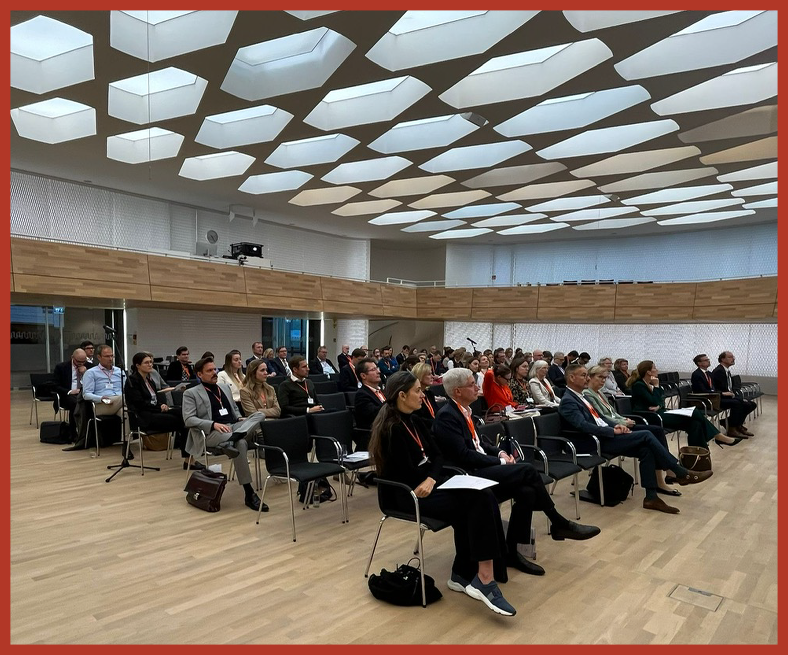 Andreas Lubberger, a member of the MARQUES Famous and Well-Known Marks Team, provides a full report on the recent Judges Meeting in Munich
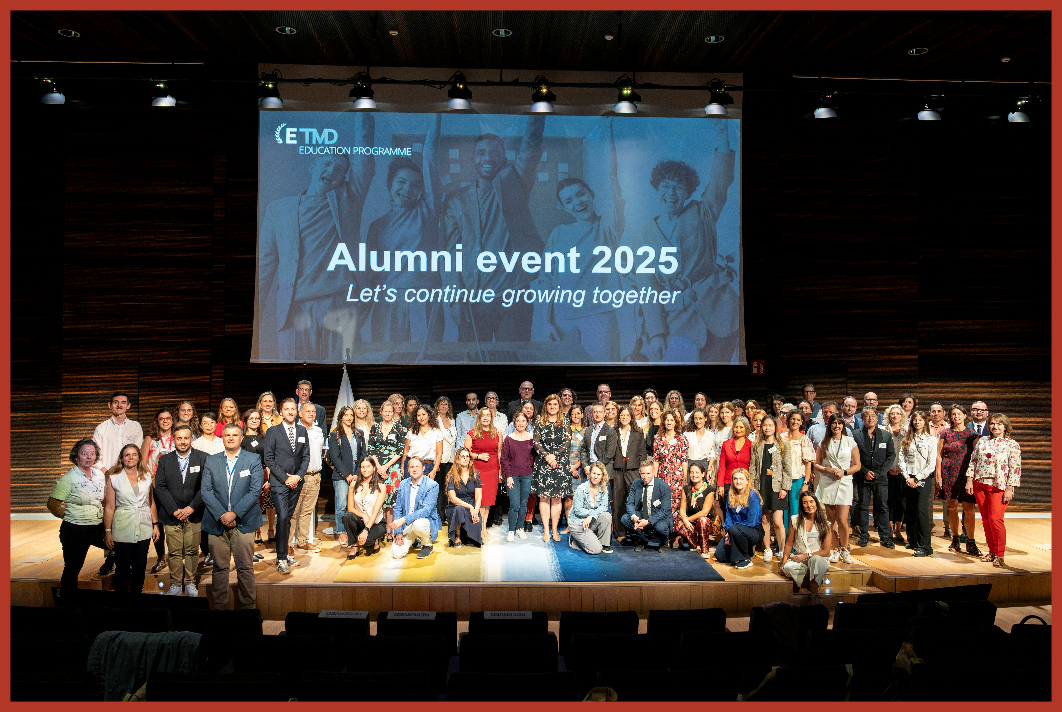 José Amorim, Sandra Müller and Charlotte Duly of the MARQUES Education Team could not be more delighted to have attended the very first alumni reunion of the European Trade Mark and Design Education Programme (ETMD EP) in Alicante on 24 October 2025
 The MARQUES Brands and Marketing Team has published a set of guidelines for companies on the use of fluid trade marks
 The expiration of the three-year non-use period following international brand owners' exit from the Russian market has emboldened certain bad-faith actors. These entities are increasingly filing cancellation actions based on non-use while simultaneously attempting to register confusingly similar marks
 EUIPO has recently announced a new functionality on eSearch Plus, the opening of the Copyright Knowledge Centre, the launch of Early TM Screening and the details of next year’s DesignEuropa Awards
 WIPO has published important information on the 13th edition of the Nice Classification and a new report on trust in IP
 The MARQUES Education Team has published an interview with Sara De Toledo about her experience of attending the MARQUES Annual Conference for the first time
 Read the MARQUES blogs for the latest trade mark news and analysis from MARQUES Teams. Recent posts include: