Case C-334/22
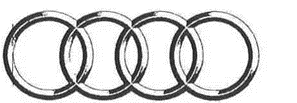 In this case, brought by AUDI against a provider of spare parts in Poland who sells radiator grilles containing an element designed for the attachment of its famous four-ring logo (pictured), the Court confirmed that, unlike in design law, there is no "repair" clause for trade marks.
The grilles offered for sale by the defendant did not originate from Audi and were not placed on the market with its consent. The shape of the grilles was either identical or similar to Audi's trade mark.
The CJEU concluded: "Article 9(2) and (3)(a) to (c) of Regulation 2017/1001 must be interpreted as meaning that a third party who, without the consent of the manufacturer of motor vehicles which is the proprietor of an EU trade mark, imports and offers for sale spare parts, namely radiator grilles for those motor vehicles, containing an element which is designed for the attachment of the emblem representing that trade mark and the shape of which is identical with, or similar to, that trade mark, makes use of a sign in the course of trade in a manner liable to affect one or more of the functions of that trade mark, which is a matter for the national court to ascertain."
The Court was also asked whether the defendant's use could be considered use to indicate the intended purpose of its product under Article 14(1)(c) of the Directive. The Court said that the use of the sign in this case exceeded referential use covered by that Article: "Article 14(1)(c) of Regulation 2017/1001 must be interpreted as meaning that it does not preclude the manufacturer of motor vehicles which is the proprietor of an EU trade mark from prohibiting a third party from using a sign identical with, or similar to, that trade mark in relation to spare parts for those motor vehicles, namely radiator grilles, where that sign consists of the shape of an element of the radiator grille designed for the attachment thereto of the emblem representing that trade mark, regardless of whether or not there is a technical possibility of attaching that emblem to the radiator grille without affixing that sign to it."
Case C-361/22
This case concerned the scope of the referential use defence to trade mark infringement. It arose in a dispute between Inditex and Buongiorno over the latter's offer of a ZARA gift card.
The dispute began in 2010 and involved questions regarding the interpretation of the 2008 EU Trade Mark Directive. The Court ruled that Article 6(1)(c) of the Directive must be interpreted "as meaning that it covers use of the trade mark in the course of trade by a third party for the purpose of identifying or referring to, in accordance with honest practices in industrial or commercial matters, goods or services as those of the proprietor of that trade mark only when such use of the trade mark is necessary to indicate the intended purpose of a product marketed by that third party or of a service offered by that party".
The Court noted that the scope of Article 6(1)(c) of the 2008 Directive "is more limited" than that of the equivalent Article 14(1)(c) of the 2015 Directive, stating: "the scope of Article 6(1)(c) of Directive 2008/95 refers to the use of the trade mark for the purpose of identifying or referring to goods or services as those of the proprietor of that trade mark only where that use is limited to the situation in which it is necessary to indicate the intended purpose of a product marketed by that third party or of a service offered by that party. In the context of Article 14(1)(c) of Directive 2015/2436, such a situation corresponds only to one of the situations in which the use of the mark may not be prohibited by its proprietor."
Case T-537/22
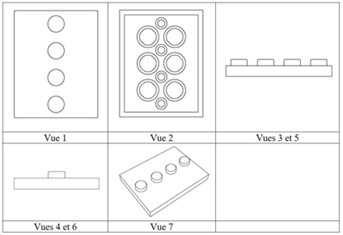 The EU General Court upheld a Board of Appeal decision rejecting a declaration of invalidity regarding Lego's RCD for "building blocks from a toy building set". The Board had found that, even if all the features of appearance of the product were solely dictated by its technical function, the design fell within the exception protecting modular systems in Article 8(3) of the Designs Regulation.
This was the second time the Court had ruled in this case, after it annulled a previous Board of Appeal decision upholding the declaration of invalidity. In this judgment, the Court said: "To the extent that a design is declared invalid only in the case where all its characteristics are excluded from protection, the applicant's arguments which, even if they were assumed to be well founded, would have the result of affecting the protection of only one of the seven characteristics of the contested design [smooth surface], are therefore not likely to call into question the validity of that design as a whole."
It also rejected the argument that the Board should have placed the burden of proof of novelty and individual character on Lego: it is for the applicant for a declaration of invalidity "to establish the disclosure of earlier designs in relation to which the contested design cannot be considered as being new and having an individual character". The Court added that "to the extent that the Board of Appeal found that no disclosure had been demonstrated by the applicant for a declaration of invalidity, it correctly considered that there was no need to carry out the assessment of the novelty and individual character of the contested design."
Finally, the Court said that the disclosure of an earlier design cannot be considered a well-known fact that does not need to be demonstrated, and "cannot be demonstrated by the mere circumstance that the owner of the design does not contest it".
Pictures taken from Court documents
 Issue 157

 The MARQUES Famous and Well-Known Marks Team is presenting a webinar titled Advertising Slogans: Highly Creative, Poorly Protectable? Possible Solutions on Wednesday 28 February at 16.00 CET
 In their regular update for HouseMARQUES, members of the MARQUES Anti-Counterfeiting and Parallel Trade Team summarise recent reports and announcements
 MARQUES Council and Team members can now book their places at the MARQUES Spring Team Meeting, which will take place on 7th and 8th March 2024 at the Hilton Hotel, Amsterdam, The Netherlands
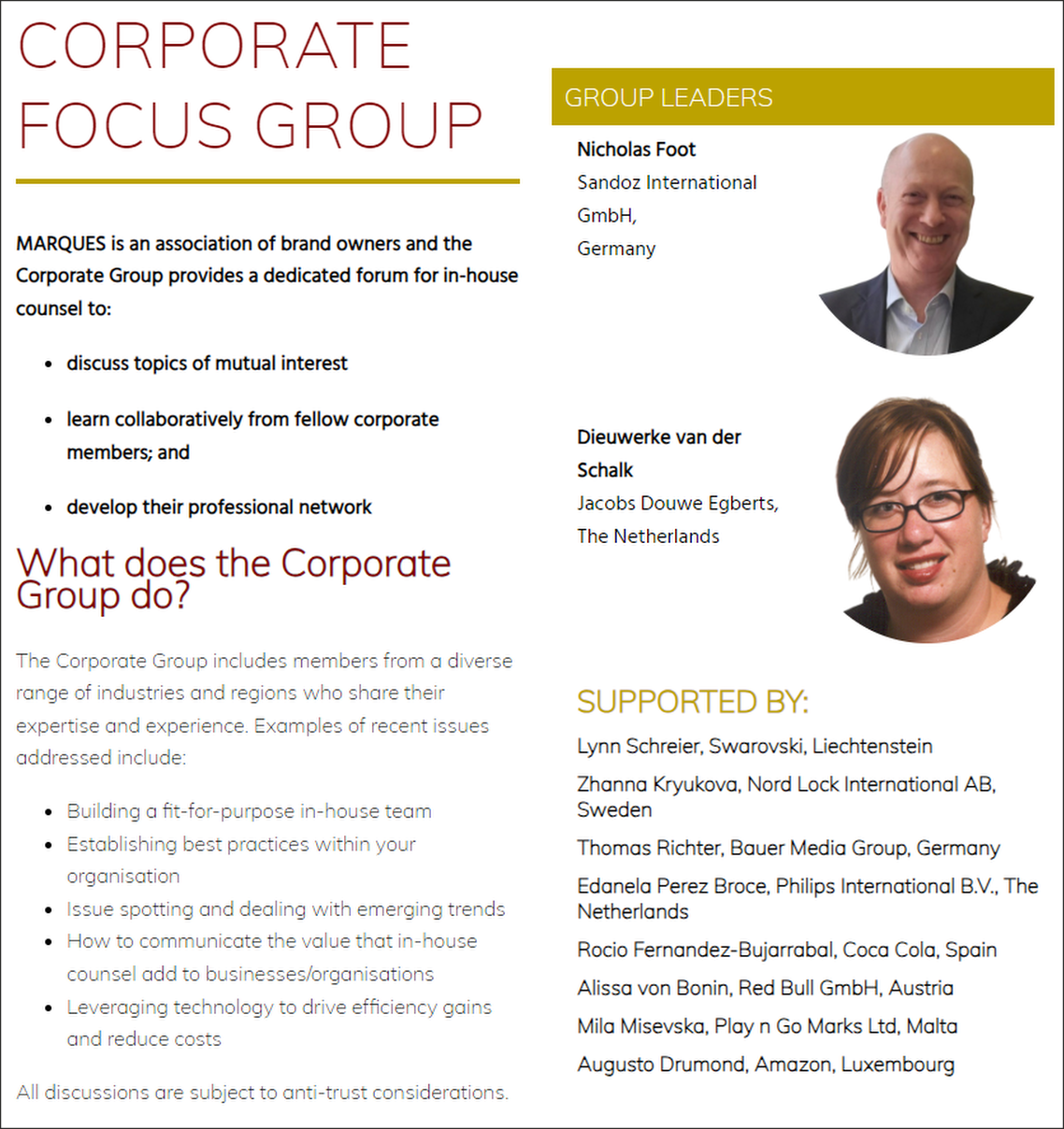 The MARQUES Corporate Focus Group, a dedicated forum for in-house counsel, now has a dedicated page on the MARQUES website
 Recent news from the EUIPO includes a new RCD form, a meeting at the European Parliament and the Office's 30th anniversary
 Read the Class 46 and Class 99 blogs for the latest trade mark and design news and analysis, including updates from MARQUES Teams