
CLASS 99
The blog for design law, in Europe and worldwide. This weblog is written by a team of design experts and fans. To contribute, or join us, or for any other reason, email class99@marques.org.
Want to receive Class 99 by email?
Click here subscribe for free.
Click here subscribe for free.
Who we all are...
THURSDAY, 20 OCTOBER 2011
Pogs - the last word
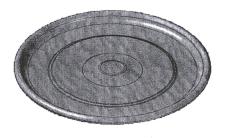 Hot off the press is the long-awaited ECJ judgment in Case C-281/10 PepsiCo v Grupo Promer Mon Graphic (earlier stages of which were discussed by Class 99 here, here and here).
Since this is their first pronouncement on matters of substantive design law it is perhaps a relief that the ECJ has followed the lower instances all the way down the line - there are no surprises, good or bad.
Highlights:
Tags: informed user ecj,
Perm-A-Link: https://www.marques.org/blogs/class99?XID=BHA286
Pogs - the last word
Since this is their first pronouncement on matters of substantive design law it is perhaps a relief that the ECJ has followed the lower instances all the way down the line - there are no surprises, good or bad.
Highlights:
- The informed user lies between the average consumer of trade mark matters and a sectoral or technical expert - "Thus, the concept of the informed user may be understood as referring, not to a user of average attention, but to a particularly observant one, either because of his personal experience or his extensive knowledge of the sector in question." (paras 53-54).
- Thus "without being a designer or a technical expert, the user knows the various designs which exist in the sector concerned, possesses a certain degree of knowledge with regard to the features which those designs normally include, and, as a result of his interest in the products concerned, shows a relatively high degree of attention when he uses them." (para 59).
- Taking into account "imperfect recollection" is not wrong in law (para 55).
- Use of samples is allowed (paras 73-74) as "the comparison of the actual goods was used only for illustrative purposes in order to confirm the conclusions already drawn" - in line with UK case law.
Tags: informed user ecj,
Perm-A-Link: https://www.marques.org/blogs/class99?XID=BHA286
MARQUES does not guarantee the accuracy of the information in this blog. The views are those of the individual contributors and do not necessarily reflect those of MARQUES. Seek professional advice before action on any information included here.
The Class 99 Archive

