
CLASS 99
The blog for design law, in Europe and worldwide. This weblog is written by a team of design experts and fans. To contribute, or join us, or for any other reason, email class99@marques.org.
Want to receive Class 99 by email?
Click here subscribe for free.
Click here subscribe for free.
Who we all are...
SATURDAY, 13 FEBRUARY 2010
Litigate or Twitigate?
Posted by: David Musker @ 10.18
Tags: design, infringement, litigation, twitter,
Perm-A-Link: https://www.marques.org/blogs/class99?XID=BHA103
Litigate or Twitigate?
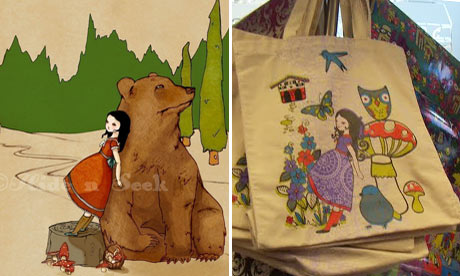
Yesterday's Guardian reports the Davina-and-Goliath battle between designer "Hidden Eloise" and stationery giant Paperchase. The designer claims (understandably, to anyone with eyes in their head) that her character in the left hand picture was copied by Paperchase in the right hand picture. She complained to the company, but they declined to cease sales and told her that they had bought the image in good faith. Here is a link to their statement, which quotes the agency they bought the artwork from, who in turn pass the buck to the individual third-party designer.
Unable, as it seems, to afford litigation, she started a Twitter campaign. According to the Guardian, it became one of the top trending stories on Twitter - something that could cause reputational damage no company can afford in the long run. The third-party designer concerned has apparently written to Hidden Eloise to apologise for copying too closely.
Moving away from the specifics of this case, in general what should a large company do when faced with the all-too-common fact that one of their products involves, to the untrained eye, a prima facie infringement of copyright and/or design right of X? To say "I bought it from Y in good faith" and carry on selling is really not good enough.
Apart from being legally and morally wrong, it is a bad commercial solution, because the company is liable when on notice, and is racking up damages which, no matter how onerous their procurement contract conditions, they may not be able to pass on to Y if Y is a small designer. If X ultimately musters the courage and the finances to sue, X, Y and the company will all lose money, and the only winners are the legal professionals. It is also a bad reputational solution, because companies selling well designed products benefit from their association in the mind of the consumer with designers whose products they market - and lose that benefit with the speed of a deflating Zeppelin when they visibly condone IP infringement.
There is only one answer - act quickly and in good faith, and take down the product while you investigate.
And for the small designer: Twitigation - an alternative to litigation?
Tags: design, infringement, litigation, twitter,
Perm-A-Link: https://www.marques.org/blogs/class99?XID=BHA103
MARQUES does not guarantee the accuracy of the information in this blog. The views are those of the individual contributors and do not necessarily reflect those of MARQUES. Seek professional advice before action on any information included here.
The Class 99 Archive

