
Now in its twelfth year, Class 46 is dedicated to European trade mark law and practice. This weblog is written by a team of enthusiasts who want to spread the word and share their thoughts with others.
Click here subscribe for free.
Who we all are...
40th Annual Conference, Lisbon, Portugal - Parts 1 and 2
 The 40th MARQUES Annual Conference is taking place in Lisbon, Portugal this week. Class 46 reports on the plenary sessions during the first morning.
Welcome to Lisbon!
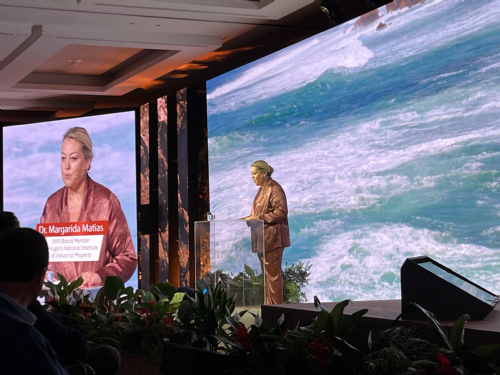
In the Opening Ceremony, Dr Margarida Matias, INPI Board Member, Portugal's National Institute of Industrial Property, Portugal (pictured right) welcomed the delegates to Lisbon and said the Institute is marking its 50th year as a public body this year. “During this period trade marks have become increasingly important intangible assets,” she said, adding: “Above all, trade marks build trust.”
She said that the evolution of trade marks is happening at an unprecedented pace and consumers expect more from brands. “They want to know where a product comes from, how it was made and what value it represents.” This brings both opportunities and challenges – many of which are addressed in the Annual Conference programme.
Dr Matias called for IP systems to promote accessibility, efficiency and effectiveness and to embrace digital transformation while ensuring responsibility and appropriate limits on automation. She also highlighted the importance of geographical indications in Portugal.
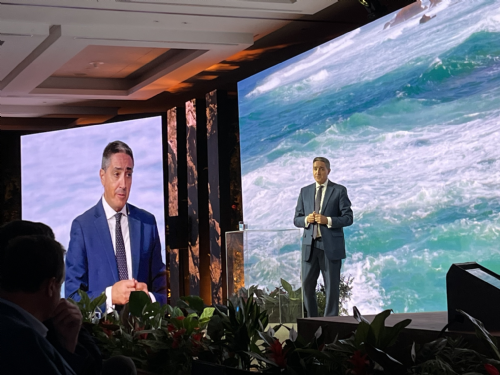 In his speech, João Negrão, Executive Director, EUIPO (left), celebrated the founding vision of MARQUES and the 30th anniversary of the EU trade mark system. This year, EUIPO will pass 5 million EUTM and EUD registrations. “In the IP community, we need to treat designs like we treat other IP rights,” he said, adding that aesthetics are particularly important for young people.
He also thanked MARQUES for its participation in EUIPO activities, saying that interaction with users is critical to the success of EUIPO. “The main challenge in front of us is competitiveness. Europe is less competitive than other regions of the world,” said Mr Negrão. “We need to work together to ensure that businesses will benefit from IP rights in the future.”
 “Business as usual will not work,” he said. “We need to look at IP rights from a business perspective, not a legal perspective … I’m confident we will deliver tangible results.”
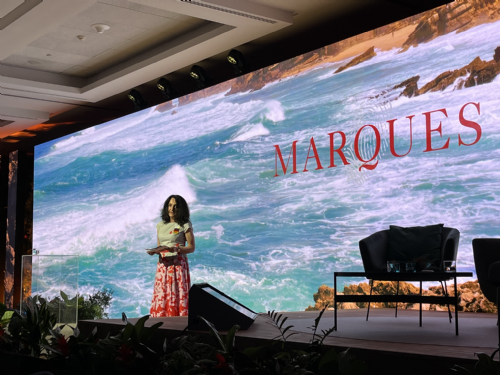
In her welcoming remarks, MARQUES Chair Claudia Pappas (right) described how Lisbon has reinvented itself over three millennia, discussed how trade marks are evolving and reviewed recent MARQUES achievements.
Brands, culture and heritage
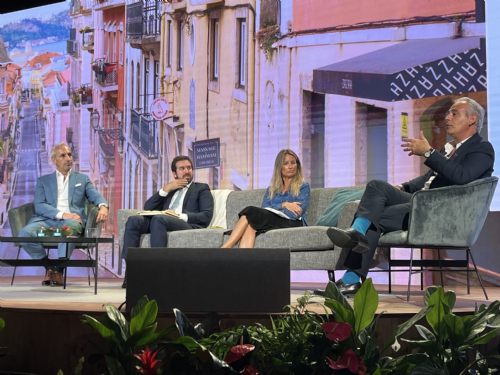
Paulo Monteverde, Baptista, Monteverde & Associados, Portugal, Member of the MARQUES Geographical Indications Team, moderated Part 1 of the Annual Conference – Brand evolution, culture and collaboration, which focused on the significance of culture and the role of IP in protecting it (pictured below left).
Nuno Sousa e Silva, Pinheiro Torres, Cabral, Sousa e Silva & Associados, Portugal looked at the evolution of geographical indications since the world’s first GI system was created for Port wine in Portugal in 1756. He talked about the “symbiotic relationship” between GIs and trade marks, stating: “The stronger the GI, the more value it will bring to the trade mark.”
 “We’re seeing an increase of brands drawing on a very wide range of cultural references,” said Marta Alves Vieira, VdA – Vieira de Almeida & Associados, Portugal. These include images, traditional symbols, regional names, crafts and other aspects of cultural identity. “The issue is to draw the line between inspiration and appropriation. It’s not always easy,” she said.
This is not just a question of what is protected, but what is credible and respectful: it involves asking a series of questions including about approval, honesty and consultation. Marta gave examples such as Camisola Poveira’s case against Tory Burch, which was resolved following an apology; design applications that were similar to the famous Capote coat, which were considered to lack novelty; and design applications resembling Vilão/Viloa dolls from Madeira, also held to be invalid.
Bringing a creative perspective, Rui Catalão, Rui Catalão Atelier, Portugal, discussed the mercado da saudade, which emphasises traditional and nostalgic cultures and brands. During the panel discussion, Nuno presented the concept of “evocation” of a GI as developed by the EU Court of Justice, noting that this provides broad protection for GIs. He added that it provides an incentive for collaboration between brands and GIs. Marta shared some examples of the protection of the traditional crafts Manteiga dos Açores and Bordado da Madeira. Rui described brands that are working with cultural heritage in interesting ways such as Burel Factory furniture, Nelo kayaks and Corticeira Amorim cork.
Autopsy of a brand
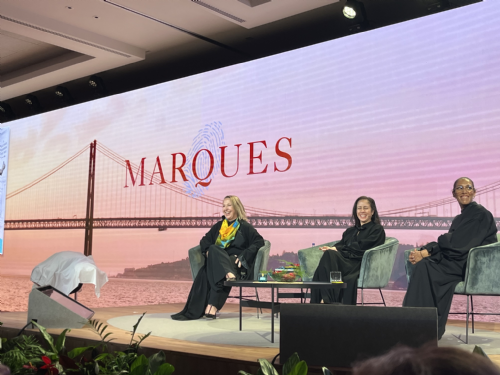 Part 2 of the Annual Conference comprised the autopsy of a (nearly) deceased brand, focusing on diagnosis, prevention and reversal. The brand (“Mark”) appeared on stage covered by a sheet alongside the three speakers, who were all wearing black robes (pictured right).
Luna Samman, Arent Fox Schiff, USA, said that once a mark becomes generic there is no coming back. She asked the audience to remember marks such as Escalator, Thermos and Zipper in a moment of silence. But she added that a good doctor will use any remedy possible to regain a pulse.
Luna said that early warning signs of genericide are dictionary entries, media usage, competitor use, social media and online use, consumer surveys and internal misuse. “Consumers are sometimes our best friends and sometimes our worst enemies,” she said, adding: “Branding starts at home. From marketing to legal, everyone needs to speak the same language.”
In a US case in 2017, Google succeeded in proving that Google still functioned as a source identifier, despite widespread use of “to google” as a verb. Meanwhile, Velcro launched a “Don’t say Velcro” campaign (including a video) to maintain its brand. Ugg boots has become generic for sheepskin boots in Australia but is protected in more than 130 other countries.
Bahia Alyafi, Alyafi IP Group, Middle East stressed the importance of naming, marking and using product names. She also highlighted the need to correct misuse. But, she asked: what can we do to understand the risk of genericism before it becomes a risk? The answer is: a brand DNA audit covering: inventory, allocation, identification and concentration.
The audit needs to map awareness, association and attribution to identify the level of risk and any change over time. “This has to be done in a collaboration between marketing, legal and other departments,” said Bahia. Brands should also provide usable vocabulary to voices such as influencers (and, increasingly, machines) to try to make sure they use the brand correctly. “If we do not fix the feedback loop, there will be a language drift,” she said. Her summary was: control, influence and monitor.
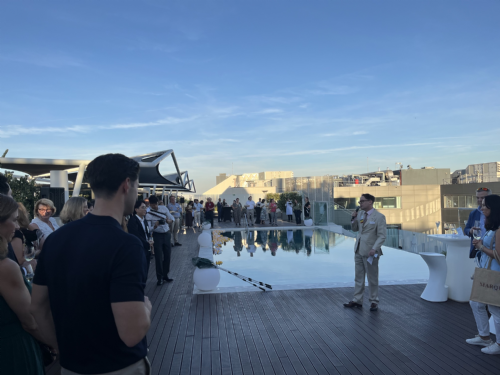 |
| MARQUES 2nd Vice-Chair Tapio Blanc welcomed first-timers at a reception on Tuesday evening |
Catrin Turner, Jellycat Ltd, UK said that genericism is a result of success: “That’s a good place to start from. We should never lose hope for the patient.” She said in-house counsel need three things: mindset, external and internal perspective.
Catrin pointed out that it is not just words that can become generic, but also product shapes. IP counsel need to lead the fight and create “the appearance of rationality” for courts and IP tribunals by building evidence of authenticity, for example through an archive, finding design and quality storytelling, using “look-for …” advertising. Litigation is the last port of call, and laws about unfairness are likely to be most helpful. Internally, she stressed negotiating correct trade mark use, working closely with your customers and building relations between marketing and legal.
The Annual Conference continues until Friday. Further reports will be posted on the Class 46 and Class 99 blogs. Photos taken by MARQUES staff and editor. Speakers do not necessarily represent the views of any organisations mentioned or of MARQUES.
Posted by: Blog Administrator @ 14.13Tags: Annual Conference, Lisbon,


 Sharing on Social Media? Use the link below...
Perm-A-Link: https://www.marques.org/blogs/class46?XID=BHA5480


