
CLASS 46
Now in its twelfth year, Class 46 is dedicated to European trade mark law and practice. This weblog is written by a team of enthusiasts who want to spread the word and share their thoughts with others.
Want to receive Class 46 by email?
Click here subscribe for free.
Click here subscribe for free.
Who we all are...
TUESDAY, 3 JUNE 2014
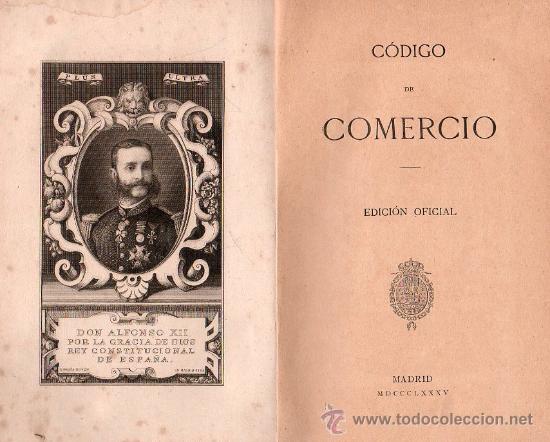
Spain: Trademarks and Code ahoy!
Tags: Commercial Code ,


 Sharing on Social Media? Use the link below...
Perm-A-Link: https://www.marques.org/blogs/class46?XID=BHA3734
Spain: Trademarks and Code ahoy!
Coming
over the horizon, 1,726 articles marching towards the Cabinet all together
called the Commercial Code. A modern review of the laws of commerce which substitutes
the current Commercial Code of 1885 and seeks to provide an unitary legislation
on the Spanish market, setting a bunch of rules concerning the business itself
(as opposed to its owners, morals or individuals), and including a general
regulation on the intellectual (and industrial) property rights.
This colossal legislation, subject to a report from the Justice and Economy Ministers and sent to the Cabinet this 2nd June, introduces current trademark case law and revisits general principles of IP law. Here a few:
- Trademarks are distinctive signs related to the business activity. They can be obtained by (first-come first-served) registration ("título") or by the Law, e.g. trademark and trade name applications for registration, mere used well-known (in Spain) trademarks, and mere used trade names in the whole Spanish territory or non-registered non-used well-known trade names in Spain. Each considered movable property.
- Trademark registrations are unitary titles in Spain. They are indivisible although they can be owned jointly and are presumed valid insofar the invalidity is not established.
- Individuals and morals are eligible for obtaining a title or registration, including public entities (government institutions or agencies of the government).
- Either the application, the granting and other legal acts affecting the registrations can only be opposed to unaware third parties upon recordal in the corresponding Registry.
- A title or registration is an ius prohibendi. It consists of the right to exclude others from unauthorized use, or other exclusive activities.
- The manufacturer, the importer or the first introducer of the infringing item, each as liable of the first commercialization, are always and legally obliged to pay damages. Otherwise, damages arise upon warning (of the existence of the rights and its violation) or fault or negligence (e.g. well-known trademarks).
- The exhaustion of trademark rights in respect to goods or services first marketed in the EEA applies, except where owner opposes, relying on legitimate reasons based on alteration of the goods after being marketed by the owner or under its consent.
- Trademark rights are transferable, but validity of transfer is conditioned to a written agreement.
- Anticompetitive uses, abuse or bad faith in the exploitation of trademark rights are not covered by the exclusive rights, as it is not either the exploitation contra legem. And a new legislated provision for trademarks: the owner of a trademark registration will be liable for violation of prior trademark rights, and so, such a registration shall not be a valid defense against infringement actions.
- A few interpretative rules: (i) the scope and extent of the intellectual (and industrial) property rights must be construed with a view to their specific role in a market economy, as this is set by the Constitution, (ii) whoever obtains registration of a trademark with the aim to prevent a third party from its current use of such mark, as opposed to use it as source indicator, is presumed to act in bad faith, and (iii) in order to establish the infringement of a trademark, a comparison with the mark actually used by the infringer is the right comparison.
- A trademark rights is an independent and compatible right with other categories of industrial property rights and intellectual property rights, and can be accumulated if the subject-matter is protectable under and complies with the specific provisions of such other categories or rights.
Tags: Commercial Code ,
Sharing on Social Media? Use the link below...Perm-A-Link: https://www.marques.org/blogs/class46?XID=BHA3734
Reader Comments: 0
Post a Comment
MARQUES does not guarantee the accuracy of the information in this blog. The views are those of the individual contributors and do not necessarily reflect those of MARQUES. Seek professional advice before action on any information included here.
The Class 46 Archive


