CLASS 46
Now in its twelfth year, Class 46 is dedicated to European trade mark law and practice. This weblog is written by a team of enthusiasts who want to spread the word and share their thoughts with others.
Want to receive Class 46 by email?
Click here subscribe for free.
Click here subscribe for free.
Who we all are...
WEDNESDAY, 24 JUNE 2009
Trade marks, social responsibility and fair trade
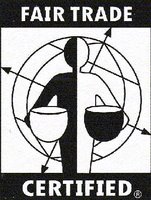 For those interested in the public law aspects of trade mark law, an interesting article by Margaret Chon can be found in the pages of the Social Science Research Network. The author addresses the aspect of trade marks as indicators of social responsibility standards.
Tags: fair trade, Lanham Act, social responsibility,


 Sharing on Social Media? Use the link below...
Perm-A-Link: https://www.marques.org/blogs/class46?XID=BHA1161
Trade marks, social responsibility and fair trade
 For those interested in the public law aspects of trade mark law, an interesting article by Margaret Chon can be found in the pages of the Social Science Research Network. The author addresses the aspect of trade marks as indicators of social responsibility standards.
 According to the abstract, such “marks of rectitude”, as she names them, “are particularly noticeable in the context of global trade, where market integration is accompanied by relatively uneven integration of environmental, labour and other standards, and where consumers in the so-called global North choose how to empower producers and/or encourage development of markets in the global South. But consumer participation in these transactions is under-explored by reference to criteria such as the quality not to mention accountability and transparency of the standards embedded within the goods or services. Newer stakeholders and meaning-makers such as the largely invisible third party certifier determine whether a product conforms to a standard, which in turn is embodied in a mark. Marks of rectitude can be viewed as a type of decentralized regulation in response to a felt need for heightened social norms.
Trade mark law can potentially function to mediate between extremely different local conditions within a global market system, to signal not source of manufacturing origin (as in classic trade mark law), or geographic origin (as signified by certification marks to provide geographic indication protection in the U.S.), but rather socially responsible practices within a global administrative framework. The "branding" aspect of this decentralized, privatized regulation raises the likelihood of slippage between the mark's function as a reliable indication of source and its newer regulatory functions”. Although the analysis focuses on the US Lanham Act, it is a very interesting read.
Posted by: Nikos Prentoulis @ 13.58Tags: fair trade, Lanham Act, social responsibility,
Sharing on Social Media? Use the link below...Perm-A-Link: https://www.marques.org/blogs/class46?XID=BHA1161
Reader Comments: 0
Post a Comment
MARQUES does not guarantee the accuracy of the information in this blog. The views are those of the individual contributors and do not necessarily reflect those of MARQUES. Seek professional advice before action on any information included here.
The Class 46 Archive


