
Now in its twelfth year, Class 46 is dedicated to European trade mark law and practice. This weblog is written by a team of enthusiasts who want to spread the word and share their thoughts with others.
Click here subscribe for free.
Who we all are...
Booking open for Luxury and Famous Brands Symposium
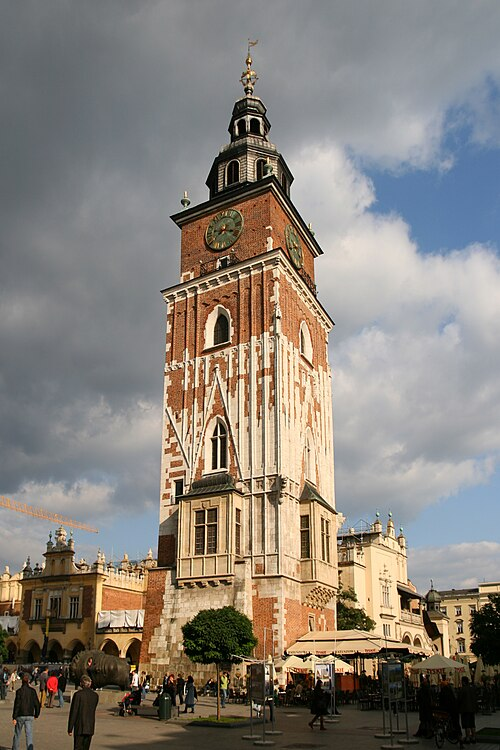 MARQUES will host the Luxury and Famous Brands Symposium in Kraków, Poland on 1 and 2 December 2026.
The theme of the Symposium is “The Luxury of Heritage: The Value of Brand Identity across Borders”.
The Symposium will bring together brand owners, IP practitioners, leading academics and representatives of IP offices to discuss the latest developments impacting luxury and famous brands.
Following five previous editions, this year the Symposium broadens its traditional focus on luxury brands to include famous brands more generally.
Programme
Topics covered will range from the protection, preservation and revival of brand heritage and iconic products, including the role of heritage in shaping brand identity and reputation, to the relationship between brands and cultural heritage.
The Symposium will also look at the extent to which heritage can be protected under EU law, taking the 30th anniversary of the EU trade mark system as an opportunity to reflect on how it has worked in practice and whether it is truly unitary.
Each panel will combine business and legal perspectives with contributions from academia, bringing together practical experience and academic analysis across a variety of industries.
Christmas market
Kraków, with its rich history and cultural heritage, will provide a particularly fitting setting for this year’s theme, while the city’s renowned Christmas market will add a special atmosphere to the Symposium at the beginning of the festive season.
For those arriving early, the MARQUES Programming Team are hosting a two-hour city tour at 14.30 on Monday 30 November.
Fees
The registration fee is €990 (MARQUES members) or €1300 (non-members). The city tour is €15, payable on the day.
Delegates wishing to stay at the Hotel Saski Kraków can benefit from the special MARQUES rates of €265 per night, subject to availability.
You can view the programme here and register online here.
To find out more, listen to the most recent episode of the Talking MARQUES podcast, available on the MARQUES website here.
Photo by of Kraków town hall tower by Jan Maksymilian Mehlich aka Lestat de Lioncourt, licensed under Creative Commons
Posted by: Blog Administrator @ 15.12Tags: Luxury, Famous Brands, Kraków,


 Sharing on Social Media? Use the link below...
Perm-A-Link: https://www.marques.org/blogs/class46?XID=BHA5490
CDs/DVDs, toys and labels lead EU detentions
EU enforcement authorities detained 196 million counterfeit items worth an estimated €6.3 billion in 2025, according to a joint report published by the EUIPO and the European Commission’s Directorate-General for Taxation and Customs Union (DG TAXUD) today.
The number is 67% higher than the number of detentions in 2024 and 29% above the previous record from 2023
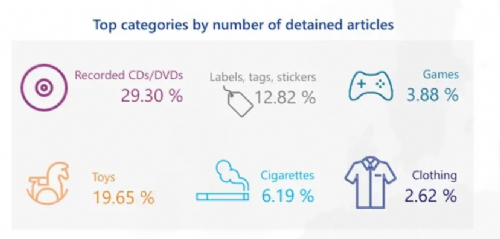 The figures cover both the EU external border and the internal market.
Recorded CDs/DVDs (including music and film releases, TV box sets, retro games and application software) were the most frequently detained counterfeit goods, accounting for nearly 30% of all seizures.
Toys accounted for almost one in five detentions while Labels, tags and stickers made up more than one in eight articles detained.
Within the internal market, Italy accounted for over 70% of all detentions, ahead of France (6.2%) and the Netherlands (4.8%).
Trade marks were the most frequently infringed rights among the detained goods (57%), followed by copyright (43%) and designs (7%).
At the EU border, Romania accounted for 43% of detained articles, followed by Bulgaria and Italy.
Spain represented more than half of the estimated value of counterfeit goods intercepted by value, followed by Germany.
The study shows how the growing volume of goods entering the EU, combined with fragmented supply chains, diverse transport methods and the expansion of e-commerce, is making counterfeit goods increasingly difficult to identify and intercept.
You can download the full document from the EUIPO website here.
Image taken from the EUIPO website.
Posted by: Blog Administrator @ 13.05Tags: Detentions, EUIPO, DG TAXUD, Customs,
Sharing on Social Media? Use the link below...Perm-A-Link: https://www.marques.org/blogs/class46?XID=BHA5489
Lewis Gaze Memorial Award winners 2026
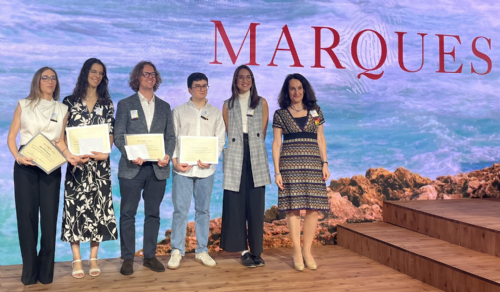 The winner of this year’s Lewis Gaze Memorial Scholarship was Marisa Fidalgo Frade. Her winning paper was titled: “Appropriate and proportionate remuneration to authors and artists: A legal analysis within the Portuguese legal framework”.
The Lewis Gaze Memorial Scholarship, established in 1997 as a memorial to the first Chairman and President of MARQUES, recognizes academic achievement.
Entries are invited from students attending university in the country hosting the MARQUES Annual Conference. This year, the students were from NOVA School of Law in Lisbon.
Second place was awarded to Francisco Lobão Alonso for his paper on “Repair-oriented interpretations in EU design law: Exploring exclusions and limitations”.
Third place was shared by Pedro Carrola Soares, who wrote a paper on “Morality and public policy in EU trademark law: Conceptual distinction and application in EU and Portuguese law”, and Ana Sofia Santos, whose paper was titled: “Pixels of protection: The quest to trademark AI-generated images in the EU”
All four students were presented with certificates during the Annual Conference by MARQUES Chair Claudia Pappas (pictured).
After the presentation, they took part in a short discussion about their work.
Marisa said her topic was chosen to appeal to a wide range of stakeholders, including rights management organisations. “The topic arose from my curiosity, professional as well as legal,” she said, adding: “My idea was to understand how remuneration is framed.”
Francisco described the issue of repairability and spare parts as “very contentious”, adding he looked to bring a new perspective: “I thought, how much can I stretch the legal interpretation to encompass a more welcoming mindset for enabling repairability for third parties to make spare parts, and to bring them more into the picture?” His paper reviews the history of design law and then analyses how the exclusions and limitations could apply if circularity is the main goal.
Pedro said his paper on morality and public policy in trade mark law grew out of “academic interest” in how the issue is approached in different European countries. He reviewed judgments from the EU General Court which assess “if a swear word is interpreted differently in another country, or, for example, if a name is interpreted in one way in Amsterdam and another way in Rome”.
Ana described her interest in AI-generated images as a “passion” saying: “I had a lot of fun with my examples. I had to learn about generative AI, which was also fun.”
Since September last year, Marisa has been working as in-house lawyer for a book publisher in Portugal. Francisco currently works as a lawyer at the law and advisory firm Passport Alliance, Pedro is working for an online gaming company and Ana is a contract manager at Airbus in Lisbon.
Amanda Costa Novaes of NOVA School of Law said the experience of holding the Lewis Gaze Award was “amazing”: “It’s very interesting to see the spark of the students and to see their interest in their topics, how they choose research and how they approach research.”
The School’s Masters programme in law, business and technology currently has 44 students and 15 researchers.
It wasn’t easy to choose the winner, said Amanda: “It showed we could be very proud of what we are doing and the level of research.”
Posted by: Blog Administrator @ 17.17Tags: Lewis Gaze, Lisbon, Annual Conference,
Sharing on Social Media? Use the link below...Perm-A-Link: https://www.marques.org/blogs/class46?XID=BHA5488
Ankara court rejects Turkpatent’s attempt to disown fee notice
|
Summary
|
Turkpatent cancelled a registration fee notice because of a power-of-attorney deficiency, then disowned its replacement after the applicant had complied. An Ankara IP court rejected the resulting attempt to apply the original deadline, placing legal certainty and reliance at the centre of the dispute. Yasemin Aktas reports
Turkpatent cancelled its initial registration fee notice because it had been served despite a deficiency in the representative’s power of attorney. It issued a replacement, refunded the earlier payment and received a second payment within the period running from service of the new notice. The office subsequently disowned the replacement as having been sent in error and removed the application.
The Ankara First Civil Court of Intellectual and Industrial Property Rights rejected that reversal in a judgment dated 16 July 2026. It annulled the decision of the Turkish Patent and Trademark Office’s Re-examination and Evaluation Board (YİDK) that had upheld removal of the application.
Cancellation of the first notice and reliance on its replacement
The initial registration fee notice was served on 16 January 2023. The judgment records that payment was made later than the 16 March deadline calculated by reference to that notice.
On 20 March, Turkpatent cancelled the initial notice on the basis that it had been served despite a deficiency in the power of attorney supporting the recorded representation. It issued a replacement notice, formally served on 28 March. The earlier payment was refunded. On 28 April, the applicant paid the fee again in full, within two months of service of the replacement.
On 8 May, Turkpatent stated that the second notice had been sent inadvertently and deemed the application lapsed. YİDK measured the second payment against the original notice, concluded that it fell outside the original two-month period and treated it as having no effect.
The office had to account for its intervening acts
Article 22 of Industrial Property Code No 6769, read with Article 12 of its implementing regulation, governs completion of registration and payment of the fee. The court acknowledged the two-month payment requirement. The dispute concerned which official notification could govern the applicant’s obligations after Turkpatent had cancelled the original notice, issued a replacement and received payment within the period running from its service.
The court held that applying the payment requirement also demanded clarity and reliability in administration, reflecting the rule-of-law principle in Article 2 of the Constitution. Turkpatent’s own intervening acts had to be given their legal effect.
Service of the second notice created a legitimate expectation that the office had corrected its earlier error and that a fresh two-month period had begun on 28 March. The applicant relied on that official direction and completed payment on 28 April.
The court held that the formally served notice retained legal effect until annulled, even if it had been issued defectively. When the applicant paid, it was acting on an official notice that the office had not yet disowned. The later claim of error could not justify removing the application in disregard of that reliance.
The reasoning placed responsibility for administrative records and personnel mistakes on the authority. In these circumstances, the office could not invoke its own record-keeping deficiencies, delays in recording representation changes or inadvertent acts to enforce a time limit extinguishing the applicant’s rights. The court treated the second notice as restarting the payment period and found the April payment timely.
Both the original and supplementary expert reports had supported Turkpatent’s position. The judge rejected their legal conclusion after examining the powers of attorney, chronology and office records. Measuring the payment solely against the January notice failed to account for its cancellation and the legal consequences of the replacement.
Why the claim of error did not defeat reliance
|
For anyone conducting trade mark proceedings before Turkpatent, the case illustrates the risk of an earlier decision or notice being revised on grounds of administrative error after an applicant has already acted on it. The judgment offers a basis for challenging comparable reversals, with the office’s intervening instructions and the applicant’s reliance placed at the centre of the analysis. |
Calling a notice an administrative mistake explains why the office wishes to change its position. It does not, by itself, determine what happens to an applicant who has already followed that notice. The court required those consequences to be assessed against legal certainty and good-faith reliance.
Turkpatent sought to enforce a deadline calculated from a notice it had cancelled, after directing the applicant to proceed under a replacement. The resulting risk was concrete: conduct consistent with the office’s current instructions was subsequently treated as insufficient to preserve the application.
For anyone conducting trade mark proceedings before Turkpatent, the case illustrates the risk of an earlier decision or notice being revised on grounds of administrative error after an applicant has already acted on it. The judgment offers a basis for challenging comparable reversals, with the office’s intervening instructions and the applicant’s reliance placed at the centre of the analysis.
Abion bore all the costs of this litigation because, in our assessment, the office’s contradictory handling of the application was arbitrary and the resulting injustice was clear. Our aim was to protect the client’s rights and demonstrate that judicial review can secure clarity and accountability in trademark proceedings in Türkiye.
What applicants should preserve when the office changes its position
Every version of a decision or notice should be retained, alongside proof of service, payment receipts and relevant representation and refund correspondence. The sequence can establish what the office instructed, when the applicant complied and whether the office changed its position only afterwards.
The ruling rests on a formally served replacement notice followed by payment within the period the court held it created. It provides no basis for assuming that every later communication restarts a deadline. The operative order annulled YİDK’s decision; it did not itself order registration. The judgment was issued at first instance with a right of appeal.
Official notices must carry legal consequences for the authority that issues them. An applicant who has complied with a formally served instruction should not lose its application merely because the office later labels that instruction an error.
Yasemin Aktas is Country Manager and Partner of Abion in Istanbul, Turkey and a member of the MARQUES Dispute Resolution Team. Abion acted for the successful party in this case.
Posted by: Blog Administrator @ 12.45
Tags: Turkey, Turkpatent, ,
Sharing on Social Media? Use the link below...Perm-A-Link: https://www.marques.org/blogs/class46?XID=BHA5487
Report on personality and publicity rights
 The MARQUES Famous and Well-Known Marks Team has published a new comparative report on the recognition, protection and economic exploitation of personality rights and/or the right of publicity.
The report has been prepared by members of the Non-Traditional Marks Sub-Team over the past two years and is one of the most extensive comparative studies of the subject available.
It is available to download from the Team’s page on the MARQUES website (log-in required).
The publication is based on a survey of legal practitioners in 27 countries. The survey comprised 41 questions.
It aims to provide a broad comparative understanding of how different legal systems protect a person’s identity and its constituent attributes including name, nickname, pseudonym, image, likeness, voice, signature, gestures, mannerisms and other identifying characteristics.
The report also examines the legal protection afforded to historical figures and infamous personalities, such as Al Capone or Pablo Escobar. It further explores the relationship between personality rights and freedom of expression, addressing the circumstances in which the use of a person's name, image or likeness may be permissible without consent, particularly in connection with parody, satire, criticism, news reporting, artistic expression and other matters of public interest. In addition, it reviews the legal tools available to combat deepfakes.
The report includes an executive summary, which provides an overview of the main findings, similarities and differences. This is followed by question-by-question analysis and a summary of the 32 principal findings and conclusions.
The survey identified three broad legal models:
- A personality-rights model, principally found in civil-law jurisdictions
- A fragmented or multiple-remedy model, in which no general personality right or right of publicity exists
- A proprietary right of publicity or specific commercial-identity model, principally represented by the United States
A key finding of the survey is that the personal nature of the underlying right does not necessarily prevent the economic exploitation of its constituent elements.
The report concludes that the international protection of personal identity is neither uniform nor based on a common legal doctrine. The same unauthorised use may be treated as an infringement of dignity and personality in one jurisdiction, false endorsement or passing off in another, and misappropriation of a proprietary publicity right in a third.
However, the survey also reveals substantial convergence. Most jurisdictions recognise that personal identity deserves protection against at least certain unauthorised uses; that names, images, voices, and other attributes may possess economic value; that commercial use may generally be authorised; and that protection must be balanced against freedom of expression and the public interest.
The principal remaining challenge is that comparable interests are protected through different rights, terminology, remedies, limitations and enforcement mechanisms. These differences become particularly significant in the digital environment, where uses of identity are instantaneous, borderless, increasingly realistic and frequently difficult to attribute to an identifiable infringer.
The Sub-Team would like to thank everyone who supported this project with contributions. If you have any questions about the report, please contact Juan Carlos Durand or another member of the Team.
Posted by: Blog Administrator @ 09.01Tags: Personality, publicity rights, non-traditional marks,
Sharing on Social Media? Use the link below...Perm-A-Link: https://www.marques.org/blogs/class46?XID=BHA5486
New gTLD applications revealed
 ICANN has published the details of 1,615 applications for new generic top-level domains (new gTLDs) that is has received.
The application were filed from April to August this year for both generic and brand gTLDs.
They include 333 brand applications and 16 community-based applications.
North America accounts for most applications (864) followed by Europe (506) and Asia/Australia/Pacific (218).
The publication kicks off a two-week replacement period, during which applicants can switch from their primary applied-for string to a replacement string. A final list of applied-for gTLD strings will then be published on 17 November 2026.
This will be followed by a four-month period for community input and objections. Objections can be made based on string confusion, legal rights, limited public interest, or community. Decisions will be made by a panel of qualified experts and can be appealed.
After the strings have been evaluated, a prioritisation draw will decide the order that applications and contention sets are processed. This is expected to take place in the first half of 2027.
Applications in this round include .alphabet, .facebook, .roblox and .tiktok as well as generic terms such as .agent, .brand, .crypto, .gpt, .hub, .mars, .moon and .robot. A number of these gTLDs have been applied for by more than one applicant.
More information is available on ICANN’s website.
The MARQUES Cyberspace Team continues to monitor the new gTLD programme and will provide further updates in due course. For more information, please contact any of the Team members.
Posted by: Blog Administrator @ 17.15Tags: ICANN, gTLD,
Sharing on Social Media? Use the link below...Perm-A-Link: https://www.marques.org/blogs/class46?XID=BHA5485
IP training session connects students with brand protection experts
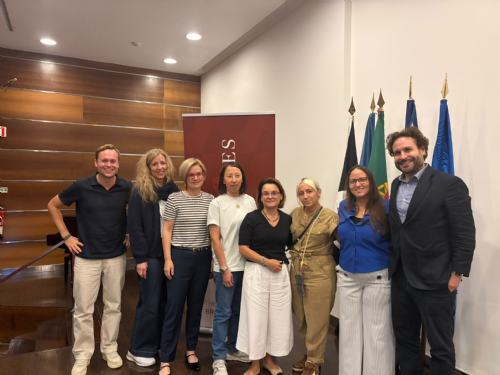 On 21 September, around 30 students took part in an IP training session in Lisbon, joining both online and in person.
The session was organised by the MARQUES Anti-Counterfeiting and Parallel Trade Team, together with ELSA Lusófona Lisboa and ELSA U.Porto, and hosted at Universidade Lusófona.
The training aimed to give students practical insights into IP rights, brand protection programmes across different industries, and strategies for tackling counterfeiting and parallel imports.
Speakers from a wide range of industries shared their perspectives, including representatives from:
- RECKITT (Ervina Vasiljevic, Global Brand Protection Counsel)
- Hugo Boss (Nicole Klug, Global Head of Intellectual Property Department)
- John Deere (Sylvia Piechatzek, Corporate Counsel)
- On (Anna Jakobsson, Director of Intellectual Property)
- Philips (Edanela Perez Broce, Senior IP Counsel)
- Mars (Bence Bozóki, Senior IP Counsel)
- Zurich Insurance (Dorine Martin, Head of Group Intellectual Property)
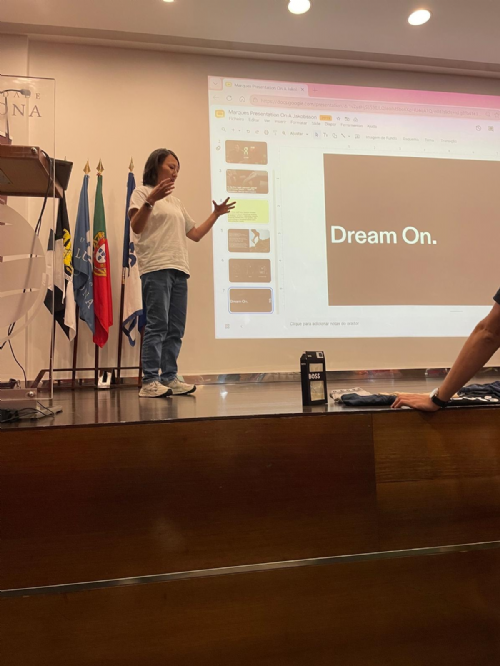 The two-hour session was moderated by Paul Trapman of Ploum and Anja Franke of Grünecker PartG mbB, who organised the training together with Mai-Britt Kroll, Senior Global Brand Protection Manager at Coty.
The speakers also had the opportunity to respond to a range of interesting questions from the student audience, covering both practical enforcement issues and possible career paths in IP.
Among other topics, the discussion touched on how to distinguish counterfeit products from parallel imports or grey market goods, when similar branding or packaging may cross the line into trade mark infringement, and whether a law degree is necessary to work as in-house counsel or in legal and brand protection roles.
The Lisbon event was part of the MARQUES training series held alongside the Annual Conference, offering students the opportunity to engage directly with experienced IP and brand protection professionals.
Photos provided by Anja Franke
Posted by: Blog Administrator @ 16.10Tags: Lisbon, ELSA, IP training,
Sharing on Social Media? Use the link below...Perm-A-Link: https://www.marques.org/blogs/class46?XID=BHA5484


