
Now in its twelfth year, Class 46 is dedicated to European trade mark law and practice. This weblog is written by a team of enthusiasts who want to spread the word and share their thoughts with others.
Click here subscribe for free.
Who we all are...
40th Annual Conference, Lisbon – Parts 3 and 4
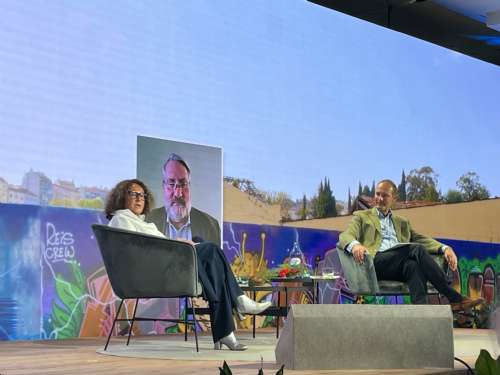 The first afternoon of this year’s Annual Conference featured sessions on IP finance and the EUIPO Boards of Appeal
Roland Mallinson, Winston Taylor International LLP, UK, Member of MARQUES Executive and Council, introduced Part 3 – Unlocking the power of IP focused on IP-backed financing (pictured right) with some statistics from a recent EUIPO report on IP financing.
Donald Broadfield Jr, Managing Director & Senior Attorney/Chief IP and Data Counsel, American Airlines, Inc, USA described four trade mark-backed loans that American Airlines has secured over the past 25 years, raising billions of dollars. This included a bond with a very low interest rate, backed by trade marks such as American Airlines and AAdvantage.
Donald said that lenders are generally well educated on brand value. Tatiana Whytelord, Intelligent Brand Extension LLC, USA, agreed, saying it is notable how little corporate leadership values IP compared to people on the other side. However, said Donald, lenders often do not understand nuances of trade mark law, such as minor changes to a specification and renewal notices. “Not all buyers have the right people to have this mindset,” said Tatiana so buyers with IP departments have a big advantage. “With lenders you need to be very conservative,” she added.
The panel discussed how approaches vary around the world. Donald said many jurisdictions did not have an established approach to IP-backed loans or had high requirements: these include Spain and Japan. “It’s not an easy process,” said Roland, who advised American Airlines on some of the deals.
Tatiana challenged the idea maintained by many companies that IP is a cost centre and stressed the importance of having an aligned system for, and purpose behind, protecting the IP. She also addressed the risks raised by personalised or founder brands.
Other topics covered by the panel included trade mark licensing and maintaining control over brand usage, ad agencies seeking to register IP rights, drafting contracts and litigation, disputes with commercial partners (such as supermarkets and online travel agencies) and franchising. “The number of loans backed by IP will increase over time,” said Donald, pointing out that trade marks are unusual assets because they often grow in value.
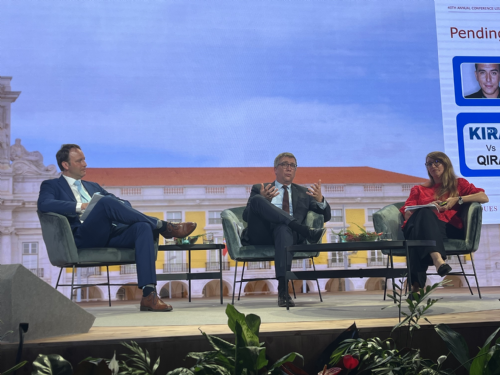 The final session of the day, Part 4 – New perspectives from EUIPO (pictured left), featured Sven Sturmann, President of the EUIPO Boards of Appeal, Spain and was moderated by Johannes Fuhrmann, Bomhard Intellectual Property, SL, Spain, Member of MARQUES Council and Chair of the European Trademark Law & Practice Team and Andreea Bende, Minded Counsels SRL, Romania, Vice-Chair of the MARQUES European Trademark Law & Practice Team.
The session covered three main topics: the Boards’ approach to generally understood English terms (such as smart, easy, online, style and shop); activities to enhance the quality and consistency of its decisions; and cooperation activities.
Mr Sturmann said the first is “a really tricky topic” that arises in many appeals. He stressed the importance of evidence, such as surveys, but recognised the challenges of doing this. Andreea referred to two cases: in CRAFT v CRAFT GEAR for goods in class 25, a likelihood of confusion was found but in SQUIZZY v SQUEEZED TO DEATH for goods in class 32, there was no likelihood of confusion.
Sven explained the Boards’ non-binding methodology for assessing basic English terms, which sets out circumstances in which English can be viewed as a matter of common knowledge. He said the aim is to be “as objective as possible” This has been applied in cases including R 2596/2023-2 iTEC SkyNex v SKYNET, R 1921/2025-4 wonderjeans v W wonders and R 1752/2024-1 G MOTION v GM GERMANY MOTIONS.
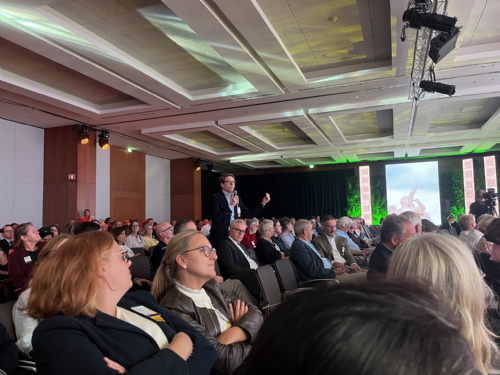 In two recent cases, T-635/25 Health Labs Care and T-497/25 Almaviva, the EU General Court has confirmed and elaborated the methodology.
To promote consistency, the Boards have introduced case-law reports, Grand Board of Appeal referrals, a case law analysis tracking system and user feedback on Board decisions. Mr Sturmann stressed that none of these activities will interfere with the independence of the Boards’ work. “I think there are a lot of things we can simplify,” he added, mentioning some initiatives with judges and efforts to promote mediation.
The Annual Conference continues until Friday. Further reports will be posted on the Class 46 and Class 99 blogs. Photos taken by MARQUES staff and editor. Speakers do not necessarily represent the views of any organisations mentioned or of MARQUES.
Posted by: Blog Administrator @ 18.38Tags: Annual Conference, Lisbon,


 Sharing on Social Media? Use the link below...
Perm-A-Link: https://www.marques.org/blogs/class46?XID=BHA5481
40th Annual Conference, Lisbon, Portugal - Parts 1 and 2
 The 40th MARQUES Annual Conference is taking place in Lisbon, Portugal this week. Class 46 reports on the plenary sessions during the first morning.
Welcome to Lisbon!
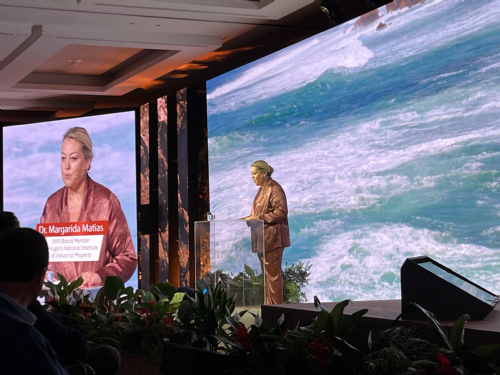
In the Opening Ceremony, Dr Margarida Matias, INPI Board Member, Portugal's National Institute of Industrial Property, Portugal (pictured right) welcomed the delegates to Lisbon and said the Institute is marking its 50th year as a public body this year. “During this period trade marks have become increasingly important intangible assets,” she said, adding: “Above all, trade marks build trust.”
She said that the evolution of trade marks is happening at an unprecedented pace and consumers expect more from brands. “They want to know where a product comes from, how it was made and what value it represents.” This brings both opportunities and challenges – many of which are addressed in the Annual Conference programme.
Dr Matias called for IP systems to promote accessibility, efficiency and effectiveness and to embrace digital transformation while ensuring responsibility and appropriate limits on automation. She also highlighted the importance of geographical indications in Portugal.
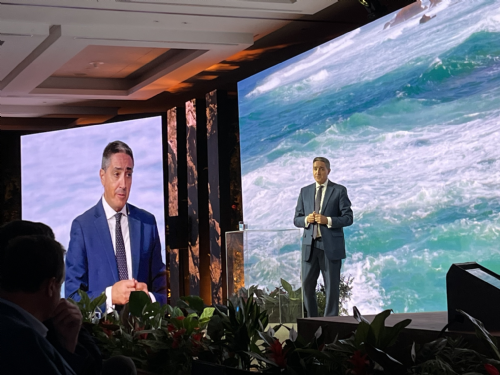 In his speech, João Negrão, Executive Director, EUIPO (left), celebrated the founding vision of MARQUES and the 30th anniversary of the EU trade mark system. This year, EUIPO will pass 5 million EUTM and EUD registrations. “In the IP community, we need to treat designs like we treat other IP rights,” he said, adding that aesthetics are particularly important for young people.
He also thanked MARQUES for its participation in EUIPO activities, saying that interaction with users is critical to the success of EUIPO. “The main challenge in front of us is competitiveness. Europe is less competitive than other regions of the world,” said Mr Negrão. “We need to work together to ensure that businesses will benefit from IP rights in the future.”
 “Business as usual will not work,” he said. “We need to look at IP rights from a business perspective, not a legal perspective … I’m confident we will deliver tangible results.”
In her welcoming remarks, MARQUES Chair Claudia Pappas (right) described how Lisbon has reinvented itself over three millennia, discussed how trade marks are evolving and reviewed recent MARQUES achievements.
Brands, culture and heritage
Paulo Monteverde, Baptista, Monteverde & Associados, Portugal, Member of the MARQUES Geographical Indications Team, moderated Part 1 of the Annual Conference – Brand evolution, culture and collaboration, which focused on the significance of culture and the role of IP in protecting it (pictured below left).
Nuno Sousa e Silva, Pinheiro Torres, Cabral, Sousa e Silva & Associados, Portugal looked at the evolution of geographical indications since the world’s first GI system was created for Port wine in Portugal in 1756. He talked about the “symbiotic relationship” between GIs and trade marks, stating: “The stronger the GI, the more value it will bring to the trade mark.”
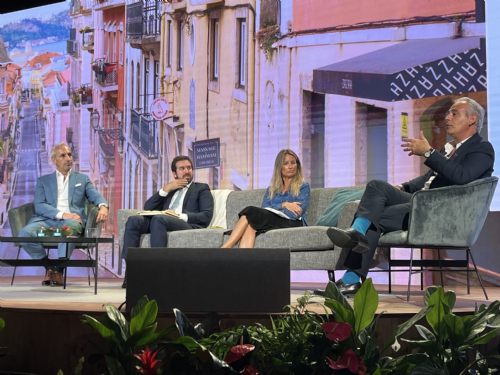 “We’re seeing an increase of brands drawing on a very wide range of cultural references,” said Marta Alves Vieira, VdA – Vieira de Almeida & Associados, Portugal. These include images, traditional symbols, regional names, crafts and other aspects of cultural identity. “The issue is to draw the line between inspiration and appropriation. It’s not always easy,” she said.
This is not just a question of what is protected, but what is credible and respectful: it involves asking a series of questions including about approval, honesty and consultation. Marta gave examples such as Camisola Poveira’s case against Tory Burch, which was resolved following an apology; design applications that were similar to the famous Capote coat, which were considered to lack novelty; and design applications resembling Vilão/Viloa dolls from Madeira, also held to be invalid.
Bringing a creative perspective, Rui Catalão, Rui Catalão Atelier, Portugal, discussed the mercado da saudade, which emphasises traditional and nostalgic cultures and brands. During the panel discussion, Nuno presented the concept of “evocation” of a GI as developed by the EU Court of Justice, noting that this provides broad protection for GIs. He added that it provides an incentive for collaboration between brands and GIs. Marta shared some examples of the protection of the traditional crafts Manteiga dos Açores and Bordado da Madeira. Rui described brands that are working with cultural heritage in interesting ways such as Burel Factory furniture, Nelo kayaks and Corticeira Amorim cork.
Autopsy of a brand
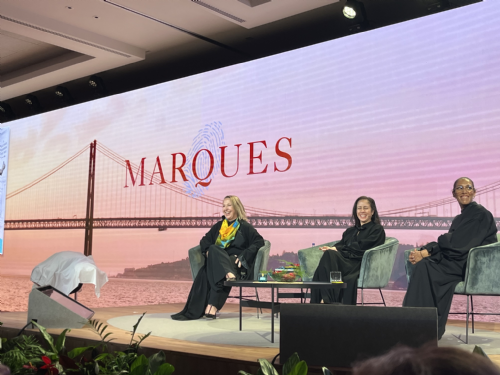 Part 2 of the Annual Conference comprised the autopsy of a (nearly) deceased brand, focusing on diagnosis, prevention and reversal. The brand (“Mark”) appeared on stage covered by a sheet alongside the three speakers, who were all wearing black robes (pictured right).
Luna Samman, Arent Fox Schiff, USA, said that once a mark becomes generic there is no coming back. She asked the audience to remember marks such as Escalator, Thermos and Zipper in a moment of silence. But she added that a good doctor will use any remedy possible to regain a pulse.
Luna said that early warning signs of genericide are dictionary entries, media usage, competitor use, social media and online use, consumer surveys and internal misuse. “Consumers are sometimes our best friends and sometimes our worst enemies,” she said, adding: “Branding starts at home. From marketing to legal, everyone needs to speak the same language.”
In a US case in 2017, Google succeeded in proving that Google still functioned as a source identifier, despite widespread use of “to google” as a verb. Meanwhile, Velcro launched a “Don’t say Velcro” campaign (including a video) to maintain its brand. Ugg boots has become generic for sheepskin boots in Australia but is protected in more than 130 other countries.
Bahia Alyafi, Alyafi IP Group, Middle East stressed the importance of naming, marking and using product names. She also highlighted the need to correct misuse. But, she asked: what can we do to understand the risk of genericism before it becomes a risk? The answer is: a brand DNA audit covering: inventory, allocation, identification and concentration.
The audit needs to map awareness, association and attribution to identify the level of risk and any change over time. “This has to be done in a collaboration between marketing, legal and other departments,” said Bahia. Brands should also provide usable vocabulary to voices such as influencers (and, increasingly, machines) to try to make sure they use the brand correctly. “If we do not fix the feedback loop, there will be a language drift,” she said. Her summary was: control, influence and monitor.
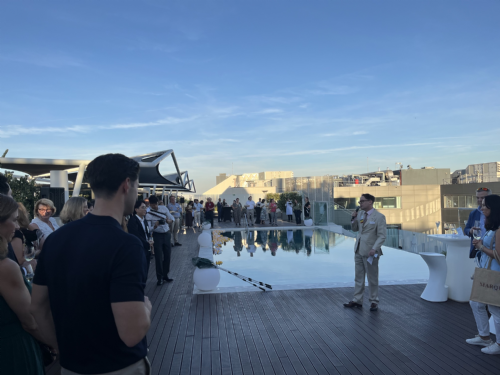 |
| MARQUES 2nd Vice-Chair Tapio Blanc welcomed first-timers at a reception on Tuesday evening |
Catrin Turner, Jellycat Ltd, UK said that genericism is a result of success: “That’s a good place to start from. We should never lose hope for the patient.” She said in-house counsel need three things: mindset, external and internal perspective.
Catrin pointed out that it is not just words that can become generic, but also product shapes. IP counsel need to lead the fight and create “the appearance of rationality” for courts and IP tribunals by building evidence of authenticity, for example through an archive, finding design and quality storytelling, using “look-for …” advertising. Litigation is the last port of call, and laws about unfairness are likely to be most helpful. Internally, she stressed negotiating correct trade mark use, working closely with your customers and building relations between marketing and legal.
The Annual Conference continues until Friday. Further reports will be posted on the Class 46 and Class 99 blogs. Photos taken by MARQUES staff and editor. Speakers do not necessarily represent the views of any organisations mentioned or of MARQUES.
Posted by: Blog Administrator @ 14.13Tags: Annual Conference, Lisbon,
Sharing on Social Media? Use the link below...Perm-A-Link: https://www.marques.org/blogs/class46?XID=BHA5480
Navigating the global patchwork: a new guide to e-commerce and counterfeit goods
The MARQUES Anti-Counterfeiting and Parallel Trade Team has published a new report examining the legal frameworks and challenges in regulating counterfeit sales on cross-border e-commerce (CBEC) platforms across 47 jurisdictions worldwide.
The 24-page report has been prepared in cooperation between the Cross-Border E-commerce and Counterfeit Goods and the Online Brand Protection sub-teams. It is available to download on the Team's page here (MARQUES log-in required).
Based on structured surveys of legal professionals in each jurisdiction, the report sheds light on legal measures, operational challenges, and potential strategies for enhancing enforcement mechanisms across different regions. It covers key topics including takedown measures, staydown enforcement, whitelisting, jurisdiction over non-residents, available legal remedies, obstacles, and protection levels.
Key findings at a glance
- Takedown measures are now a widely recognised baseline, with 89% of surveyed jurisdictions confirming their availability – driven by comprehensive legislation such as the EU’s Digital Services Act, the US Digital Millennium Copyright Act, and China’s E-Commerce Law.
- Staydown measures remain far more challenging: only 13% of jurisdictions confirmed general implementation, while 59% face substantial enforcement challenges. The EU stands out as a particularly favourable jurisdiction, building on the DSA’s mandatory repeat-offender regime and the CJEU’s forward-looking preventive measures established in L'Oréal v eBay.
- Whitelisting has gained limited traction – only 13% of jurisdictions report feasibility, with most relying on platform-specific policies rather than legal mandates.
- Jurisdiction over non-resident sellers is reported by 81% of jurisdictions, yet practical cross-border enforcement remains resource-intensive.
- Civil remedies are widely available (91%), but criminal enforcement varies considerably and is often impractical against non-resident operators.
The findings are enriched with detailed regional analysis, comparing practices in the US, China and the EU, and are accompanied by a series of world maps highlighting the main points.
Looking ahead
There is reason for cautious optimism. The EU's comprehensive regulatory approach, which combines the DSA’s platform accountability framework with established CJEU and national court jurisprudence, not only provides a model that other jurisdictions could consider adopting, but also creates market incentives for platforms to implement robust anticounterfeiting technologies on a global scale.
Once platforms invest in AI-powered filtering systems and automated detection technologies to comply with EU staydown obligations, there is every reason to expect these tools to be deployed worldwide, raising protection levels even in jurisdictions that lack the legal framework to mandate such measures.
International cooperation, harmonisation of staydown obligations, and the proliferation of platform-level technical solutions will be crucial in closing the enforcement gaps that currently allow counterfeit goods to proliferate across borders.
For more information, please contact Stefan Schröter of the ACPT Team.
Posted by: Blog Administrator @ 10.10Tags: e-commerce, counterfeit, anti-counterfeiting,
Sharing on Social Media? Use the link below...Perm-A-Link: https://www.marques.org/blogs/class46?XID=BHA5479
Greece and Poland added to SRO chart

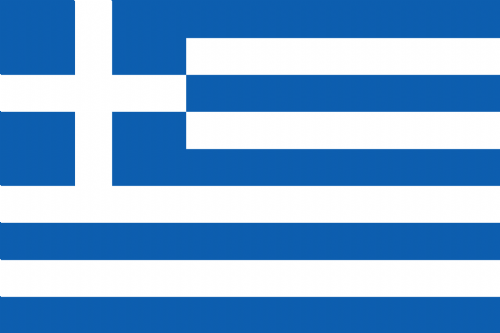
The chart on self-regulatory organisations (SROs) has been updated with new sections on Greece and Poland.
The chart is compiled by the MARQUES Unfair Competition Team and can be downloaded on the Team’s page on the MARQUES website (MARQUES log-in required).
It now covers 14 countries.
Pawel Wac, head of the trade mark team at Polservice, has compiled the report on Poland.
Stefanos Tsimikalis, a Partner of Tsimikalis Kalonarou Law Firm, contributed the report on Greece.
The purpose of the chart is to provide corporate lawyers and attorneys with a practical, user-friendly overview of SROs for advertising and unfair competition matters.
With growing digitalisation and globalisation of advertising and other business activities, it is increasingly important for businesses to familiarise themselves with self-regulation of advertising and other matters.
The chart covers advertising and unfair competition matters, but not consumer protection matters or industry-specific organisations.
The five questions for each jurisdiction encompass: existence and identity of self-regulatory organisations; matters handled; rules, eligible parties and fees; procedure; and penalties and enforceability.
If you have any questions, please contact Alexandra Di Maggio, Rani Mallick, Felipe Dannemann Lundgren or another member of the Unfair Competition Team.
Flags downloaded from https://flagpedia.net
Posted by: Blog Administrator @ 15.43Tags: SRO, Poland, Greece,
Sharing on Social Media? Use the link below...Perm-A-Link: https://www.marques.org/blogs/class46?XID=BHA5478
Short IP Training sessions launched
 Registrations are now open for the Short IP Training sessions, which start on 17 September 2026 with “Introduction to IP”.
The sessions are stand-alone, online, and free of charge training opportunities focused on key EUIPO procedures and practices, which are organised by the EUIPO Academy Department (Knowledge for IP professionals).
They are designed to provide practical knowledge and develop specific competencies, while also serving as a pathway to more advanced learning opportunities, including the European Trade Mark and Design Education Programme (ETMD EP).
The sessions are open to all IP professionals and each can accommodate up to 300 participants. Early registration is encouraged to secure your place.
Participants who successfully attend all Short IP training sessions will be awarded a certificate of completion.
The tracks may be completed over two consecutive years, and the Academy will keep track of your participation records to ensure that your progress is duly recognised.
For example, if you complete all sessions within the trade mark track this year, you may complete all sessions within the design track next year and still qualify for the final certificate.
The MARQUES Education Team has long been involved in the EUIPO’s training initiatives, having supported the ETMD EP since 2018, with Shane Smyth, José Amorim, Sandra Müller and Charlotte Duly serving as members of the Advisory Council and Examination Board as well as tutors and examiners in the programme.
The MARQUES Education Team supports the introduction of the new Short IP Training sessions, which provide flexibility to meet the future of workplaces and training needs, and remains willing to continue to support the EUIPO Academy.
More information including the registration link is available on the EUIPO website here.
Photo reproduced from EUIPO website
Posted by: Blog Administrator @ 10.44Tags: EUIPO Academy, training,
Sharing on Social Media? Use the link below...Perm-A-Link: https://www.marques.org/blogs/class46?XID=BHA5477
One year of eMadrid
WIPO marked one year of eMadrid this week.
There are now 40,000 users of eMadrid, from 200 countries.
WIPO says that 75% of all existing international trademark registrations are being managed through eMadrid and users are sharing over 334,000 trade mark assets across workbenches.
Improvements implemented during the past year include faster representative changes and workbench improvements such as easier checking and updating of email addresses and enhanced filtering on workbench assets.
From October, WIPO will offer refresher webinars in seven languages exploring how eMadrid streamlines international trade mark registration management.
The webinars will cover digital transactions, smart alerts, portfolios and collaboration tools.
Dates and registration details will be published on the WIPO Madrid System webinar page.
WIPO is also inviting users to join its Madrid System user group to shape the future of the digital services available under eMadrid. You can sign up here.
More information is on WIPO’s website here.
Posted by: Blog Administrator @ 15.59Tags: eMadrid, international registration, ,
Sharing on Social Media? Use the link below...Perm-A-Link: https://www.marques.org/blogs/class46?XID=BHA5476
Madrid e-Filing at the USPTO
From 1 October 2026, Madrid e-Filing will be the sole platform for filing new outbound international trademark applications based on US applications and registrations.
Until 30 September, there is a transitional period during which US applicants can use either Madrid e-Filing or the USPTO’s Trademark Electronic Application System International (TEASi).
Madrid e-Filing enables international trademark registration applicants to file online, communicate directly with the office of origin, and receive and respond to irregularity notices issued by WIPO. The service is designed to save time and reduce the risk of filing errors.
Use of Madrid e-Filing requires a WIPO account.
More information on how to file through Madrid e-Filing and the key changes is available on WIPO’s website here, along with links to further resources.
WIPO is also planning live demonstrations in September: details will be available in due course on the Madrid System webinar page.
Posted by: Blog Administrator @ 13.51Tags: Madrid System, USPTO, IR,
Sharing on Social Media? Use the link below...Perm-A-Link: https://www.marques.org/blogs/class46?XID=BHA5475


