
CLASS 99
The blog for design law, in Europe and worldwide. This weblog is written by a team of design experts and fans. To contribute, or join us, or for any other reason, email class99@marques.org.
Want to receive Class 99 by email?
Click here subscribe for free.
Click here subscribe for free.
Who we all are...
THURSDAY, 6 JUNE 2013
Stays? Watch this space, say General Court
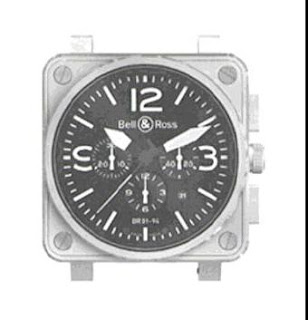 OHIM's Alicante News for May notifies us of a new General Court decision on Community Designs - Case T-80/10; Bell & Ross BV / OHIM, Klockgrossisten i Norden AB intervening; Judgment of 25 April 2013. Unfortunately, as so often, it is available only in French at this point so the following is based on OHIM's summary, my poor French, and Google Translate. If any French readers would care to add anything, feel free.
The name may be familiar to you. If so, it is because you remember the sad story of Bell & Ross' previous visit to the General Court, and thence to the Court of Justice.
The design in this case, RCD 342951-0002 (depicted to the right), is one of two closely similar watch designs which were challenged by Klockgrossisten i Norden.
The first, RCD 342951-0001, was heard before the first instance as ICD 4299, then before the Board of Appeal as R1267/2008-3. Bell & Ross then filed an appeal to the General Court, but only the fax and not the signed original arrived in time. By decision in Case T-51/10 the General Court therefore threw out their appeal on formal grounds. The Court of Justice upheld the General Court in Decision C-426/10P. Got that? Well, that was the end of the road on that design, but its sister design went along the same path: first instance decision ICD 4307; Board of Appeal judgment R1285/2008-3; and now, at last, the General Court decision T-80/10 which, since everything was timely filed, is on some interesting procedural and substantive issues.
Initially, the decision deals with some procedural issues. The proprietor sued the applicant for invalidity in the Commercial Court in Paris, six years ago in 2007. The applicant for invalidity responded by filing an OHIM invalidation action - but in the wrong language. They then counterclaimed for invalidity, but asked for a stay before the Paris Court. Meanwhile, they were told by OHIM of their error, and reapplied in French. Instead of the OHIM proceedings being the first-filed (which would have mandated the Court to stay the proceedings under CDR Art 91(1)), they were second-filed, so OHIM had to consider whether or not it should stay instead under CDR Art 91(2). OHIM decided not to. They were upheld on this by the General Court. My French is not up to understanding precisely why, but it is potentially an interesting issue for litigators. The reasoning included - sensibly enough - the fact that the French Court had decided to stay their own proceedings pending the decision to be taken by the Invalidity Division (para. 52-53).
There was then an argument about a late-filed bit of evidence - cited at the appeal stage. Bell & Ross cited Article 6 of the European Convention on Human Rights which, as higher-ranking legislation, is always possible but generally smells of desparation. It got them nowhere. From the point of view of the General Court, both instances of OHIM are administrative so the Board of Appeal is required to conduct essentially a re-hearing rather than a mere review, and failure by the first instance does not impact the legality of the Board’s decision, which is what is under appeal (para. 88-90). In any event, it was admittedly the case that Bell & Ross knew about the evidence concerned from the French proceedings.
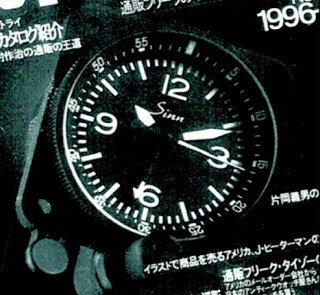
On to the substance. The prior art, below, was apparently a prior Japanese aircraft panel clock. So the design had been "transposed" from one sector - aircraft - to another - watches. Which can, sometimes, be quite an innovative thing to do. However, in this case the evidence showed that there had in the past been "pilot watches" and other transpositions from the aircraft sector to the watch sector. This dog therefore did not fight.
Bell & Ross argued that the high cost of quality watches would mean that the informed user would pay particular attention and therefore see more differences - a pretty reasonable trade mark argument. They also claimed that the price was so high that one bought the watch purely for aesthetic reasons, as an item of jewellery, the function of reading the time being more or less irrelevant.
The General Court disagreed - "the examination of the individual character of a design is whether the overall impression produced by this latter differs from overall impressions produced by the designs previously disclosed, regardless of aesthetic or commercial considerations" (para. 107-108). The informed user was reasonably but not particularly observant. Further, the process of creation, the commercial success and the degree of market recognition of the design among the public are irrelevant when comparing designs (para. 145-146).
The front faces of the two designs were fairly similar, but there was an issue about the side views (specifically, the thickness). However, the General Court concluded that (to quote with thanks from OHIM) the difference in the thickness has only a ‘weak influence on the overall impression’ given that a cockpit clock is designed to be inserted in the aircraft’s dashboard, with the result that the profile view is mostly invisible during normal use thereof (para. 132-135). Likewise, the thickness of a wrist watch determines only to a marginal extent the impression left by this watch (para. 136). The key was the impression created by each of the designs when in use.
On the other hand, the Board of Appeal had held that aspects of the hands were to be disregarded as being functional (the function of telling the time). The General Court accepted Bell & Howell's argument that the Board was wrong - these elements did contribute to the overall impression. However, they didn't contribute very much since they were commonplace, and also rather small and inconspicuous (para. 151-159). So the two created the same overall impression. Collapse of design, and presumably of infringement action too. As we may have said before, the timings of this invalidation track are problematic in the real world of designs, which may last only a few seasons. The whole invalidation process so far has taken six years, and we still potentially have a Court of Justice stage to go. The General Court are busy people, but the process before them has taken 3 years. Isn't there any way that the process can be sped up where, as here, there is parallel litigation?
Posted by: David Musker @ 16.55
Tags: appeal, France, general court, invalidation, OHIM, overall impression, stay of proceedings, watches,
Perm-A-Link: https://www.marques.org/blogs/class99?XID=BHA461
Stays? Watch this space, say General Court
The name may be familiar to you. If so, it is because you remember the sad story of Bell & Ross' previous visit to the General Court, and thence to the Court of Justice.
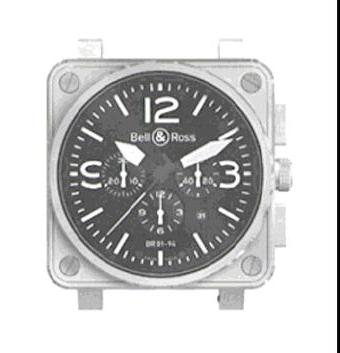
The design in this case, RCD 342951-0002 (depicted to the right), is one of two closely similar watch designs which were challenged by Klockgrossisten i Norden.
The first, RCD 342951-0001, was heard before the first instance as ICD 4299, then before the Board of Appeal as R1267/2008-3. Bell & Ross then filed an appeal to the General Court, but only the fax and not the signed original arrived in time. By decision in Case T-51/10 the General Court therefore threw out their appeal on formal grounds. The Court of Justice upheld the General Court in Decision C-426/10P. Got that? Well, that was the end of the road on that design, but its sister design went along the same path: first instance decision ICD 4307; Board of Appeal judgment R1285/2008-3; and now, at last, the General Court decision T-80/10 which, since everything was timely filed, is on some interesting procedural and substantive issues.
Initially, the decision deals with some procedural issues. The proprietor sued the applicant for invalidity in the Commercial Court in Paris, six years ago in 2007. The applicant for invalidity responded by filing an OHIM invalidation action - but in the wrong language. They then counterclaimed for invalidity, but asked for a stay before the Paris Court. Meanwhile, they were told by OHIM of their error, and reapplied in French. Instead of the OHIM proceedings being the first-filed (which would have mandated the Court to stay the proceedings under CDR Art 91(1)), they were second-filed, so OHIM had to consider whether or not it should stay instead under CDR Art 91(2). OHIM decided not to. They were upheld on this by the General Court. My French is not up to understanding precisely why, but it is potentially an interesting issue for litigators. The reasoning included - sensibly enough - the fact that the French Court had decided to stay their own proceedings pending the decision to be taken by the Invalidity Division (para. 52-53).
There was then an argument about a late-filed bit of evidence - cited at the appeal stage. Bell & Ross cited Article 6 of the European Convention on Human Rights which, as higher-ranking legislation, is always possible but generally smells of desparation. It got them nowhere. From the point of view of the General Court, both instances of OHIM are administrative so the Board of Appeal is required to conduct essentially a re-hearing rather than a mere review, and failure by the first instance does not impact the legality of the Board’s decision, which is what is under appeal (para. 88-90). In any event, it was admittedly the case that Bell & Ross knew about the evidence concerned from the French proceedings.
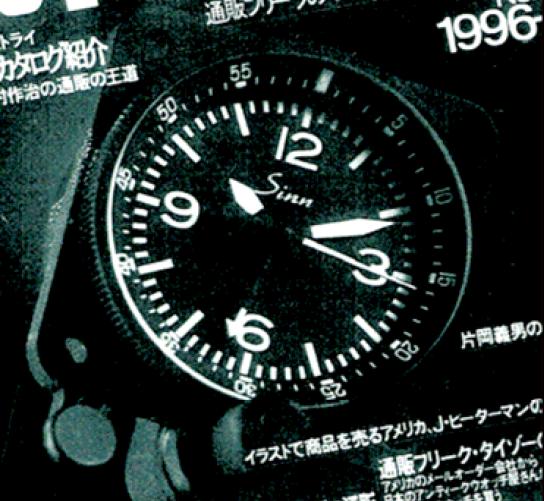
On to the substance. The prior art, below, was apparently a prior Japanese aircraft panel clock. So the design had been "transposed" from one sector - aircraft - to another - watches. Which can, sometimes, be quite an innovative thing to do. However, in this case the evidence showed that there had in the past been "pilot watches" and other transpositions from the aircraft sector to the watch sector. This dog therefore did not fight.
Bell & Ross argued that the high cost of quality watches would mean that the informed user would pay particular attention and therefore see more differences - a pretty reasonable trade mark argument. They also claimed that the price was so high that one bought the watch purely for aesthetic reasons, as an item of jewellery, the function of reading the time being more or less irrelevant.
The General Court disagreed - "the examination of the individual character of a design is whether the overall impression produced by this latter differs from overall impressions produced by the designs previously disclosed, regardless of aesthetic or commercial considerations" (para. 107-108). The informed user was reasonably but not particularly observant. Further, the process of creation, the commercial success and the degree of market recognition of the design among the public are irrelevant when comparing designs (para. 145-146).
The front faces of the two designs were fairly similar, but there was an issue about the side views (specifically, the thickness). However, the General Court concluded that (to quote with thanks from OHIM) the difference in the thickness has only a ‘weak influence on the overall impression’ given that a cockpit clock is designed to be inserted in the aircraft’s dashboard, with the result that the profile view is mostly invisible during normal use thereof (para. 132-135). Likewise, the thickness of a wrist watch determines only to a marginal extent the impression left by this watch (para. 136). The key was the impression created by each of the designs when in use.
On the other hand, the Board of Appeal had held that aspects of the hands were to be disregarded as being functional (the function of telling the time). The General Court accepted Bell & Howell's argument that the Board was wrong - these elements did contribute to the overall impression. However, they didn't contribute very much since they were commonplace, and also rather small and inconspicuous (para. 151-159). So the two created the same overall impression. Collapse of design, and presumably of infringement action too. As we may have said before, the timings of this invalidation track are problematic in the real world of designs, which may last only a few seasons. The whole invalidation process so far has taken six years, and we still potentially have a Court of Justice stage to go. The General Court are busy people, but the process before them has taken 3 years. Isn't there any way that the process can be sped up where, as here, there is parallel litigation?
Posted by: David Musker @ 16.55
Tags: appeal, France, general court, invalidation, OHIM, overall impression, stay of proceedings, watches,
Perm-A-Link: https://www.marques.org/blogs/class99?XID=BHA461
MARQUES does not guarantee the accuracy of the information in this blog. The views are those of the individual contributors and do not necessarily reflect those of MARQUES. Seek professional advice before action on any information included here.
The Class 99 Archive

