
CLASS 99
The blog for design law, in Europe and worldwide. This weblog is written by a team of design experts and fans. To contribute, or join us, or for any other reason, email class99@marques.org.
Want to receive Class 99 by email?
Click here subscribe for free.
Click here subscribe for free.
Who we all are...
FRIDAY, 8 JUNE 2012
Manual revision should come in handy ...
"Manual Revision in RCD Invalidity Proceedings" is the title of the design article in OHIM's latest Alicante News. It runs like this:
Tags: invalidity proceedings, OHIM manual,
Perm-A-Link: https://www.marques.org/blogs/class99?XID=BHA351
Manual revision should come in handy ...
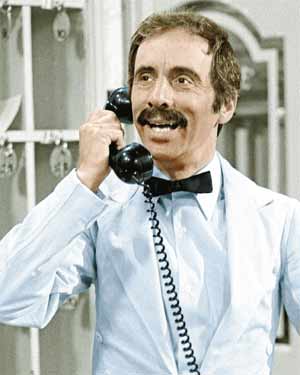 |
| Note for poor spellers: OHIM's Manual comes from Alicante, but Manuel comes from Barcelona ... |
"As part of the Office’s ongoing commitment to ensuring the best possible quality in the services provided to its users, a revision of the manual relating to invalidity proceedings of registered Community designs (‘RCD’) has been carried out. The purpose of this revision is to make available to RCD applicants and legal practitioners a first point of reference which reflects the practice of the Office [This is welcome: it's a cross between helpful guidance and invaluable demystification -- but it is only a reflection of OHIM practice and is not a binding document]. The revision focused on both procedural and substantive issues with the aim of aligning, where possible, the RCD invalidity proceedings with the CTM cancellation practice [Procedural issues, involving evidence, deadlines, extensions etc, are easier to align as between RCDs and CTMs since they raise the same concerns in much the same manner, while substantive issues are harder to align since the objectives of RCD and CTM registration, invalidity etc are so very different]. The case-law of the Boards of Appeal and of the Luxembourg courts has also been integrated into the manual in order to foster coherence and predictability with respect to RCD invalidity decisions [Bearing in mind that there's a vast quantity of CTM Luxembourg case law and relatively little for RCDs, one assumes that the gravitational pull of the larger body].It might be ignorance, poor eyesight or a case of overdoing it at the computer, but this blogger had rather expected to find a hyperlink from this news item on the Manual to the text of the Manual itself. Now here's a challenge for readers: what is the smallest number of click-throughs that will take the reader from this page of Alicante News to the relevant page of the Manual? Posted by: Blog Administrator @ 10.33
The main innovations can be summarised as follows.
The manual emphasises that the application for a declaration of invalidity of a RCD shall contain a clear and precise statement of the grounds relied on by the invalidity applicant. New grounds subsequently put forward before the Invalidity Division will be automatically declared inadmissible [In a perfect world this would never cause any problems, but it is not unheard of for an invalidity applicant to maintain that his grounds, though not explicitly stated, are clearly and precisely to be implied from what he has stated].
In compliance with the Judgment of 12 May 2010, Case T-148/08, Beifa Group Co. Ltd / OHIM, (Instrument for writing), ECR II-1681 [noted by Class 99 here], where the invalidity applicant claims that the RCD shall be declared invalid on the basis of a conflict with an earlier trade mark within the meaning of Article 25 (1) (e) CDR, the RCD holder is entitled to request proof of use of the earlier trade mark in his/her first observations in reply to the application. In this respect the same rules as those applying to CTM opposition proceedings will apply [This blogger understood Beifa to require that the use of the earlier trade mark be its use as a design, not as a trade mark. Is this correct? If so, the nature of proof of use of the same earlier mark may be different in RCD invalidity proceedings to trade mark opposition or invalidity proceedings].
Regarding substantive issues, the manual mirrors the position adopted by the Boards of Appeal with respect to the interpretation of the notion of functionality, within the context of Article 8 (1) CDR. The approach adopted is one which does not look at alternative shapes, but rather considers only the design at issue. Article 8 (1) CDR does not require that a given feature is the only means by which the product’s technical function can be achieved, but rather requires an evaluation of whether the technical function in question was the only relevant factor in the selection of that given feature (the key word in Article 8 (1) CDR being ‘solely’). The fact that a particular feature of a product’s appearance is denied protection by Article 8 (1) CDR does not mean that the whole design must be declared invalid, pursuant to Article 25 (1) (b) CDR. The design as a whole will be invalid only if all the essential features of the appearance of the product in question were solely dictated by its technical function. [A cynic might say that this formulation is sufficiently flexible to prevent the majority of outcomes being confidently predicted ahead of a ruling]
Finally, it is recalled that when examining an application for a RCD, the Office does not verify whether the application concerns the ‘same design or utility model’ whose priority is claimed. However, the examination of a priority claim will be carried out by the Office if the invalidity applicant challenges the validity of this priority claim, or if the holder challenges the effects of the disclosure of a design for purposes of Articles 5, 6 and 7 CDR, where the disclosure occurred within the priority period.
In such a case, the Office will examine whether the priority claim is valid. A priority claim relating to the ‘same design or utility model’ requires identity with the corresponding RCD without addition or suppression of features".
Tags: invalidity proceedings, OHIM manual,
Perm-A-Link: https://www.marques.org/blogs/class99?XID=BHA351
MARQUES does not guarantee the accuracy of the information in this blog. The views are those of the individual contributors and do not necessarily reflect those of MARQUES. Seek professional advice before action on any information included here.
The Class 99 Archive

