
CLASS 99
The blog for design law, in Europe and worldwide. This weblog is written by a team of design experts and fans. To contribute, or join us, or for any other reason, email class99@marques.org.
Want to receive Class 99 by email?
Click here subscribe for free.
Click here subscribe for free.
Who we all are...
TUESDAY, 10 JANUARY 2012
First cellphone invalidation at OHIM?
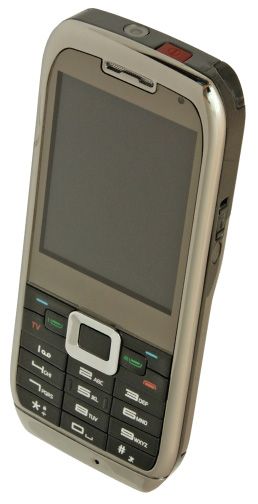 Thanks to reader (and Finnish design guru) Nina Mikander for bringing to our attention OHIM Invalidation Case ICD 8242, concerning RCD 001734401-0001, depicted. It was opposed by Nokia on the basis of their own earlier designs RCD 000790589-0001 and RCD 000766332-0002.
No fundamental point of law arises in the decision, but it makes interesting reading against the backdrop of the Apple/Samsung litigation. According to OHIM's decision in this case at paras 20-21:
"However, as far as the size of the screen, the lines and the place of each and every key of the keypad are concerned, the designer can exercise freely his right to creativity and add unique features that will make his mobile phones distinguish it from others. Therefore, the functionality as well as the design quality of telephones is the prime concern of the informed user. The various designs sold in the market have shown that the telephone companies have succeeded in integrating these features in their mobile phones without ever losing the identity of their design and, inevitably, the informed user will pay attention to the design details that attribute a distinctive character to the mobile phone of a certain company and act as a guarantee of origin of the product.
The RCD presents certain features such as a front panel, screen and control keypad. The presence of these features above is undoubtedly imposed by the technical function of a telephone. The absence, for example, of the keypads would alter the character of the product and most evidently would lead to a malfunction of the mobile phone, not being able to dial or text any messages. Nonetheless, the end purpose of a telephone could be achieved by many equally valid solutions and produce a design objectively attractive as well as functional."
Thus, the fact that there are some highly technical aspects to the design was not relevant - there was actually considerable design freedom, and the similarities between the phone and the citations were not dictated by function, so the design was invalid.
The comments about the design acting as a guarantee of origin are interesting - that is normally a trade mark function. If that is a legitimate function of a design, it may be that erosion of such a guarantee by infringements would be a ground for an interlocutory or interim injunction, as was (unsuccessfully) argued in the US Apple case we reviewed recently here.
In passing, it is interesting to note that the opposed design was a "hybrid" - it consisted of six line drawings and a rendered image (above). OHIM lets you do this, but the protection is presumably limited to the features shown in the rendered image. So, is there any point in preparing and filing line drawings? Posted by: David Musker @ 16.49
Tags: cellphone, invalidation, Invalidity, OHIM, telecommunications, telephone,
Perm-A-Link: https://www.marques.org/blogs/class99?XID=BHA314
First cellphone invalidation at OHIM?
No fundamental point of law arises in the decision, but it makes interesting reading against the backdrop of the Apple/Samsung litigation. According to OHIM's decision in this case at paras 20-21:
"However, as far as the size of the screen, the lines and the place of each and every key of the keypad are concerned, the designer can exercise freely his right to creativity and add unique features that will make his mobile phones distinguish it from others. Therefore, the functionality as well as the design quality of telephones is the prime concern of the informed user. The various designs sold in the market have shown that the telephone companies have succeeded in integrating these features in their mobile phones without ever losing the identity of their design and, inevitably, the informed user will pay attention to the design details that attribute a distinctive character to the mobile phone of a certain company and act as a guarantee of origin of the product.
The RCD presents certain features such as a front panel, screen and control keypad. The presence of these features above is undoubtedly imposed by the technical function of a telephone. The absence, for example, of the keypads would alter the character of the product and most evidently would lead to a malfunction of the mobile phone, not being able to dial or text any messages. Nonetheless, the end purpose of a telephone could be achieved by many equally valid solutions and produce a design objectively attractive as well as functional."
Thus, the fact that there are some highly technical aspects to the design was not relevant - there was actually considerable design freedom, and the similarities between the phone and the citations were not dictated by function, so the design was invalid.
The comments about the design acting as a guarantee of origin are interesting - that is normally a trade mark function. If that is a legitimate function of a design, it may be that erosion of such a guarantee by infringements would be a ground for an interlocutory or interim injunction, as was (unsuccessfully) argued in the US Apple case we reviewed recently here.
In passing, it is interesting to note that the opposed design was a "hybrid" - it consisted of six line drawings and a rendered image (above). OHIM lets you do this, but the protection is presumably limited to the features shown in the rendered image. So, is there any point in preparing and filing line drawings? Posted by: David Musker @ 16.49
Tags: cellphone, invalidation, Invalidity, OHIM, telecommunications, telephone,
Perm-A-Link: https://www.marques.org/blogs/class99?XID=BHA314
MARQUES does not guarantee the accuracy of the information in this blog. The views are those of the individual contributors and do not necessarily reflect those of MARQUES. Seek professional advice before action on any information included here.
The Class 99 Archive

