
CLASS 99
The blog for design law, in Europe and worldwide. This weblog is written by a team of design experts and fans. To contribute, or join us, or for any other reason, email class99@marques.org.
Want to receive Class 99 by email?
Click here subscribe for free.
Click here subscribe for free.
Who we all are...
FRIDAY, 7 OCTOBER 2011
Aesthetic Functionality in the EU? Second time unlikely for B&O
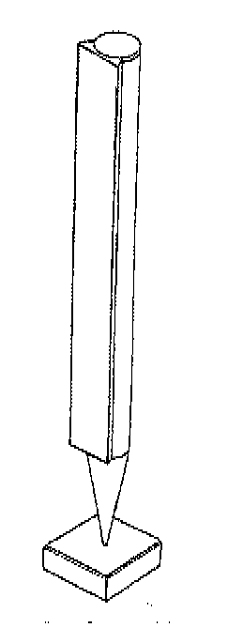 Under reference T-508/08, the EU General Court has issued its first substantive decision (first I'm aware of, anyway) on Europe's "aesthetic functionality" exclusion of shape marks, under CTMR Art 7(1)(e)(iii) (equivalent to TM Directive Art 3(1)(e)(iii)) which excludes registration of marks of "the shape which gives substantial value to the goods".
It is doubtful whether anyone has a clear idea of the limits of this exclusion, or its controversial US case-law prototype. On the one hand, any shape mark adds value - if it didn't, who would bother spending the money to register it? On the other, some consider that only high art is excluded. In the muddled middle, many hope that it has a narrow scope. Those hopes may just have been dashed.
The subject was the BEOLAB 8000, a "design classic" loudspeaker by Scandinavian high-concept audio company Bang & Olufsen. It had been registered as a design in Denmark in 1991 (and no doubt elsewhere - see for example GB design 2021348 and US Design Patent D344950). The CTM application was filed in 2003, refused by OHIM at two levels as being non-distinctive, then appealed to the General Court which reversed OHIM in judgment T-460/05. They held that the shape "creates a striking design which is remembered easily" and could therefore not be rejected as being devoid of distinctive, character - which was widely seen as a victory for B&O.
Not so. The case was reconsidered by OHIM's First Board of Appeal and refused again, in decision R 497/2005-1 - this time, on the basis of CTMR Art 7(3)(e)(iii) - hence the second appeal to the General Court. The design was, if anything, too distinctive for its own good. The Board held that "In principle, the same sign may be protected under trade mark law and design law, copyright law, patent law, title law etc., each depending on its individual conditions (cf. ... Case R 856/2004-G... Lego brick, at paragraph 39). Nevertheless, such kind of multiple protection is not without limits following Article 7(1)(e) CTMR. … The trade mark applied for was protected as a design at least at the Danish Patent and Trade Mark Office ..."
The GC upheld OHIM second time around. They relied on the Opinion of A-G Ruiz-Jarabo Colomer in the Philips case for the proposition that "the immediate purpose in barring registration of ... shapes which give substantial value to the goods is to prevent the exclusive and permanent right which a trade mark confers from serving to extend the life of other rights which the legislature has sought to make subject to ‘limited periods’." If this is correct, it would seem to simply exclude trade mark protection for any registered design after its expiry - a sweeping result.
Is there any way round this? Would it be better not to register designs at all if you want shape mark protection in the end? That might not do it - after all, many designs are protected automatically by a three year unregistered Community design, which is difficult to avoid, not to mention copyright. And in any event, it would be an illogical result if an unregistered design got better protection than a registered one.
In the event, the GC's decision did not turn on design registrations but on the fact that advertising material showed the shape to be a major selling point. That approach seems to leave few shape marks open to registration - in their first assault on this shape mark OHIM struck it down as too commonplace to be distinctive and in their second they used the fact that it was not commonplace to strike it down as adding value.
Some urgent clarification of the overlap between European designs and trade marks seems desirable, if we are to find any middle way between Scylla and Charybdis. Posted by: David Musker @ 15.01
Tags: advocate general's opinion, general court, loudspeaker, OHIM, substantial value,
Perm-A-Link: https://www.marques.org/blogs/class99?XID=BHA292
Aesthetic Functionality in the EU? Second time unlikely for B&O
It is doubtful whether anyone has a clear idea of the limits of this exclusion, or its controversial US case-law prototype. On the one hand, any shape mark adds value - if it didn't, who would bother spending the money to register it? On the other, some consider that only high art is excluded. In the muddled middle, many hope that it has a narrow scope. Those hopes may just have been dashed.
The subject was the BEOLAB 8000, a "design classic" loudspeaker by Scandinavian high-concept audio company Bang & Olufsen. It had been registered as a design in Denmark in 1991 (and no doubt elsewhere - see for example GB design 2021348 and US Design Patent D344950). The CTM application was filed in 2003, refused by OHIM at two levels as being non-distinctive, then appealed to the General Court which reversed OHIM in judgment T-460/05. They held that the shape "creates a striking design which is remembered easily" and could therefore not be rejected as being devoid of distinctive, character - which was widely seen as a victory for B&O.
Not so. The case was reconsidered by OHIM's First Board of Appeal and refused again, in decision R 497/2005-1 - this time, on the basis of CTMR Art 7(3)(e)(iii) - hence the second appeal to the General Court. The design was, if anything, too distinctive for its own good. The Board held that "In principle, the same sign may be protected under trade mark law and design law, copyright law, patent law, title law etc., each depending on its individual conditions (cf. ... Case R 856/2004-G... Lego brick, at paragraph 39). Nevertheless, such kind of multiple protection is not without limits following Article 7(1)(e) CTMR. … The trade mark applied for was protected as a design at least at the Danish Patent and Trade Mark Office ..."
The GC upheld OHIM second time around. They relied on the Opinion of A-G Ruiz-Jarabo Colomer in the Philips case for the proposition that "the immediate purpose in barring registration of ... shapes which give substantial value to the goods is to prevent the exclusive and permanent right which a trade mark confers from serving to extend the life of other rights which the legislature has sought to make subject to ‘limited periods’." If this is correct, it would seem to simply exclude trade mark protection for any registered design after its expiry - a sweeping result.
Is there any way round this? Would it be better not to register designs at all if you want shape mark protection in the end? That might not do it - after all, many designs are protected automatically by a three year unregistered Community design, which is difficult to avoid, not to mention copyright. And in any event, it would be an illogical result if an unregistered design got better protection than a registered one.
In the event, the GC's decision did not turn on design registrations but on the fact that advertising material showed the shape to be a major selling point. That approach seems to leave few shape marks open to registration - in their first assault on this shape mark OHIM struck it down as too commonplace to be distinctive and in their second they used the fact that it was not commonplace to strike it down as adding value.
Some urgent clarification of the overlap between European designs and trade marks seems desirable, if we are to find any middle way between Scylla and Charybdis. Posted by: David Musker @ 15.01
Tags: advocate general's opinion, general court, loudspeaker, OHIM, substantial value,
Perm-A-Link: https://www.marques.org/blogs/class99?XID=BHA292
MARQUES does not guarantee the accuracy of the information in this blog. The views are those of the individual contributors and do not necessarily reflect those of MARQUES. Seek professional advice before action on any information included here.
The Class 99 Archive

