
CLASS 99
The blog for design law, in Europe and worldwide. This weblog is written by a team of design experts and fans. To contribute, or join us, or for any other reason, email class99@marques.org.
Want to receive Class 99 by email?
Click here subscribe for free.
Click here subscribe for free.
Who we all are...
THURSDAY, 13 OCTOBER 2011
More from Poland - Not such a clean business?
Another case comment from Krystian Maciaszek, this one exclusive to Class 99 although I'm sorry to say it has sat in my in-tray for a little while. I quote:

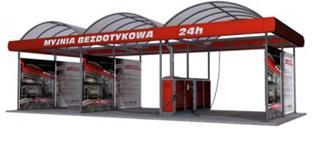 The defendant offers self-serviced car washes, see left (the photo is taken from the internet website of the defendant, from the description of the judgement it appears that it was this construction).
1) In the light of the above case, the court stated that „the car wash of the defendant and the design of the plaintiff are similar in this that they are based on the construction of a shed. This element is however not new or individual in its character, therefore it will not be taken into consideration by an informed user.” In my opinion, one can agree with such a standpoint. It corresponds with a German theory of a basic form ("grund form"), especially clearly seen in this case.Consequently, the Court acknowledged that „the designs should be compared by including new traits and not known and generally accessible. The elements of folklore or style created historically for example, do not belong to the content of the law. The right to the registration does not include these attributes which are of public property, but only new, important traits of the design. Such existence of the same general impression does not always decides about the imitation; it is often an unavoidable consequence of the situation, where the appearance of the object is inspired by traditions or highly defined by its use function.”
I do not have major comments to the first part of the argument of the court, but its statement that “existence of the same general impression does not always decides about the imitation” may seem to be too far going. It seems that the court said too much, since the occurrence of the same general impression exerted on an informed user is a prerequisite of infringing the right to the design registration – and the arguments of different courts often begin their own life independently of its context and such categorical statement could easily be used against the substance of the norm. It would be more appropriate to refer for example to a similarity and concurrent elements belonging to public sphere. It should also be reserved that indeed the protection deriving from the registration does not include the elements of the design belonging to the public sphere, however it does not exclude granting of the protection for a design that constitutes their combination fulfilling the prerequisites of the protection.
2) The court had also stated that the „informed user is such who is more perspicacious and has a better than the usual one, knowledge of the object. It is not an artist himself or usual consumer or an expert in a specified area but a person who lies in between them. Specified qualifications are required from aware user, therefore it cannot be the consumer, but a person that uses the object and exerts it as an expert. Not necessarily does it have to be an end user.”
By the title of the commentary to the above argumentation of the court, I would like to note that it is difficult for me to avoid an impression that the court got into some contradiction, separating an expert of the patent law from the informed user – something that is right – and stating next that the informed user uses the object as an expert. If an aware user has its separate status, then it cannot be stated that he uses (exerts) the object as an expert, then his attention and knowledge, which should be taken into account would be higher than it should be.
3) Recently, the participation of the experts in the evidence proceedings in the cases of infringing the industrial designs has been widely discussed at the forum of the European representatives of the industrial design law practice. Therefore, the standpoint of the court should be noted, according to which “the evaluation of the similarity (existence or lack of different general impression) made in the matter of infringement of the community design has a normative character, similar as in the cases of infringement of community trademarks. The court includes evidence material offered by the parties of the proceedings. The opinion of the expert who is not an aware user but an expert cannot in any case decide about adjustment of the dispute. The expert can however assist with help to the court, indicating to the similarities and differences occurring in the design and contrasted product, explaining what is the range of the creative freedom when working on a defined kind of designs, as long as it is disputable between the parties. The opinion is not therefore a necessary or exclusive evidence, deciding in the matter of infringement”. On the ground of the Polish jurisdiction, it is insomuch beneficial standpoint that completely contrary has been presented in the earlier jurisdiction of the Supreme Court (a judgement of October 23, 2007, IICSK 302/07). As it can be seen, the matter is rather problematic, all the more, important meaning for the result of the case cannot be refused.
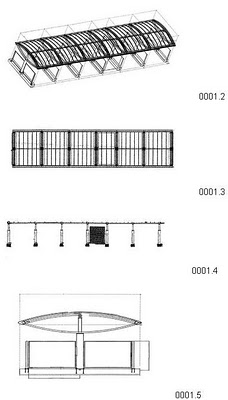
Apart from my comments related to the judgement, I would like to refer to the way of the application of the subject community industrial design. In my opinion, we are in fact dealing with two designs, the first one presented on the color photo and the second one presented on the schematic drawings. The differences between them exceed the level of insignificant dissimilarities. I am curious about the opinions of the readers in this respect.
So, dear readers, what do you think? Posted by: David Musker @ 14.47
Tags: informed user, Poland,
Perm-A-Link: https://www.marques.org/blogs/class99?XID=BHA288
More from Poland - Not such a clean business?
Another case comment from Krystian Maciaszek, this one exclusive to Class 99 although I'm sorry to say it has sat in my in-tray for a little while. I quote:
The Court for the Community Trademarks and Community Designs in Warsaw in the judgement of July 30, 2010 (signature file: XXII GWwp 8/10) decided on lack of infringement of the right to the registration of the community trademark. The case referred to the infringement of the community industrial design of the self-serviced car wash RCD 000417852–0001.
1) In the light of the above case, the court stated that „the car wash of the defendant and the design of the plaintiff are similar in this that they are based on the construction of a shed. This element is however not new or individual in its character, therefore it will not be taken into consideration by an informed user.” In my opinion, one can agree with such a standpoint. It corresponds with a German theory of a basic form ("grund form"), especially clearly seen in this case.
I do not have major comments to the first part of the argument of the court, but its statement that “existence of the same general impression does not always decides about the imitation” may seem to be too far going. It seems that the court said too much, since the occurrence of the same general impression exerted on an informed user is a prerequisite of infringing the right to the design registration – and the arguments of different courts often begin their own life independently of its context and such categorical statement could easily be used against the substance of the norm. It would be more appropriate to refer for example to a similarity and concurrent elements belonging to public sphere. It should also be reserved that indeed the protection deriving from the registration does not include the elements of the design belonging to the public sphere, however it does not exclude granting of the protection for a design that constitutes their combination fulfilling the prerequisites of the protection.
2) The court had also stated that the „informed user is such who is more perspicacious and has a better than the usual one, knowledge of the object. It is not an artist himself or usual consumer or an expert in a specified area but a person who lies in between them. Specified qualifications are required from aware user, therefore it cannot be the consumer, but a person that uses the object and exerts it as an expert. Not necessarily does it have to be an end user.”
By the title of the commentary to the above argumentation of the court, I would like to note that it is difficult for me to avoid an impression that the court got into some contradiction, separating an expert of the patent law from the informed user – something that is right – and stating next that the informed user uses the object as an expert. If an aware user has its separate status, then it cannot be stated that he uses (exerts) the object as an expert, then his attention and knowledge, which should be taken into account would be higher than it should be.
3) Recently, the participation of the experts in the evidence proceedings in the cases of infringing the industrial designs has been widely discussed at the forum of the European representatives of the industrial design law practice. Therefore, the standpoint of the court should be noted, according to which “the evaluation of the similarity (existence or lack of different general impression) made in the matter of infringement of the community design has a normative character, similar as in the cases of infringement of community trademarks. The court includes evidence material offered by the parties of the proceedings. The opinion of the expert who is not an aware user but an expert cannot in any case decide about adjustment of the dispute. The expert can however assist with help to the court, indicating to the similarities and differences occurring in the design and contrasted product, explaining what is the range of the creative freedom when working on a defined kind of designs, as long as it is disputable between the parties. The opinion is not therefore a necessary or exclusive evidence, deciding in the matter of infringement”. On the ground of the Polish jurisdiction, it is insomuch beneficial standpoint that completely contrary has been presented in the earlier jurisdiction of the Supreme Court (a judgement of October 23, 2007, IICSK 302/07). As it can be seen, the matter is rather problematic, all the more, important meaning for the result of the case cannot be refused.
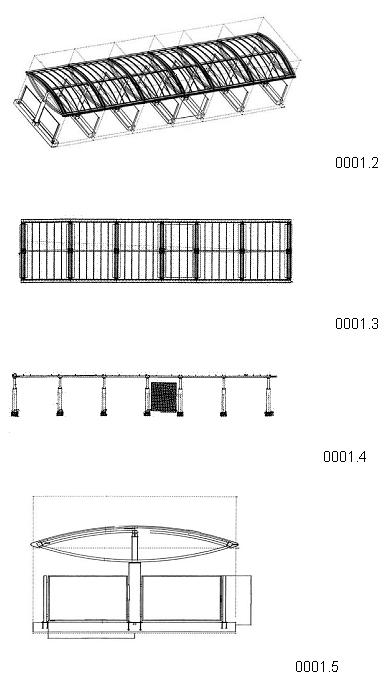
Apart from my comments related to the judgement, I would like to refer to the way of the application of the subject community industrial design. In my opinion, we are in fact dealing with two designs, the first one presented on the color photo and the second one presented on the schematic drawings. The differences between them exceed the level of insignificant dissimilarities. I am curious about the opinions of the readers in this respect.
So, dear readers, what do you think? Posted by: David Musker @ 14.47
Tags: informed user, Poland,
Perm-A-Link: https://www.marques.org/blogs/class99?XID=BHA288
MARQUES does not guarantee the accuracy of the information in this blog. The views are those of the individual contributors and do not necessarily reflect those of MARQUES. Seek professional advice before action on any information included here.
The Class 99 Archive

