
CLASS 99
The blog for design law, in Europe and worldwide. This weblog is written by a team of design experts and fans. To contribute, or join us, or for any other reason, email class99@marques.org.
Want to receive Class 99 by email?
Click here subscribe for free.
Click here subscribe for free.
Who we all are...
WEDNESDAY, 26 OCTOBER 2011
News from Poland
The Supreme Administrative Court (SAC) in one of its most recent decisions (September 7, 2011, case reference number II GSK 838/10) took the view that the provisions concerning industrial designs refers to the user of the design, and not its distributor or seller. Moreover the SAC noted that due to obvious reasons, the goods, as the matter of principle, are visible in the stage of distribution, but this stage is not significant for the evaluation of fulfilling all of the criteria required from the industrial designs by the product, where its visibility has a chief meaning. The SAC acknowledged that the stage of using the design by the final user is the most decisive. At the same time, in the light of the provision of Article 102 paragraph 1 of the Act of Industrial Property Rights Law, the industrial design must meet the visibility criterion at the
stage of its use by the final user.
The above thesis may not be particularly exploratory for the readers. However, in the context of former judical decisions of the SAC, it may turn out quite significant. Before, the SAC has presented a standpoint acknowledging that the characteristic attributes of the industrial design shall be visible in the moment of purchasing the goods (ice creams) and an estimation of the newness and individual character should be made at that moment.
Let’s hope that at least in that range the standpoint of the SAC will become stable.
As to the case alone, it was related to the cancellation of the industrial design of the insulation board, whose figure I present below.
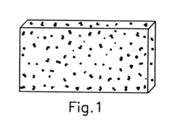
Well, it’s difficult to consider it as hyper distinctive, nevertheless, it has been cancelled exactly due to the lack of its visibility.
Posted by: Krystian Maciaszek @ 11.29
Tags: informed user,
Perm-A-Link: https://www.marques.org/blogs/class99?XID=BHA285
News from Poland
The Supreme Administrative Court (SAC) in one of its most recent decisions (September 7, 2011, case reference number II GSK 838/10) took the view that the provisions concerning industrial designs refers to the user of the design, and not its distributor or seller. Moreover the SAC noted that due to obvious reasons, the goods, as the matter of principle, are visible in the stage of distribution, but this stage is not significant for the evaluation of fulfilling all of the criteria required from the industrial designs by the product, where its visibility has a chief meaning. The SAC acknowledged that the stage of using the design by the final user is the most decisive. At the same time, in the light of the provision of Article 102 paragraph 1 of the Act of Industrial Property Rights Law, the industrial design must meet the visibility criterion at the
stage of its use by the final user.
The above thesis may not be particularly exploratory for the readers. However, in the context of former judical decisions of the SAC, it may turn out quite significant. Before, the SAC has presented a standpoint acknowledging that the characteristic attributes of the industrial design shall be visible in the moment of purchasing the goods (ice creams) and an estimation of the newness and individual character should be made at that moment.
Let’s hope that at least in that range the standpoint of the SAC will become stable.
As to the case alone, it was related to the cancellation of the industrial design of the insulation board, whose figure I present below.

Well, it’s difficult to consider it as hyper distinctive, nevertheless, it has been cancelled exactly due to the lack of its visibility.
Posted by: Krystian Maciaszek @ 11.29
Tags: informed user,
Perm-A-Link: https://www.marques.org/blogs/class99?XID=BHA285
MARQUES does not guarantee the accuracy of the information in this blog. The views are those of the individual contributors and do not necessarily reflect those of MARQUES. Seek professional advice before action on any information included here.
The Class 99 Archive

