
Now in its twelfth year, Class 46 is dedicated to European trade mark law and practice. This weblog is written by a team of enthusiasts who want to spread the word and share their thoughts with others.
Click here subscribe for free.
Who we all are...
Lessons from the T2 case in China
|
Key takeaways
|
A recent case concerning the T2 brand confirms that overseas brand equity built through cross-border commerce, digital engagement and consumer recognition can receive meaningful protection in China, even before a brand has fully established a physical retail presence in China. By Yun Chen, Nadine Archer and Michael Rorai.
Background
This dispute concerned the Australian tea brand T2 and its associated IP rights.
The plaintiffs included its creator, an Australian Company Tea Too Pty Ltd (TEA TOO) and the former owner of the T2 trade mark. They brought legal proceedings against several local entities that were using the signs TEA TOO and 茶二 (CHA’ER, the Chinese equivalent of “Tea Too”) in China.
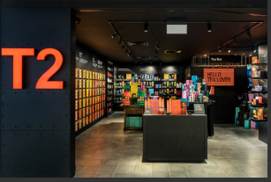
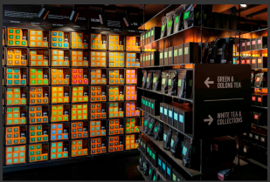
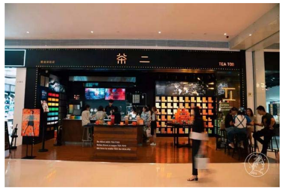
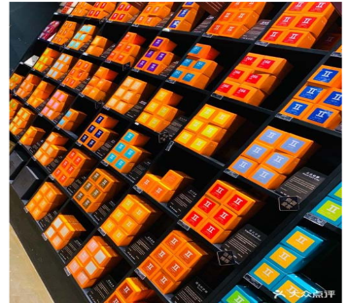
The plaintiffs alleged that the defendants had operated a tea brand under CHA’ER in Chinese, which was highly similar to T2, and had replicated key elements of the T2 brand’s overall trade dress through their corporate names, storefront decorations, product packaging and promotional materials. Notably, the storefront decorations included photographs of Tea Too’s employees.
The plaintiffs contended that these activities were intended to create an association with the T2 brand and to take unfair advantage of the goodwill and reputation it had built up over time.
The decision
The Chinese courts held at first instance and on appeal that the defendants’ use of TEA TOO and CHA’ER in Chinese, together with similar storefronts, packaging and promotional materials, constituted unfair competition.
The courts ordered the defendants to stop using the infringing signs and corporate names, remove infringing storefront materials and promotional materials, destroy relevant infringing items, eliminate the adverse effects of their conduct, and pay damages.
Five practical lessons for brand owners
Cross-border reputation can be recognised in China
 |
 |
| Plaintiff’s use |
After reviewing evidence showing the global development of the T2 brand, Chinese consumer discussions on e-commerce and social media platforms, media coverage and prior findings of the CNIPA, the courts concluded that the T2 brand and trade marks possessed substantial distinctiveness and enjoyed a relatively high degree of recognition within the relevant market in China.
Importantly, the Courts recognised that in today’s interconnected commercial environment, brand reputation no longer depends solely on physical operations within a particular territory. Cross-border e-commerce, digital marketing, social media engagement and international travel may all contribute to the establishment of goodwill and consumer recognition in China.
The courts also noted that the Defendants themselves had repeatedly suggested in their marketing materials that they had a business relationship with T2. These representations supported the conclusion that the T2 brand had already acquired significant commercial influence among Chinese consumers.
The ruling confirms that brand equity built through genuine consumer engagement does not stop at a country’s border. T2 had cultivated a real and measurable following among Chinese consumers through social media, cross-border e-commerce and international travel, well before operating physical retail locations in China.
Trade mark registration is not a shield for bad-faith conduct
 |
 |
| Defendant’s infringing use |
The defendants argued that they owned registered trade marks including CHA’ER in Chinese and therefore possessed a legitimate legal basis for using the disputed signs.
The courts rejected this argument, emphasising that trade mark registration addresses only the registrability of a mark. It does not automatically legitimise every subsequent act of use.
In this case, the courts found that TEA TOO corresponded phonetically to T2, while CHA’ER in Chinese represented its direct Chinese-language equivalent.
The court concluded that the registrations and subsequent use of the infringing signs formed part of a broader strategy to benefit from the goodwill associated with the T2 brand.
For overseas brands entering the Chinese market, this case highlights the importance of adopting a proactive trade mark filing and enforcement strategies at an early stage.
Joint enforcement by entities helps to enforce complementary interests together
The courts recognised that both the brand founder and operator, TEA TOO, and the related trade mark owner possessed direct and legitimate interests in protecting the T2 brand. Although one entity operated the brand while another held the trade mark registrations, both suffered harm arising from consumer confusion, loss of goodwill and unfair commercial competition.
They also held that trade mark infringement and unfair competition claims often arise from the same underlying conduct and therefore may be addressed efficiently in a single action.
Protection can extend to overall brand identity and trade dress
The court also took account of the replication of T2’s distinctive storefront appearance from actual T2 advertising materials, store décor and retail presentation, recognising that the look and feel of a retail environment can form an important part of a brand’s overall commercial identity where it contributes to consumer recognition and association.
The Court concluded that these activities collectively created a misleading association with the T2 brand and constituted acts of confusion and false commercial promotion under Chinese law.
Systematic bad-faith copying can lead to meaningful remedies
In determining liability and remedies, the court considered factors including the duration of the infringement, the scale of the defendants’ business operations, the commercial benefits derived from the infringing conduct and the market influence of the T2 brand.
Based on unfair competition, the courts ordered the defendants to stop using the infringing signs and corporate names, remove infringing storefront elements and promotional materials, destroy relevant infringing items and eliminate the adverse effects of their conduct.
The decision sends a strong signal that systematic and bad-faith attempts to free-ride on the reputation and goodwill of established brands may result in substantial legal and financial consequences.
Strategic implications for overseas brand owners
Overseas brand owners should consider filing early in China, monitoring third-party filings and market activity, preserving evidence of China-facing reputation, and documenting consumer engagement through e-commerce, social media, travel retail and other cross-border channels.
The case also underlines the value of taking a coordinated approach to enforcement where different group entities hold operational, goodwill and trade mark ownership interests.
Successful enforcement in China may depend not only on securing local registrations, but also on telling a clear, evidence-backed story about the brand’s reputation, consumer recognition and commercial journey.
Yun Chen is a Partner of Baker McKenzie FenXun; Nadine Archer is Senior Trade Marks Associate, Baker McKenzie London and Michel Rorai is former General Counsel Lipton Teas & Infusions Ltd, Partner at Legaltree and a member of the MARQUES IAM Team. Yun was local attorney, Nadine was coordinating global attorney and Michel was in-house counsel for Lipton in this case. Photos reproduced with permission
Posted by: Blog Administrator @ 08.11Tags: T2, Tea Too, China, ,


 Sharing on Social Media? Use the link below...
Perm-A-Link: https://www.marques.org/blogs/class46?XID=BHA5493


