
CLASS 46
Now in its twelfth year, Class 46 is dedicated to European trade mark law and practice. This weblog is written by a team of enthusiasts who want to spread the word and share their thoughts with others.
Want to receive Class 46 by email?
Click here subscribe for free.
Click here subscribe for free.
Who we all are...
THURSDAY, 15 SEPTEMBER 2011
Reality Check: MARQUES conference Part 7
The next session of the Baveno Conference, chaired by Hub Harmeling (Freshfields Bruckhaus Deringer, The Netherlands), was subtitled "Neuro Science / Market surveys /Brand awareness / Feedback from consumers about brand image or brand abuse / Class actions".
 Gerald Ford (Ford, Bubala & Associates, USA) opened the session by explaining that, in the US, guidance as to the correct methodology in the submission of survey evidence was laid down by the Federal judiciary (no corresponding development has occurred in Europe). US courts have a mandate to ensure that expert testimony is both (i) relevant and (ii) reliable. "Mall intercept" was a significant means of obtaining reliable data from screened shoppers, who were literally intercepted in the course of shopping and then taken off for private questioning with regard to their consumer responses. Approximately 50% of survey spend is now on internet surveys, since they have a huge attraction -- whether the internet is used for the survey itself or as a conduit by means of which a disparate and hard-to-find group of respondents is identified. A phone interview can then be conducted, having led the respondent to a secure website containing the relevant material. Neuroscience was growing as a concept too, principally through the monitoring of eye movements and the tracking of skin responses.
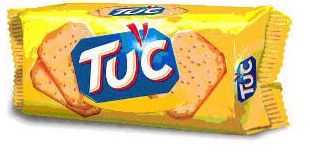 Peter Munzinger (Bardehle Pagenberg, Germany, and formerly with Puma) was then asked by the chairman whether these new kinds of survey evidence might be held to be admissible in Europe. Peter listed the sorts of circumstances in which evidence of public perception might be required and the sort of proceedings in which it might be submitted. In the Windsurfing Chiemsee case the Court of Justice of the European Union said that such evidence was admissible where there was a particular difficulty in ascertaining a state of facts, though it is not clear precisely what that means; he also mentioned the TDI case and the importance of only admitting survey evidence where it relates to something the proof of which is necessary for the resolution of the matter before the court. Where brand leaders are involved, it's important to have a control test since consumers are likely to guess that the brand leader is the manufacturer of any products in the same market. That was the basis on which survey evidence was rejected in the TUC case, reported here on Class 46.
Posted by: Blog Administrator @ 09.07
Peter Munzinger (Bardehle Pagenberg, Germany, and formerly with Puma) was then asked by the chairman whether these new kinds of survey evidence might be held to be admissible in Europe. Peter listed the sorts of circumstances in which evidence of public perception might be required and the sort of proceedings in which it might be submitted. In the Windsurfing Chiemsee case the Court of Justice of the European Union said that such evidence was admissible where there was a particular difficulty in ascertaining a state of facts, though it is not clear precisely what that means; he also mentioned the TDI case and the importance of only admitting survey evidence where it relates to something the proof of which is necessary for the resolution of the matter before the court. Where brand leaders are involved, it's important to have a control test since consumers are likely to guess that the brand leader is the manufacturer of any products in the same market. That was the basis on which survey evidence was rejected in the TUC case, reported here on Class 46.
Posted by: Blog Administrator @ 09.07
Tags: Baveno Conference 2011,


 Sharing on Social Media? Use the link below...
Perm-A-Link: https://www.marques.org/blogs/class46?XID=BHA2542
Reality Check: MARQUES conference Part 7
The next session of the Baveno Conference, chaired by Hub Harmeling (Freshfields Bruckhaus Deringer, The Netherlands), was subtitled "Neuro Science / Market surveys /Brand awareness / Feedback from consumers about brand image or brand abuse / Class actions".
Internet -- and indeed any type of survey at which the respondent is not present -- poses problems. Is the respondent the person you think it is, or is it a child? Also, a growing number of households have no landline, which makes the geographical location of respondents uncertain. Additionally it is difficult to correlate findings with causality: confusion can be caused, for example, by similarity of descriptive elements of a mark or by beliefs which a respondent already possesses before being tested. As in medical science, tests can be made on a control group (who are not shown a putatively infringing mark) as well as on the subject group.
Tags: Baveno Conference 2011,
Sharing on Social Media? Use the link below...Perm-A-Link: https://www.marques.org/blogs/class46?XID=BHA2542
Reader Comments: 0
Post a Comment
MARQUES does not guarantee the accuracy of the information in this blog. The views are those of the individual contributors and do not necessarily reflect those of MARQUES. Seek professional advice before action on any information included here.
The Class 46 Archive


