
Now in its twelfth year, Class 46 is dedicated to European trade mark law and practice. This weblog is written by a team of enthusiasts who want to spread the word and share their thoughts with others.
Click here subscribe for free.
Who we all are...
EUIPO updates GenAI guidelines
 EUIPO has updated its guidelines for staff on the responsible use of generative AI (GenAI) tools.
It says the new framework “sets out how GenAI can be used safely and transparently across the Office, while maintaining human oversight, data protection and legal compliance”.
The guidance is set out in Communication No 1/2026, which replaces guidelines from 2023 and aligns the Office’s approach with the EU Artificial Intelligence Act and relevant European Commission guidance on the responsible use of AI.
EUIPO says the updated guidelines introduce clear rules on prompting and information handling, particularly with regard to the protection of personal data, the verification of AI-generated outputs and the need for human oversight at all stages, and highlight that staff remain fully responsible for any content generated with AI tools and reminds colleagues that AI outputs must always be critically reviewed.
EUIPO introduced mandatory AI Driving Licence training in 2025 and this applies to all new colleagues joining the Office.
More details are available on this page on the EUIPO website, which includes a graphic on EUIPO’s responsible approach to AI (pictured above), information on AI governance, a summary of current usage of AI tools in the trade mark lifecycle and usage in other areas.
Posted by: Blog Administrator @ 11.50Tags: EUIPO, GenAI, AI Act,


 Sharing on Social Media? Use the link below...
Perm-A-Link: https://www.marques.org/blogs/class46?XID=BHA5455
EUIPO Grand Board confirms refusal of ANIMAL FARM and 1984
The EUIPO Grand Board of Appeal has upheld a decision that the book titles ANIMAL FARM and 1984 should be refused for being descriptive of certain goods and services.
On 6 March 2018, the Estate of the late Sonia Bronwell Orwell filed an application to register the word mark ANIMAL FARM for goods and services in classes including 9, 16, 28 and 41. On the same date, the Estate filed an application to register 1984 for goods and services in classes including 9, 16 and 24.
The relevant goods and services cover audio video, magnetic and digital carriers, books, printed matter, toys and games, education and entertainment-related services.
In June and July 2019, the applications were partially refused under Article 7(1)(b) and (c) of the EU Trade Mark Regulation because they described certain characteristics of the goods and services for which protection was sought, and were also devoid of any distinctive character.
The Estate appealed both decisions. In decisions of June and July 2020, the Fifth Board of Appeal referred the cases to the Grand Board, citing diverging decisions on the registrability of titles of books or names of well-known characters.
Shortly after that, ANIMAL FARM was registered for goods and services in classes 18, 21, 25 and 45 and 1984 was registered for goods and services in classes 18, 21, 25, 28 and 45.
Grand Board reasoning
In its decision, published on 27 May, the Grand Board concluded that the signs applied for were descriptive for all the goods and services applied for in classes 9, 16, 28 and 41, because a significant part of the relevant public would immediately recognise ANIMAL FARM and 1984 as the titles of George Orwell’s novels. They would therefore perceive those signs, at first sight and without further cognitive steps, as designating the subject matter of the relevant goods and services.
The Grand Board found that the relevant public primarily rely on titles and authors to identify and select artistic works but rely on publishers or other trade indicators to identify the commercial origin of the relevant goods and services, stating:
When used in relation to goods and services whose nature is to contain or provide expressive content, a work title will be perceived first and foremost as identifying the work itself, rather than as indicating that the goods or services originate from one undertaking. In the absence of evidence that the relevant public has been educated through use to perceive the work titles as badges of origin, the signs cannot fulfil the essential origin function of a trade mark.
It further explained that the difficulty in registering titles of famous works as trade marks arises from the fundamentally different functions performed by titles of artistic works and trade marks, stating:
Whereas a trade mark serves to identify the commercial origin of goods or services, the title of a work serves primarily to designate and distinguish the work itself. In the absence of any established market practice whereby the title of a single work is used as an indicator of the undertaking responsible for the goods or services, the relevant public is not accustomed to perceiving such titles as badges of origin.
The Grand Board concluded that the relevant public would understand the signs ANIMAL FARM and 1984 as descriptive and non-distinctive indications in relation to the content or subject matter of the goods and therefore devoid of distinctive character.
Titles of artistic works
The Grand Board said that for titles of literary works to be registered as trade marks they must have distinctive character, adding:
The decisive question is whether a sign consisting of the title of a literary work, when used in relation to goods and services such as books, printed matter, digital data carriers, education and entertainment services, would be perceived by the relevant public not merely as designating the work itself, but primarily as an indication of the commercial origin of those goods or services. In other words, it must be determined whether such a sign is capable of fulfilling the essential function of a trade mark, namely to distinguish the goods or services of one undertaking from those of other undertakings.
In this case, it said, the Estate had not put forward any evidence showing that the relevant public perceived a connection between the marks applied for and a specific commercial undertaking. Nor was there any indication that the existence of copyright had determined or materially influenced the perception of the signs by the relevant public.
Finally, the Grand Board encouraged the EU legislator to consider whether an EU-wide right for titles of works should be created, to address the legitimate interests in protecting them.
The full decision (reference R1719/2019-G) can be found on EUIPO’s website here. The Estate can appeal the decision to the EU General Court.
Posted by: Blog Administrator @ 09.21Tags: EUIPO, Grand Board, ANIMAL FARM, 1984,
Sharing on Social Media? Use the link below...Perm-A-Link: https://www.marques.org/blogs/class46?XID=BHA5454
Madrid System Yearly Review 2026
 WIPO has published the latest edition of the Madrid System Yearly Review, which includes facts and figures from 2025.
According to the publication, there were 64,000 international trademark applications filed in 2025, with over 450,000 designations. Over 943,000 international trademark registrations were in force in 2025, with over 7.5 million designations.
Applicants in the United States filed the highest number of international trademark applications (10,997) – a 2.5% decrease on 2024 – followed by Germany (6,106) (-5.3%), China (5,636) (-4.9%), France (4,026) (-4.4%) and the United Kingdom (UK) (3,871) (+3.7%).
L'Oréal of France remained the top applicant for a fifth consecutive year, filing 274 applications. The USA’s Light and Wonder, Inc climbed 38 spots to become the second top filer (105 applications), followed by Slovenia’s Krka, Tovarna Zdravil, DD, Novo Mesto (101).
About 80% of all international trademark applications filed in 2025 included one to three goods or services classes. The most popular class was class 9, followed by class 35, class 42 and class 41.
There were 2.5% more subsequent designation requests in 2025 than in 2024, a third year of growth. Requests have grown by 57% over the past 15 years – from over 43,000 in 2011 to over 68,000 in 2025, reflecting the accession of new members and a broader push by holders into established markets.
You can download and read the report on the WIPO website here.
Posted by: Blog Administrator @ 15.21Tags: Madrid System, L'Oreal, WIPO,
Sharing on Social Media? Use the link below...Perm-A-Link: https://www.marques.org/blogs/class46?XID=BHA5453
IP Case Law Conference report
The 6th IP Case law Conference took place in Alicante and online on 21 and 22 May and featured panels comprising judges, EUIPO Board of Appeal members, academics and IP practitioners – including several MARQUES members.
Frontiers of trade mark law
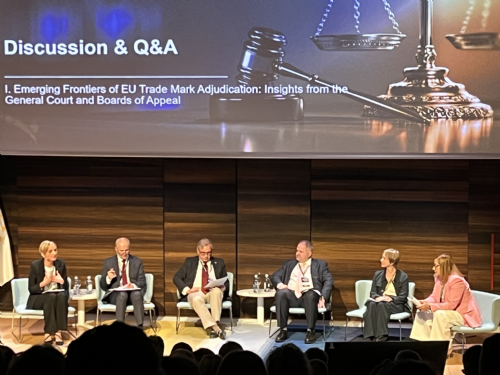 In the first panel, on the emerging frontiers of EUTM adjudication, General Court Judge Krystyna Kowalik-Bańczyk discussed trade mark applications in unfamiliar scripts, which make up a growing proportion of applications in the EU.
The judge discussed cases including C-147/14 Loutfi v AMJ Meatproducts, which held that pronunciation must be taken into account if the relevant public would consider those factors, as well as cases concerning transliteration of Chinese characters (T-140/24 Baidu and T-533/23 Hongqi).
In a recent case, T-323/21 Castle Freres v EUIPO relating to the mark DRAGON DE CHINE, 600,000 Chinese speakers in France were not (yet) enough to prove genuine use of a Chinese character mark given the nature of the use of the mark, as it was used alongside other brand elements.
Partial use and the definition of sub-categories in sectors including beverages, automobiles and luxury goods were the topics of General Court Judge Ion Gâlea’s presentation. He noted that the purpose and intended use of the mark is a well-established criterion, but other characteristics may also be relevant. It is difficult to identify a trend in the case law, he said, and concluded: “The concept of homogenous category also appears in other contexts, such as absolute grounds for refusal.”
Judge William Valasidis discussed how visual elements influence relative grounds for weak marks, in light of the judgments in Case T-70/20 Museum of Illusions, Case T-443/21 Yoga Alliance India International and T-736/22 SNACK MI, T-1066/1069/23 MAY TEA and T-145/14 Two parallel strips on a shoe. He said visual elements can play a key role in opposition proceedings, including in assessing the likelihood of confusion and reputation analysis. He emphasised that size and position matters as well as the precise combination of visual and verbal elements. “The degree of attention of consumers is crucial,” said Judge Valasidis, as is the sector involved and other factual circumstances.
In her presentation, Cinzia Negro, Chairperson of the 2nd EUIPO Board of Appeal, asked: is “high inherent distinctiveness” an oxymoron? She addressed the question under both Article 8(1)(b) and Article 8(5) reputation. She answered “yes” for the former but “no” for the latter, saying that a unique mark is more readily and strongly evoked in the mind of consumers than a common word (such as Puma): “All else being equal … it is easier for a unique trade mark to come to the consumer’s mind when encountered on completely different products.”
Following this, Virginia Melgar, Chairperson of the 5th Board of Appeal, discussed the opposite scenario: can strong reputation make up for weak distinctiveness? She concluded that the case law has no uniform understanding, and the inherent distinctive character is a separate relevant faction in assessing the link, independent from the finding of reputation. “The weakness of the earlier mark ... may play an important role in the global assessment of the link,” she said.
The panel was moderated by Savvas S Papasavvas, Vice-President of the General Court.
Use it or lose it
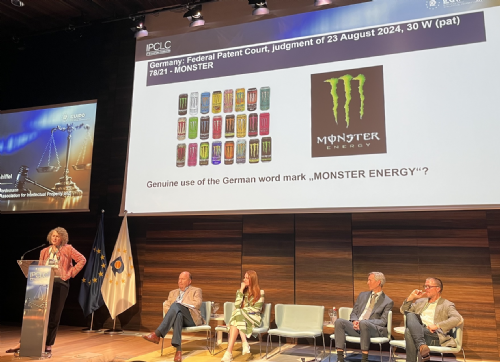 Following a panel on design law (see this Class 99 blog post), the third panel was moderated by Shane Smyth of FRKelly, a member of the MARQUES Council. It looked at proof of use.
Katie Goulding, Brand IP Counsel at Jaguar Land Rover, said the “use it lose it” rule implies static marks whereas in reality brands are changing and being used in different contexts. A better question to ask is: what are we trying to achieve? What is the evidence for? “Most brands have to adapt quickly,” she said. That means having sensible, commercial conversations about what to achieve with the brands, not necessarily what to protect on the register. When it comes to assembling evidence, she said relationships are key; IP should help build brands; consider the full breadth of architecture (clubs, memberships, collaborations etc) and licensing opportunities. She also emphasised getting access to tools used by other teams in the business and building a narrative. “We have to be forward-looking not backward-looking,” she concluded.
The next speaker, Anke Nordemann-Schiffel, Partner at Nordemann and President of GRUR, looked at use of a trade mark in altered form in Article 18(1)(a). She agreed with Katie that “trade marks are living things”. She described the approach in case law as “very, very liberal” as even fundamental changes to weak marks may constitute genuine use, but she added that there are signs the approach is becoming stricter.
Anke referred to recent rulings from the EU General Court, national courts and Boards of Appeal, including Case T-46/25 GENUSSLÄNDER; I ZB 30/25H15 / Hecht 15; R 1128/2025-4 PHARMOS NATUR; R 952/2025-1 bauhaus-shop (figurative); R1020/2025-2 CRYPTO.com; R1003/2025-1 BRUGMAN and finally a case from Germany in MONSTER ENERGY. “The distinctive elements are key. They must be clearly analysed and defined. If you have to make changes, try to be subtle and on the margins. Spend time on what is the distinctive character and show how that has remain unchanged in the brand evolution,” she advised.
André Pohlmann, Member of the 3rd and 5th Boards of Appeal, ranged from Ancient Greece to the Metaverse in his presentation. He asked: how do you prove genuine use in the EU when the use takes place in a virtual environment? Using the analogy of fish in a tank, he said the aim of genuine use is to make sure the tank is not filled with unused marks. In oppositions the aim is to strike a balance between the rights of trade mark owners and third parties.
In Case T-563/24 Làv, the trade mark owner did not show the link between invoices and product catalogues. In two recent judgments, T-73/25 Viva and T-297/25 OX, the General Court confirmed that digital evidence is valid. But the use of AI in evidence poses fundamental challenges to our system of justice: courts react very sensitively when faced with hallucinations. The perfect evidence doesn’t exist, said Mr Pohlmann: there is always a combination of documents. The best solution is an affidavit on all aspects of use along with documents corroborating it.
The final presentation asked: can territorial use outside of the EU amount to use in the EU? Simon Malynicz KC of Hogarth Chambers reviewed Case T-7668/20 Standard International, which had found that advertising in the EU of hotel services outside of the EU constituted genuine use.
Her argued that following Case C-495/07 Silberquelle, the question is whether a business is competing with similar goods on the same market in the EU. Under Case C-259/02 La Mer, the threshold for use is low – but that is part of a multi-factorial assessment. Finally, Simon said there is a temporal restriction: the use needs to be within the five-year window. “If you’re relying only on advertising, you’re going to have to show it’s competitive with services in the EU and that it’s factually strong enough to support the whole case on genuine use on its own.”
Iconic marks across borders
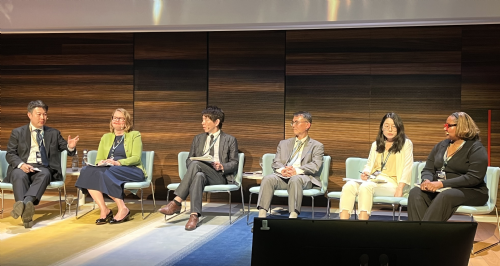 The final session of the first day brought an international perspective and was moderated by Daryl Lim, H. Laddie Montague Jr. Chair in Law, Associate Dean for Research and Strategic Partnerships, and Founding Director, IP Law and Innovation Initiative, Penn State Dickinson Law.
Discussing Article 8(5), Nina Korjus, Chairperson of the 4th Board of Appeal, said the existence of a “link” must be appreciated globally (C-252/07 Intel); it is important to look at how strong the earlier mark really is (C-564/16 P Puma); and reputation can be established by any relevant evidence (R0040/2025-4 OPPLE). In R2215/2919-1 Puma, the Board rejected an opposition even based on Puma’s best case as there was no link. That decision is being appealed.
Masatoshi Otsuka, Deputy Director, Trademark Administrative Judge, JPO Trial and Appeal Department, discussed the protection of reputed and famous marks in Japan. He also referred to opposition cases involving Apple and Puma which showed that it is hard to protect even a famous marks, saying: “These cases illustrate the difficulty in drawing the line on the extent to which famous marks should be protected.”
Ray Jang, Administrative Trademark Judge, IP Trial and Appeal Board, MOIP, Korea, said “We need more specific criteria to decide what is remarkably recognised, well recognised or bad faith.” In one case the Supreme Court invalidated LEGOPHARMA for pharmaceuticals based on the reputation of LEGO for toys etc.
Wei Chengcheng, Principal Officer in the Trademark Office of CNIPA, summarised the protection for well-known marks in China and the procedures for determination and protection. She also had examples of cases involving Puma and Apple and stressed the importance of a comprehensive assessment.
Melanye Johnson, Acting Deputy Chief Administrative Trademark Judge at the USPTO TTAB, said the principle in the US is: “prove it to me every time!” and courts diverge in their interpretation. “Fame must be proven with substantial evidence in every single case,” she said, adding that the evidence should be from the United States.
Ms Johnson cited Starbucks v Lessbucks where Starbucks was granted a broad scope of protection based on extensive evidence of reputation. She also discussed trade mark dilution cases, noting that Nike successfully argued the Just Do It sign would be diluted by Just Drew It based on its reputation as a slogan and tagline. It was entitled to the “highest level of protection” against confusion.
Fireside chat
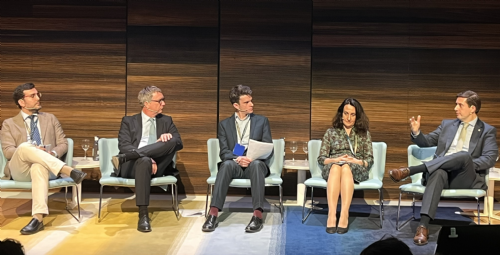 Session 6 of the Conference, comprised a fireside chat featuring Sven Stürmann, President of the Boards of Appeal; Miguel Gusmão, Director of the Operations Department of EUIPO; Claudia Pappas, Head of the IP Team, Thyssenkrupp Intellectual Property GmbH and Chair of the MARQUES Council; and Alfonso Sabán Astray of Herrero & Asociados. It was moderated by Max Walters, Editor, Managing IP.
Miguel discussed how EUIPO uses AI in its business and how it is regulated. “We have a lot of data and we can see a lot of patterns,” he said. In areas with large volumes of work and repetitive patterns, AI can assist in making the Office more effective. However EUIPO has implemented a two-step process, with one step always being human verification.
“None of this would work if we did not involve our users,” said Miguel. EUIPO also has mandatory training on AI for all staff. “Using AI is not an end in itself, but a means to deliver predictability and consistency,” he said.
Sven argued that AI is “very relevant” in enhancing predictability, but human judgement and independence must be maintained. “AI can be a support for the drafting but never for the decision making,” he said. He added that use of AI by lawyers can lead to longer statements, which makes the process more time-consuming and less efficient: the Boards are now discussing the introduction of page limits. “It is important not to lose trust,” he stressed. “We need to see this as a common task, and ensure we are using it in a fair, transparent and common-sense way.”
Alfonso said that AI has had the most rapid growth of any technology in history, adding: “AI can be very accurate and very stupid at the same time.” He said lawyers need to find a balance between “what is expectable and what is acceptable”. He said he uses it for high-volume, easily replicable and easily verifiable tasks, as well as for help with communications in other languages.
In her comments, Claudia said AI first changed her life in the form of GPS, but she then lost the ability to find her way without it. “We also need to think about this in our business field,” she said. At ThyssenKrupp, there is a monthly meeting to discuss use of AI in IP work as well as regular meetings with other German brand owners. AI tools are used for checking invoices, drafting, checking goods and services lists and contracts. Challenges include labour law, contracts with AI providers, data compliance, indemnification and protection of know-how. “What’s the role of lawyers?” asked Claudia.
The panel also discussed choosing the right tool, cutting out “blubbery”, retaining judgement skills, using AI to provide a third opinion, the risks of using external providers, developing new skills and competences, the importance of empathy, transparency and the EU AI Act. Claudia stressed the importance of identifying when AI produces nonsense, saying: “My take is: Don’t stop thinking. We have to think more.”
Parallel lives
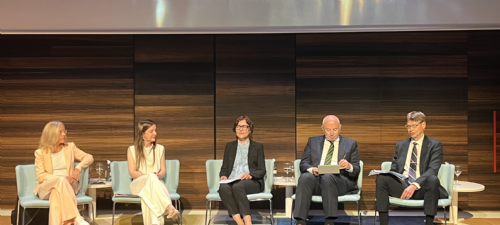 Session 7 covered the dialogue between trade mark registration and infringement proceedings. It was moderated by Kari Kuusiniemi, President of the Supreme Administrative Court of Finland.
Cornelia Schmitt of Grünecker argued that courts are taking a close look at the conduct of parties and using the system too aggressively, and asked: “At what point does a filing strategy become bad faith or abuse?” In Case T-136/11 concerning Pelikan’s repeated re-filings of near-identical marks, the General Court said there is a presumption of good faith and the registration of a similar mark and use in enforcement proceedings does not necessarily show bad faith. However, in T-663/19 Monopoly, Hasbro had admitted that a reason for re-filing was to avoid the burden of proving use and the trade mark was partly cancelled.
In R 2455/2017-G Sandra Pabst, the Grand Board of Appeal held that cancellation actions had been filed in bad faith and therefore it rejected the request as inadmissible. Cornelia said that, following recent decisions, more companies are thinking carefully about re-filings and whether to file applications with slight differences.
Sarah Van Den Brande of Liedekerke discussed recycling and upcycling in the context of the EU Green Deal. She said there are three main defences to trade mark infringement that are relevant for recycling/upcycling: (1) no use as a trade mark; (2) exhaustion of trade mark rights; and (3) referential use.
The legal principles have been applied in cases including Case C-197/21 SodaStream, in which the Court said a trade mark holder can oppose unless there is an economic link; a Hermès case from France in which all the lines of defence were rejected; and several cases regarding the customization of ROLEX watches. In one case, it was held that customization at a customer’s request was lawful, but commercialization of customized watches was unlawful.
Sarah concluded that recycling can proceed as long as no claim of a link with the trade mark owner is made; for upcycling there is no case law; and for customisers the initiative needs to come from the consumer.
Judge Jolanta de Heij-Kaplińska of the Court of Appeal of Warsaw presented on interim measures and invalidation proceedings. There should be a global assessment bearing in mind the principle of proportionality, she said.
Finally, Chris Oldknow of Amazon discussed decision-making at scale. He said that notice and takedown procedures are in a sense an interim measure. About 60% of what is sold on Amazon is sold by third-party sellers: making that work well relies on reducing friction. Protecting customers starts with proactive controls, which are built on machine learning, and involves verification tools and technologies and transparent processes. In the last six months, Amazon has made 20 million proactive notices. “There are a huge amount of decisions that are working their way up through the system,” said Chris. “We have a long way to go and the DSA is in its infancy.”
Names and other IP rights
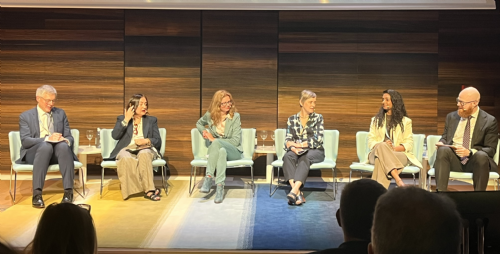 In the final session of the Conference, Giuseppe Bertoli, Director of the EUIPO Legal Affairs Department, introduced craft and industrial geographical indications (CIGIs): the first CIGO (for Porcelaine de Limoges) was recently registered.
He also discussed the interaction between GIs and trade marks, as clarified by the General Court in Case T-239/23 Nero Champagne. In response, the EUIPO has drafted new guidelines which will be published soon. Giuseppe asked whether inter partes proceedings still matter in cases involving GIs, and said he believed they do – though they may become less common.
Gaya R Schultz of Kennedy Van der Laan focused on the conflict between trade marks and trade names. She said trade names are gaining nationwide reach and are often not properly checked by trade mark applicants. However, in the absence of guidance, decisions are made case-by-case. “A clearer and more consistent approach would be desirable,” she said.
Head of IP Strategy at INDITEX and MARQUES Council member, Susana Fernández Martín, addressed domain names and the challenges they pose to established principles such as jurisdiction. She discussed recent Board of Appeal cases involving domain names as prior rights. “Owning a domain name is the starting point to challenge an EUTM. It’s not impossible but you need to provide appropriate evidence of significance,” she said.
Irène Bénac, Vice-President of the 3rd Civil Chamber – 2nd Section, Judicial Court of Paris, discussed personality rights. She described them as “extra-patrimonial” as they cannot be transferred and normally last for a lifetime. Citing a number of French cases, she said they can acquire economic value and may be protected by IP rights, that are transferable and licensable. Heirs can inherit personality rights, but are bound by the wishes of the deceased. “Personality rights are not a clever solution for protecting these characteristics, and are almost always set aside in favour of trade mark rights,” she concluded.
 Finally, Sukanya Wadhwa of Brandsmiths discussed copyright protection and designs/trade marks, focusing on the judgment in Joined Cases C-580/23 Mio and C-795/23 Konektra as well as a recent UK case involving AGA and some German cases on copyright and AI. “Not all choices are creative. Various factors may be taken into account, but what matters for copyright subsistence is what they mean for the creativity expressed,” she said.
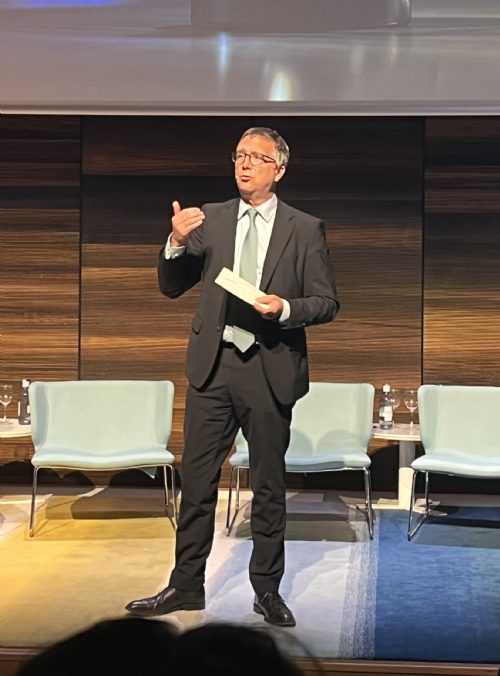
The session was moderated by Agris Batalauskis, Director of the Latvian IP Office. The Conference concluded with a summary by Sven Stürmann, President of the Boards of Appeal (pictured right).
You can read more about the IP Case Law Conference on EUIPO’s website here. Videos of the sessions and copies of the presentations are expected to be made available in due course. Photos by James Nurton
Posted by: Blog Administrator @ 17.50Tags: IPCLC, EUIPO, Boards of Appeal, CJEU,
Sharing on Social Media? Use the link below...Perm-A-Link: https://www.marques.org/blogs/class46?XID=BHA5452
IP Case Law Conference 2026 opens
The 6th edition of the IP Case Law Conference hosted by the EUIPO Boards of Appeal is taking place this week. The theme is “Growing through change”.
Several MARQUES members are taking part in the Conference, which is being held in Alicante and online
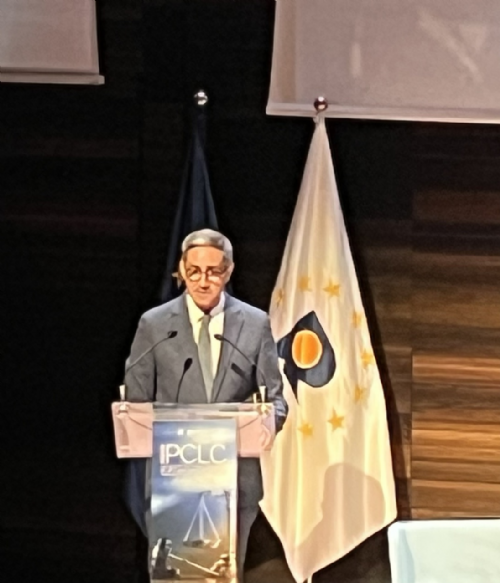 In his opening remarks yesterday, EUIPO Executive Director João Negrão (right) said the IP landscape has shifted considerably in the 10 years since the Case Law Conference was first held. “Change also brings opportunity,” he said, adding: “We are living through change … without precedent.”
Stressing the importance of IP rights for innovation and growth, he said case law is the “foundation of trust, which makes the system work.” But he added that the law needs to keep pace as the volume and complexity of rulings demonstrates. “No single institution or jurisdiction can meet today’s IP challenge alone,” he said. “Nobody knows everything, but everybody knows something.”
“The pace of change in recent years has been rather remarkable,” said Savvas S Papasavvas, Vice-President of the EU General Court. In trade marks, he said, the general principles are established but the world of markets and advertising have changed the ways that brands relate to consumers.
“The intersection between trade marks and domain names has become part of a broader discussion about how brand identity is asserted and protected in the digital space,” he added, while the recent EU design reform reflects need for the design system to adapt as boundaries are constantly being tested.
Mr Papasavvas said the legal framework must continue to provide clarity while leaving space for innovation, particularly as new questions arise from AI, and that IP disputes do not respect borders: “Comparative perspectives are therefore invaluable.” He concluded: “Courts must apply legal principles with clarity, consistency and legal discipline.”
Sven Stürmann, President of the Boards of Appeal of the EUIPO, celebrated the diversity of the Conference. “Diversity, inclusiveness and transparency are core values that we promote at EUIPO,” he said. “Change may be constant, but trust in legal outcomes must remain stable.”
“Change is no longer occasional or gradual; it is constant and increasingly rapid,” he said, increasing the need for broader understanding of access to justice, including clear, understandable and practical outcomes for those who rely on the system. “Our case law must be dynamic, responding to new technologies, business models and societal innovations,” said Mr Stürmann.
In this context, he said dialogue is increasingly important, as well as willingness to rethink established approaches and adapt. “Legal quality is not achieved in isolation but built from dialogue, cooperation and shared responsibility throughout our IP community.” One thing we know, he said, is: “IP case law never stands still, and neither can we.”
A view from the EU Court of Justice
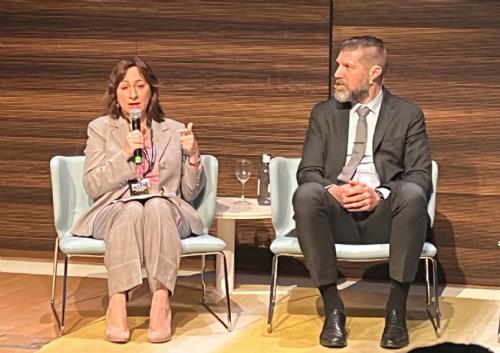 |
| Judge Octavia Spineanu-Matei with Conference Master Thomas Frydendahl |
In her speech on Friday, Octavia Spineanu-Matei, President of the 8th Chamber at the Court of Justice of the EU, discussed the filter mechanism introduced in Article 58a in 2019 regarding appeals from the EU General Court to the Court of Justice of the EU.
Since 2019, only eight appeals out of 301 have been allowed to proceed. Five were upheld, one dismissed and two are pending.
Most of the time the request was dismissed because it did not meet formal requirements, did not explain the significant issue, did not indicate the contested points or how the alleged error in law influenced the case. But Judge Spineanu-Matei said that she hoped that more appeals will be brought and allowed to proceed: “It would be a pity for an error to remain in the case law of the General Court.”
The first case in which an appeal was allowed to proceed was Case C-328/21 P KaiKai, a designs case which had significance beyond the law on designs and also had consequences for member states. Judge Spineanu-Matei also discussed Case C-93/23 P Neoperl concerning whether the General Court exceeded the limits of its jurisdiction and Case C-4111/25 P Versiontech relating to the scope of the General Court’s power to alter decisions of the Board of Appeal: this case is still pending at the Court of Justice.
Judge Spineanu-Matei said the lessons are that the request must be self-explanatory and must not exceed seven pages. It is not necessary to show the appeal is well founded but that it raises an issue of significance with respect to the unity/consistency/development of EU law. This issue must not only be alleged but also explained, and how the alleged error affected the outcome of the case must also be explained.
Look out for further reports from the Conference on the Class 46 and Class 99 blogs. You can find out more about the Conference on the EUIPO website here. Photos taken by MARQUES editor James Nurton
Posted by: Blog Administrator @ 10.44Tags: IPCLC, EUIPO, Boards of Appeal, CJEU,
Sharing on Social Media? Use the link below...Perm-A-Link: https://www.marques.org/blogs/class46?XID=BHA5451
Book now for the MARQUES Annual Conference
 Registration for the 40th MARQUES Annual Conference, which takes place in Lisbon, Portugal from 22 to 25 September, is now open.
The theme of the Annual Conference is “The Exciting Evolution of Trade Marks” and the panel sessions will focus on how trade marks are evolving in exciting ways as businesses explore new ways of using brands and other IP assets to build trust with consumers.
Plenary sessions
The Annual Conference will feature plenary sessions on topics including:
- The fine line between fame and genericism
- Innovative strategies to unlock the value of IP
- The role of regulation beyond trade marks
- The intersection of geographical indications, trade marks and international trade
- Beyond greenwashing: the new Digital Product Passport
It will also include updates from EUIPO and the annual review of CJEU and EU General Court case law.
Workshops
Interactive workshops at this year's Annual Conference presented by the MARQUES Teams will cover:
- Amicus curaie submissions
- Anticounterfeiting at trade fairs
- Protecting voice, image and identity
- AI and marketing
- Improving the UDRP
- EU design developments
Social programme and hotels
The social programme includes an informal Welcome Reception on 22 September, Cultural Evening at SUD Lisboa on 23 September and Gala Dinner Evening on 24 September.
The main plenary sessions will be held at the Epic Sana while the workshops will take place at the nearby Dom Pedro. Accommodation is available at both these hotels, as well as the InterContinental.
You can choose your hotel when booking (subject to availability). Special hotel rates have also been negotiated for delegates wishing to extend their stay either before or after the Annual Conference.
Modular participation is also available for anyone who wishes to source their own accommodation or who lives locally.
Registration
Early registration is strongly recommended. At the time of posting, 358 people from 58 countries had already booked.
The Early Bird full residential rate is €3,400 for MARQUES members and €4,250 for non-members. This rate applies to bookings received by Friday 26 June 2026.
Find all the information about the Annual Conference (including the programme and speakers, accommodation details, tours/excursions, fees, terms and conditions, and online registration) on the dedicated page on the MARQUES website.
Posted by: Blog Administrator @ 09.04Tags: Annual Conference, Lisbon,
Sharing on Social Media? Use the link below...Perm-A-Link: https://www.marques.org/blogs/class46?XID=BHA5450
Sixth edition of ETMD Education Programme
 The EUIPO has launched the sixth edition of the ETMD Education Programme for practitioners (2026/27).
Applications for the programme are open from today (18 May) until 31 May 2026 and it runs from September 2026 to March 2027.
There are 60 places and selection is based on requirements, experience and motivation so EUIPO encourages early applications.
The programme is aimed at IP professionals advising on trade mark and design matters, including IP lawyers, in-house counsel and consultants and agents representing clients before the EUIPO.
Applicants need to demonstrate sufficient prior knowledge, either by being a professional representative admitted by the EUIPO, having three years of relevant experience, a law degree and IP experience or another means. They also need to have thorough knowledge of English.
The programme has three tracks: (1) trade mark and design (full programme); (2) trade mark; and (3) design. Evaluation is by two intermediate exams and one final exam.
The fees are €1500 (track 1); €1000 (track 2); and €500 (track 3).
The MARQUES Education Team can attest to the value of the training course to strengthen professional expertise, having been involved in the ETMD Education Programme from its beginning in 2018, with Shane Smyth, José Amorim, Sandra Müller and Charlotte Duly serving as members of the Advisory Council and Examination Board as well as tutors and examiners in the programme.
In episode 21 of the Talking MARQUES podcast, available here, Sandra Müller and Guido Donath discussed the programme following the completion of the fifth edition.
Find out more about the programme on EUIPO’s website here.
Posted by: Blog Administrator @ 10.40Tags: ETMD, EUIPO, Education Team,
Sharing on Social Media? Use the link below...Perm-A-Link: https://www.marques.org/blogs/class46?XID=BHA5449


