
Now in its twelfth year, Class 46 is dedicated to European trade mark law and practice. This weblog is written by a team of enthusiasts who want to spread the word and share their thoughts with others.
Click here subscribe for free.
Who we all are...
IP training session connects students with brand protection experts
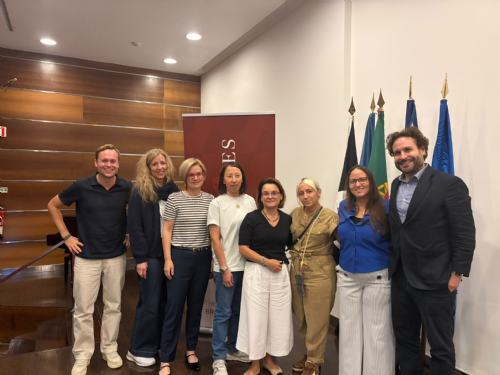 On 21 September, around 30 students took part in an IP training session in Lisbon, joining both online and in person.
The session was organised by the MARQUES Anti-Counterfeiting and Parallel Trade Team, together with ELSA Lusófona Lisboa and ELSA U.Porto, and hosted at Universidade Lusófona.
The training aimed to give students practical insights into IP rights, brand protection programmes across different industries, and strategies for tackling counterfeiting and parallel imports.
Speakers from a wide range of industries shared their perspectives, including representatives from:
- RECKITT (Ervina Vasiljevic, Global Brand Protection Counsel)
- Hugo Boss (Nicole Klug, Global Head of Intellectual Property Department)
- John Deere (Sylvia Piechatzek, Corporate Counsel)
- On (Anna Jakobsson, Director of Intellectual Property)
- Philips (Edanela Perez Broce, Senior IP Counsel)
- Mars (Bence Bozóki, Senior IP Counsel)
- Zurich Insurance (Dorine Martin, Head of Group Intellectual Property)
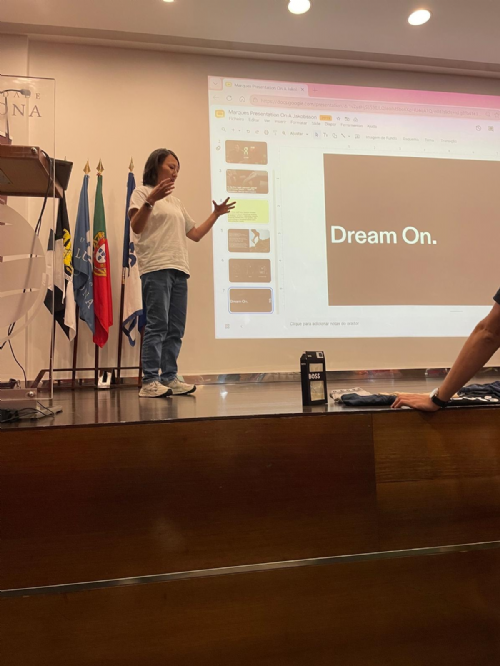 The two-hour session was moderated by Paul Trapman of Ploum and Anja Franke of Grünecker PartG mbB, who organised the training together with Mai-Britt Kroll, Senior Global Brand Protection Manager at Coty.
The speakers also had the opportunity to respond to a range of interesting questions from the student audience, covering both practical enforcement issues and possible career paths in IP.
Among other topics, the discussion touched on how to distinguish counterfeit products from parallel imports or grey market goods, when similar branding or packaging may cross the line into trade mark infringement, and whether a law degree is necessary to work as in-house counsel or in legal and brand protection roles.
The Lisbon event was part of the MARQUES training series held alongside the Annual Conference, offering students the opportunity to engage directly with experienced IP and brand protection professionals.
Photos provided by Anja Franke
Posted by: Blog Administrator @ 16.10Tags: Lisbon, ELSA, IP training,


 Sharing on Social Media? Use the link below...
Perm-A-Link: https://www.marques.org/blogs/class46?XID=BHA5484
40th Annual Conference – Parts 7 and 8
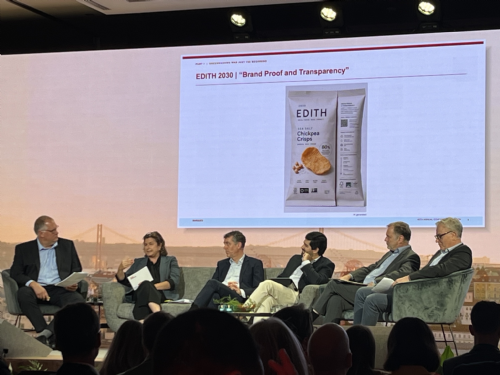 The final day of this year’s Annual Conference in Lisbon began with a discussion of the impact of labelling and environmental laws on trade marks in Europe (Part 7 – Greenwashing was just the beginning). It was moderated by Jan-Caspar Rebling, Stobbs IP Limited, UK, Member of the MARQUES Regulatory Team
Gregor Versondert, Procter & Gamble International Operations S.A, Switzerland, Member of MARQUES Council and Regulatory Team, started the discussion by talking about brand equity. He said this starts with brand awareness and sustainability is increasingly part of it: “A good environmental record does make lots of consumers go for one product rather than another. It will stay with us.”
Jose Maria Azeredo, Lidl, Portugal, agreed, saying that what was once perceived as added value will become common ground thanks to EU regulations. But he added a question is: “How much sustainability can my consumer afford?” as private label products are forced ot become higher priced. Dr Andreas Gayk, Markenverband eV, added that long-term sustainability is key to brand value.
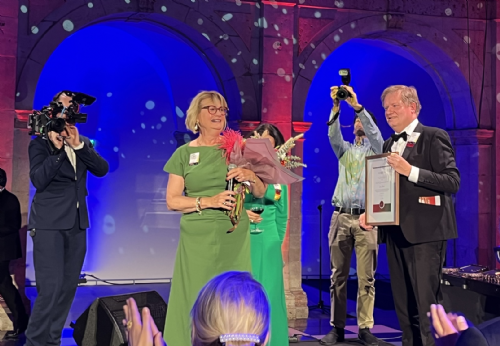 |
| Ingrid De Groot was honoured at the Gala Dinner for 30 years of service to MARQUES, including as Internal Relations Officer, and presented with lifetime membership. |
Bernd Weichhaus, JBViniol Partnerschaft, Germany, Member of the MARQUES Regulatory Team, introduced the Empowering Consumers for the Green Transition (EmpCo) Directive. He said that consumer issues, and particularly sustainability issues, are driving regulation and discussed a case study of Edith chickpea crisps, and their claim to have “zero environmental impact”. He said the environmental claims were ambiguous and lacked information.
Bernd said the EmpCo directive has a big impact on trade marks as it prohibits certain labelling which is not justified or supported. It also provides that products claiming to be certified must meet the requirements of that certification. He shared several examples of trade mark applications that include terms such as eco, which have been refused due to descriptiveness or lack of distinctiveness.
The directive marks a shift from market-led sustainability to evidence-based sustainability, said Bernd, who described the enforcement actions that can be taken. Gregor said that, while the legal remedies can be severe, the biggest risk is loss of reputation among consumers.
Eva-Maria Strobel, Baker McKenzie Switzerland AG, Switzerland, Member of the MARQUES Regulatory Team, discussed the digital product passport. “This is a digital file that tells us about the product – where it comes from, what materials, how it performs environmentally and whether it can be repaired or recycled,” she said, adding that it is one of the main tools in the EU’s regulatory framework on green claims. “It’s like the product biography.”
The first passports, for batteries, are being introduced in 2027 with other products to follow by 2029. Eva-Maria said it matters to brands because it means the consumer no longer has to trust what the brand says – they can check. This means the emphasis moves to the data behind the product, she said.
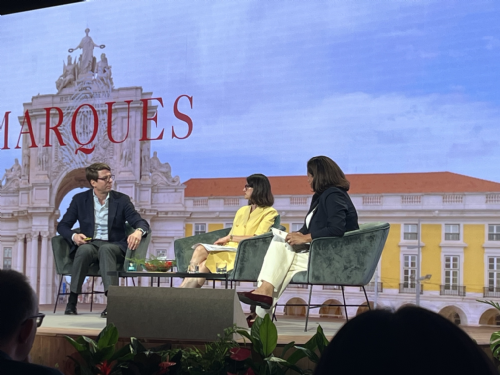 The final session of the Annual Conference, Part 8 comprised the regular review of CJEU and EU General Court case law, focusing on: monkeys, furniture and money. It was moderated by Claire Lehr, Edwin Coe LLP, UK, Chair of the MARQUES Programming Team, and featured Sebastian Fischoeder, Taylor Wessing Partnerschaftsgesellschaft mbB, Germany, Member of the MARQUES Amicus Curiae Team, and Eleonora Viegas, Judge Court of Appeal Lisbon, President of the IP Section, Vice President of the Court of Appeal, Portugal
They discussed three topics arising from recent or pending cases:
- The CJEU judgment in Case C-337/22P EUIPO v Nowhere, in which the Court said that EUTM opposition requirements must be met at the time of the relevant EUIPO or Board of Appeal decision. “The EUIPO or BoA must assess the requirements for the opposition not only at the application or priority date of the subsequent trade mark, but also when deciding on the opposition,” explained Sebastian. The key takeaway is: love and cherish your trade mark!
- The recent Case C-298/23 IKEA concerning IP rights and freedom of expression, in which the CJEU set out the criteria for assessing due cause. Judge Viegas described this as “a fascinating case” and said: “The Court made it very clear that it is the alleged infringer who must establish why, in the interest of freedom of expression, it may use a well-known trade mark.” The panel also briefly discussed whether the Court had gone too far in directing the national court in its judgment.
- Case C-573/25, a referral from Germany on the reimbursement of legal costs which raises questions about statutory fee recovery schemes. This led to a lively audience discussion about the pros and cons of statutory schemes. The Court’s judgment is expected within the next year.
- For all three cases, the speakers ran a poll for the audience to vote on their decision and also invited comments from the floor.
The Annual Conference concluded with remarks by MARQUES Chair Claudia Pappas, a video of highlights and a look forward to the 41st Annual Conference, which will be in Athens, Greece.
Photos taken by MARQUES staff and editor. Speakers do not necessarily represent the views of any organisations mentioned or of MARQUES.
Posted by: Blog Administrator @ 15.18
Tags: Annual Conference, Lisbon,
Sharing on Social Media? Use the link below...Perm-A-Link: https://www.marques.org/blogs/class46?XID=BHA5483
Annual Conference, Lisbon – Parts 5 and 6
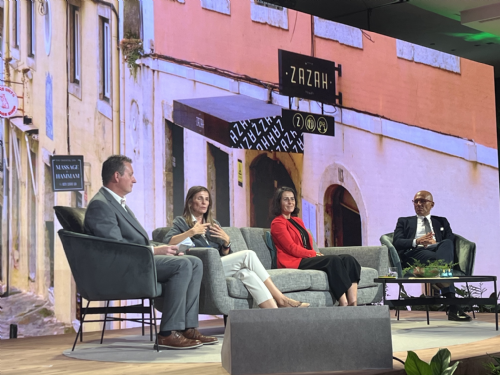 Part 6 of the 40th Annual Conference in Lisbon, Portugal looked at geographical indications (GIs) and trade marks in a session titled “Preserving heritage in a changing world” (pictured right).
Introducing the session, moderator Alessandro Sciarra, Bird & Bird, Italy, Chair of the MARQUES GI Team, described GIs as “one of the most rapidly evolving areas of IP”. He said that the GIs can sustain rural economies, be a catalyst for tourism, provide key elements for nation branding and be a powerful for deepening trade relationships. “This is reflected in the growing number of countries that have adopted sui generis protection for GIs and special categories of trade marks,” said Alessandro.
In the first presentation, Elisa Zaera Cuadrado, Business Operations Department, EUIPO said the EU legislative framework has recently seen many changes. She said there is “greater legal certainty” thanks to the implementation of Regulation (EU) 2024/1143.
Elisa also discussed the new opportunities arising from the creation of a unitary title for craft and industrial GIs (CIGIs). She summarised the key features of the CIGI scheme and the role of EUIPO. So far, there have been 90 applications and 45 registrations, with textiles, stones and ceramics the most popular sectors.
Turning to conflicts between trade marks and GIs, Elisa introduced changes in the EUIPO Guidelines in July 2026, and discussed how the concept of “evocation” is treated in ex officio examination. She stressed that the “scope of protection of a GI is quite broad” and discussed recent cases including Nero Champagne. She added that EUIPO is “very strict” in the interpretation of use of the GI and stated: “If we have more situations of evocation, we will have more refusals of trade marks,” giving some examples of when a restriction is and is not possible.
Elisa predicted that there will be more ex officio actions but said opposition proceedings will continue to be important. Finally, she recommended the tools GIview and GIHub, which are both available on the EUIPO website.
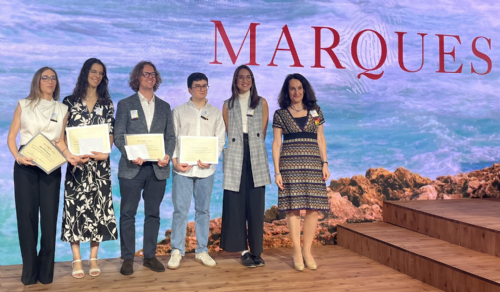 |
| MARQUES Chair Claudia Pappas presented the Lewis Gaze Memorial Awards to students from Portugal’s NOVA School of Law today. Look out for an interview with them on the MARQUES blogs soon! |
Teresa Pais Coelho, oriGIn Portugal, Portugal, described the work to preserve Portuguese heritage and why GIs are important. “It’s not just collective property, it’s a protection for the community that protects quality and preserves know-how,” she said, adding that GIs also promote sustainable development. Portugal ranks 4th in the EU for the number of registered GIs and also leads in CIGIs so far.
According to a 2024 report, said Teresa, craft plays an important role in job creation and local economic growth. Craft and tourism also reinforce each other, especially for rural and less-developed areas. Portugal ratified the Geneva Act in 2023, facilitating international protection of GIs. Teresa recommended trade mark registration in appropriate cases alongside GI protection. “We have different lines of defence … this is vitally important to ensure that the names of our products can travel beyond frontiers,” she said.
In the final presentation of the session, Vincent Stauffer, Federation of the Swiss Watch Industry FH, Switzerland, recounted the history of watches in Switzerland. By 1790, Geneva was already exporting more than 60,000 watches. The Federation is marking its 150th anniversary this year and the industry employs 65,000 people in Switzerland with exports worth €27 billion a year.
“There are studies showing there is a Swiss-made premium,” said Vincent. “This premium can go up to 40% of the price, compared to 20% for Swiss chocolate. In 1971 Switzerland passed a law on the use of the name Swiss for watches, which was most recently revised in 2017. It sets out the criteria that must be met by a Swiss watch. The Federation allocates Swiss registration marks and maintains a register.
To ensure international protection, Switzerland includes GI protection in free-trade agreements with trading partners. Vincent described the tools available for protection, including trade marks, and summarised the pros and cons of each. “We monitor all trade mark applications worldwide covering class 14 products,” he said, and the Federation takes action against any that include Swiss GIs. Where oppositions are not possible, it tries to sign undertakings. It also takes action against abuses including in online marketplaces, working in parallel with its members and closely with authorities. “Cooperation is key,” he said. “It’s important to protect a tradition that is almost 500 years old … It’s important for us to find solutions and have open borders, and to find the right tools to act.”
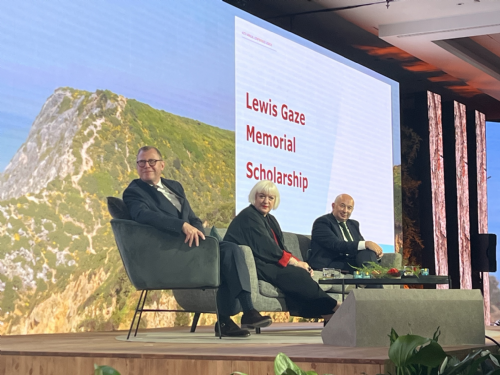 Within and without rules
In Part 5 "Working Within and Without Rules", panel moderator Nick Wood from Com Laude/Markmonitor, Member of MARQUES Council and Cyberspace Team, introduced a lively session with the statement that: “The world of IP management is no longer just about the formalities of prosecution, enforcement and commercialisation. Today’s brand owners want their IP counsel to help them look around corners, to help them to innovate, and to reshape how IP is valued and regarded globally.”
Speakers Marion Heathcote, Principal at Davies Collison Cave in Australia, Member of MARQUES Council and Chair of the IP Emerging Issues Team, and Chris Oldknow, Head of Policy for Amazon in Europe, ran with this theme, grouping together the critical forces impacting the IP system in six areas: Regulation, Advertising, Consumer Protection, Reputation, Digital Communication and AI.
Chris described how a tapestry of overlapping regulations in Europe are indirectly affecting IP managers, who, he maintains, “at least need to be in the room” when compliance is discussed because these issues impact on marketing, brand positioning and the management of data. He used a litany of acronyms to illustrate how complex life for IP managers is becoming in Europe: GDPR, AVMSD (Audiovisual Media Services Directive), DSA (Digital Services Act), AIA (Artificial Intelligence Act), PLD (Product Liability Directive), CRA (Cyber Resilience Act) and the DFA (Digital Fairness Act).
Marion spoke with passion about the need for IP professionals to become “Worry Warriors”, the stewards of trust in brands, intimately involved in the creative and marketing process so that solutions for potentially problematic issues are resolved. She described how advertising is pushing at “the legal boundaries of persuasion” and urged IP practitioners “to be authentication validators, both for our brand owners and in our own practices.”
The Annual Conference continues until Friday. Further reports will be posted on the Class 46 and Class 99 blogs. Photos taken by MARQUES staff and editor. Speakers do not necessarily represent the views of any organisations mentioned or of MARQUES.
Posted by: Blog Administrator @ 13.48Tags: Annual Conference, Lisbon,
Sharing on Social Media? Use the link below...Perm-A-Link: https://www.marques.org/blogs/class46?XID=BHA5482
40th Annual Conference, Lisbon – Parts 3 and 4
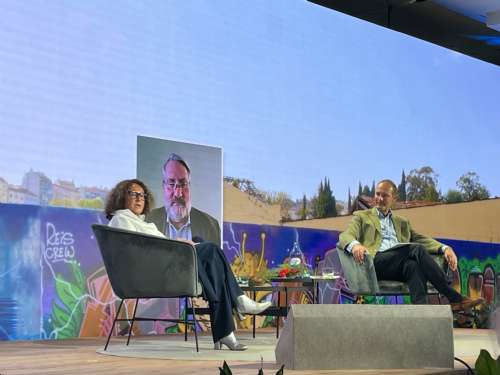 The first afternoon of this year’s Annual Conference featured sessions on IP finance and the EUIPO Boards of Appeal
Roland Mallinson, Winston Taylor International LLP, UK, Member of MARQUES Executive and Council, introduced Part 3 – Unlocking the power of IP focused on IP-backed financing (pictured right) with some statistics from a recent EUIPO report on IP financing.
Donald Broadfield Jr, Managing Director & Senior Attorney/Chief IP and Data Counsel, American Airlines, Inc, USA described four trade mark-backed loans that American Airlines has secured over the past 25 years, raising billions of dollars. This included a bond with a very low interest rate, backed by trade marks such as American Airlines and AAdvantage.
Donald said that lenders are generally well educated on brand value. Tatiana Whytelord, Intelligent Brand Extension LLC, USA, agreed, saying it is notable how little corporate leadership values IP compared to people on the other side. However, said Donald, lenders often do not understand nuances of trade mark law, such as minor changes to a specification and renewal notices. “Not all buyers have the right people to have this mindset,” said Tatiana so buyers with IP departments have a big advantage. “With lenders you need to be very conservative,” she added.
The panel discussed how approaches vary around the world. Donald said many jurisdictions did not have an established approach to IP-backed loans or had high requirements: these include Spain and Japan. “It’s not an easy process,” said Roland, who advised American Airlines on some of the deals.
Tatiana challenged the idea maintained by many companies that IP is a cost centre and stressed the importance of having an aligned system for, and purpose behind, protecting the IP. She also addressed the risks raised by personalised or founder brands.
Other topics covered by the panel included trade mark licensing and maintaining control over brand usage, ad agencies seeking to register IP rights, drafting contracts and litigation, disputes with commercial partners (such as supermarkets and online travel agencies) and franchising. “The number of loans backed by IP will increase over time,” said Donald, pointing out that trade marks are unusual assets because they often grow in value.
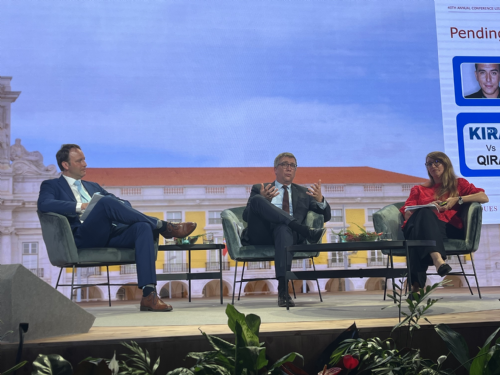 The final session of the day, Part 4 – New perspectives from EUIPO (pictured left), featured Sven Sturmann, President of the EUIPO Boards of Appeal, Spain and was moderated by Johannes Fuhrmann, Bomhard Intellectual Property, SL, Spain, Member of MARQUES Council and Chair of the European Trademark Law & Practice Team and Andreea Bende, Minded Counsels SRL, Romania, Vice-Chair of the MARQUES European Trademark Law & Practice Team.
The session covered three main topics: the Boards’ approach to generally understood English terms (such as smart, easy, online, style and shop); activities to enhance the quality and consistency of its decisions; and cooperation activities.
Mr Sturmann said the first is “a really tricky topic” that arises in many appeals. He stressed the importance of evidence, such as surveys, but recognised the challenges of doing this. Andreea referred to two cases: in CRAFT v CRAFT GEAR for goods in class 25, a likelihood of confusion was found but in SQUIZZY v SQUEEZED TO DEATH for goods in class 32, there was no likelihood of confusion.
Sven explained the Boards’ non-binding methodology for assessing basic English terms, which sets out circumstances in which English can be viewed as a matter of common knowledge. He said the aim is to be “as objective as possible” This has been applied in cases including R 2596/2023-2 iTEC SkyNex v SKYNET, R 1921/2025-4 wonderjeans v W wonders and R 1752/2024-1 G MOTION v GM GERMANY MOTIONS.
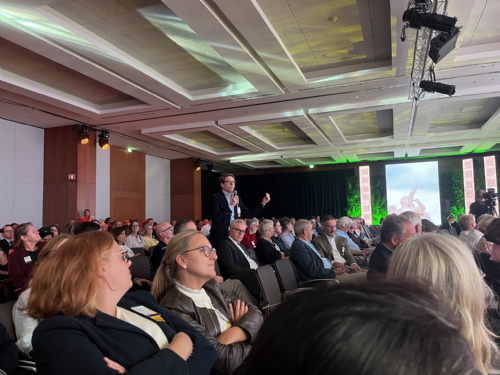 In two recent cases, T-635/25 Health Labs Care and T-497/25 Almaviva, the EU General Court has confirmed and elaborated the methodology.
To promote consistency, the Boards have introduced case-law reports, Grand Board of Appeal referrals, a case law analysis tracking system and user feedback on Board decisions. Mr Sturmann stressed that none of these activities will interfere with the independence of the Boards’ work. “I think there are a lot of things we can simplify,” he added, mentioning some initiatives with judges and efforts to promote mediation.
The Annual Conference continues until Friday. Further reports will be posted on the Class 46 and Class 99 blogs. Photos taken by MARQUES staff and editor. Speakers do not necessarily represent the views of any organisations mentioned or of MARQUES.
Posted by: Blog Administrator @ 18.38Tags: Annual Conference, Lisbon,
Sharing on Social Media? Use the link below...Perm-A-Link: https://www.marques.org/blogs/class46?XID=BHA5481
40th Annual Conference, Lisbon, Portugal - Parts 1 and 2
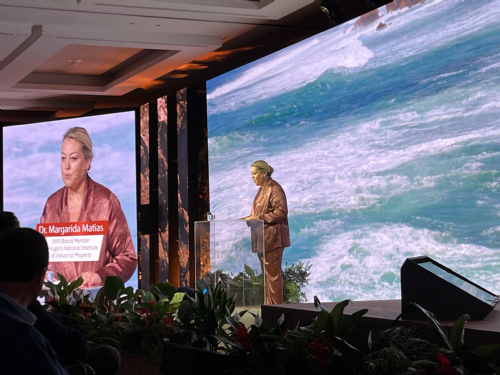 The 40th MARQUES Annual Conference is taking place in Lisbon, Portugal this week. Class 46 reports on the plenary sessions during the first morning.
Welcome to Lisbon!
In the Opening Ceremony, Dr Margarida Matias, INPI Board Member, Portugal's National Institute of Industrial Property, Portugal (pictured right) welcomed the delegates to Lisbon and said the Institute is marking its 50th year as a public body this year. “During this period trade marks have become increasingly important intangible assets,” she said, adding: “Above all, trade marks build trust.”
She said that the evolution of trade marks is happening at an unprecedented pace and consumers expect more from brands. “They want to know where a product comes from, how it was made and what value it represents.” This brings both opportunities and challenges – many of which are addressed in the Annual Conference programme.
Dr Matias called for IP systems to promote accessibility, efficiency and effectiveness and to embrace digital transformation while ensuring responsibility and appropriate limits on automation. She also highlighted the importance of geographical indications in Portugal.
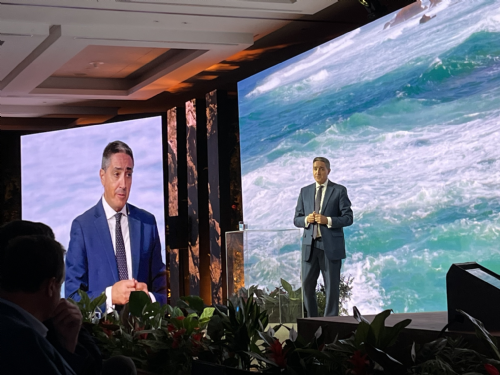 In his speech, João Negrão, Executive Director, EUIPO (left), celebrated the founding vision of MARQUES and the 30th anniversary of the EU trade mark system. This year, EUIPO will pass 5 million EUTM and EUD registrations. “In the IP community, we need to treat designs like we treat other IP rights,” he said, adding that aesthetics are particularly important for young people.
He also thanked MARQUES for its participation in EUIPO activities, saying that interaction with users is critical to the success of EUIPO. “The main challenge in front of us is competitiveness. Europe is less competitive than other regions of the world,” said Mr Negrão. “We need to work together to ensure that businesses will benefit from IP rights in the future.”
 “Business as usual will not work,” he said. “We need to look at IP rights from a business perspective, not a legal perspective … I’m confident we will deliver tangible results.”
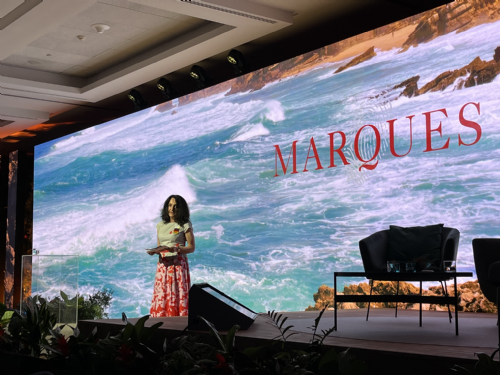
In her welcoming remarks, MARQUES Chair Claudia Pappas (right) described how Lisbon has reinvented itself over three millennia, discussed how trade marks are evolving and reviewed recent MARQUES achievements.
Brands, culture and heritage
Paulo Monteverde, Baptista, Monteverde & Associados, Portugal, Member of the MARQUES Geographical Indications Team, moderated Part 1 of the Annual Conference – Brand evolution, culture and collaboration, which focused on the significance of culture and the role of IP in protecting it (pictured below left).
Nuno Sousa e Silva, Pinheiro Torres, Cabral, Sousa e Silva & Associados, Portugal looked at the evolution of geographical indications since the world’s first GI system was created for Port wine in Portugal in 1756. He talked about the “symbiotic relationship” between GIs and trade marks, stating: “The stronger the GI, the more value it will bring to the trade mark.”
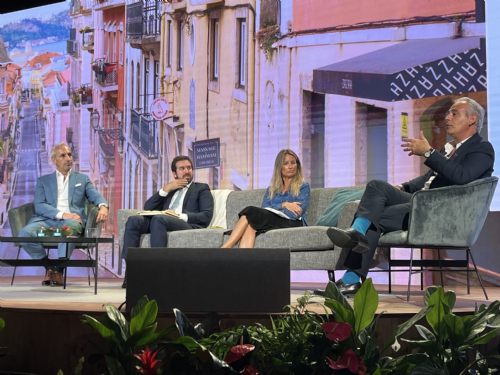 “We’re seeing an increase of brands drawing on a very wide range of cultural references,” said Marta Alves Vieira, VdA – Vieira de Almeida & Associados, Portugal. These include images, traditional symbols, regional names, crafts and other aspects of cultural identity. “The issue is to draw the line between inspiration and appropriation. It’s not always easy,” she said.
This is not just a question of what is protected, but what is credible and respectful: it involves asking a series of questions including about approval, honesty and consultation. Marta gave examples such as Camisola Poveira’s case against Tory Burch, which was resolved following an apology; design applications that were similar to the famous Capote coat, which were considered to lack novelty; and design applications resembling Vilão/Viloa dolls from Madeira, also held to be invalid.
Bringing a creative perspective, Rui Catalão, Rui Catalão Atelier, Portugal, discussed the mercado da saudade, which emphasises traditional and nostalgic cultures and brands. During the panel discussion, Nuno presented the concept of “evocation” of a GI as developed by the EU Court of Justice, noting that this provides broad protection for GIs. He added that it provides an incentive for collaboration between brands and GIs. Marta shared some examples of the protection of the traditional crafts Manteiga dos Açores and Bordado da Madeira. Rui described brands that are working with cultural heritage in interesting ways such as Burel Factory furniture, Nelo kayaks and Corticeira Amorim cork.
Autopsy of a brand
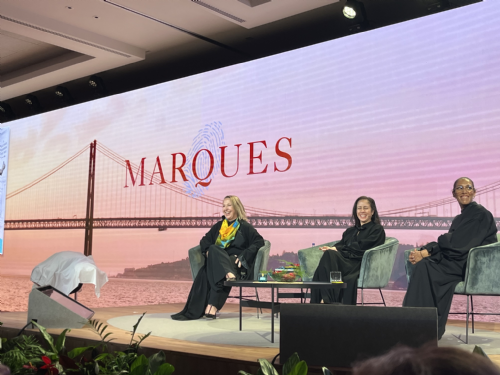 Part 2 of the Annual Conference comprised the autopsy of a (nearly) deceased brand, focusing on diagnosis, prevention and reversal. The brand (“Mark”) appeared on stage covered by a sheet alongside the three speakers, who were all wearing black robes (pictured right).
Luna Samman, Arent Fox Schiff, USA, said that once a mark becomes generic there is no coming back. She asked the audience to remember marks such as Escalator, Thermos and Zipper in a moment of silence. But she added that a good doctor will use any remedy possible to regain a pulse.
Luna said that early warning signs of genericide are dictionary entries, media usage, competitor use, social media and online use, consumer surveys and internal misuse. “Consumers are sometimes our best friends and sometimes our worst enemies,” she said, adding: “Branding starts at home. From marketing to legal, everyone needs to speak the same language.”
In a US case in 2017, Google succeeded in proving that Google still functioned as a source identifier, despite widespread use of “to google” as a verb. Meanwhile, Velcro launched a “Don’t say Velcro” campaign (including a video) to maintain its brand. Ugg boots has become generic for sheepskin boots in Australia but is protected in more than 130 other countries.
Bahia Alyafi, Alyafi IP Group, Middle East stressed the importance of naming, marking and using product names. She also highlighted the need to correct misuse. But, she asked: what can we do to understand the risk of genericism before it becomes a risk? The answer is: a brand DNA audit covering: inventory, allocation, identification and concentration.
The audit needs to map awareness, association and attribution to identify the level of risk and any change over time. “This has to be done in a collaboration between marketing, legal and other departments,” said Bahia. Brands should also provide usable vocabulary to voices such as influencers (and, increasingly, machines) to try to make sure they use the brand correctly. “If we do not fix the feedback loop, there will be a language drift,” she said. Her summary was: control, influence and monitor.
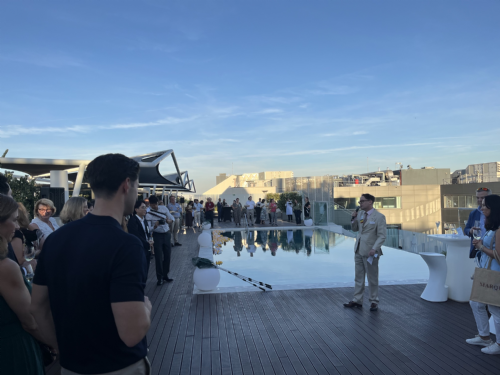 |
| MARQUES 2nd Vice-Chair Tapio Blanc welcomed first-timers at a reception on Tuesday evening |
Catrin Turner, Jellycat Ltd, UK said that genericism is a result of success: “That’s a good place to start from. We should never lose hope for the patient.” She said in-house counsel need three things: mindset, external and internal perspective.
Catrin pointed out that it is not just words that can become generic, but also product shapes. IP counsel need to lead the fight and create “the appearance of rationality” for courts and IP tribunals by building evidence of authenticity, for example through an archive, finding design and quality storytelling, using “look-for …” advertising. Litigation is the last port of call, and laws about unfairness are likely to be most helpful. Internally, she stressed negotiating correct trade mark use, working closely with your customers and building relations between marketing and legal.
The Annual Conference continues until Friday. Further reports will be posted on the Class 46 and Class 99 blogs. Photos taken by MARQUES staff and editor. Speakers do not necessarily represent the views of any organisations mentioned or of MARQUES.
Posted by: Blog Administrator @ 14.13Tags: Annual Conference, Lisbon,
Sharing on Social Media? Use the link below...Perm-A-Link: https://www.marques.org/blogs/class46?XID=BHA5480
Navigating the global patchwork: a new guide to e-commerce and counterfeit goods
The MARQUES Anti-Counterfeiting and Parallel Trade Team has published a new report examining the legal frameworks and challenges in regulating counterfeit sales on cross-border e-commerce (CBEC) platforms across 47 jurisdictions worldwide.
The 24-page report has been prepared in cooperation between the Cross-Border E-commerce and Counterfeit Goods and the Online Brand Protection sub-teams. It is available to download on the Team's page here (MARQUES log-in required).
Based on structured surveys of legal professionals in each jurisdiction, the report sheds light on legal measures, operational challenges, and potential strategies for enhancing enforcement mechanisms across different regions. It covers key topics including takedown measures, staydown enforcement, whitelisting, jurisdiction over non-residents, available legal remedies, obstacles, and protection levels.
Key findings at a glance
- Takedown measures are now a widely recognised baseline, with 89% of surveyed jurisdictions confirming their availability – driven by comprehensive legislation such as the EU’s Digital Services Act, the US Digital Millennium Copyright Act, and China’s E-Commerce Law.
- Staydown measures remain far more challenging: only 13% of jurisdictions confirmed general implementation, while 59% face substantial enforcement challenges. The EU stands out as a particularly favourable jurisdiction, building on the DSA’s mandatory repeat-offender regime and the CJEU’s forward-looking preventive measures established in L'Oréal v eBay.
- Whitelisting has gained limited traction – only 13% of jurisdictions report feasibility, with most relying on platform-specific policies rather than legal mandates.
- Jurisdiction over non-resident sellers is reported by 81% of jurisdictions, yet practical cross-border enforcement remains resource-intensive.
- Civil remedies are widely available (91%), but criminal enforcement varies considerably and is often impractical against non-resident operators.
The findings are enriched with detailed regional analysis, comparing practices in the US, China and the EU, and are accompanied by a series of world maps highlighting the main points.
Looking ahead
There is reason for cautious optimism. The EU's comprehensive regulatory approach, which combines the DSA’s platform accountability framework with established CJEU and national court jurisprudence, not only provides a model that other jurisdictions could consider adopting, but also creates market incentives for platforms to implement robust anticounterfeiting technologies on a global scale.
Once platforms invest in AI-powered filtering systems and automated detection technologies to comply with EU staydown obligations, there is every reason to expect these tools to be deployed worldwide, raising protection levels even in jurisdictions that lack the legal framework to mandate such measures.
International cooperation, harmonisation of staydown obligations, and the proliferation of platform-level technical solutions will be crucial in closing the enforcement gaps that currently allow counterfeit goods to proliferate across borders.
For more information, please contact Stefan Schröter of the ACPT Team.
Posted by: Blog Administrator @ 10.10Tags: e-commerce, counterfeit, anti-counterfeiting,
Sharing on Social Media? Use the link below...Perm-A-Link: https://www.marques.org/blogs/class46?XID=BHA5479
Greece and Poland added to SRO chart


The chart on self-regulatory organisations (SROs) has been updated with new sections on Greece and Poland.
The chart is compiled by the MARQUES Unfair Competition Team and can be downloaded on the Team’s page on the MARQUES website (MARQUES log-in required).
It now covers 14 countries.
Pawel Wac, head of the trade mark team at Polservice, has compiled the report on Poland.
Stefanos Tsimikalis, a Partner of Tsimikalis Kalonarou Law Firm, contributed the report on Greece.
The purpose of the chart is to provide corporate lawyers and attorneys with a practical, user-friendly overview of SROs for advertising and unfair competition matters.
With growing digitalisation and globalisation of advertising and other business activities, it is increasingly important for businesses to familiarise themselves with self-regulation of advertising and other matters.
The chart covers advertising and unfair competition matters, but not consumer protection matters or industry-specific organisations.
The five questions for each jurisdiction encompass: existence and identity of self-regulatory organisations; matters handled; rules, eligible parties and fees; procedure; and penalties and enforceability.
If you have any questions, please contact Alexandra Di Maggio, Rani Mallick, Felipe Dannemann Lundgren or another member of the Unfair Competition Team.
Flags downloaded from https://flagpedia.net
Posted by: Blog Administrator @ 15.43Tags: SRO, Poland, Greece,
Sharing on Social Media? Use the link below...Perm-A-Link: https://www.marques.org/blogs/class46?XID=BHA5478


